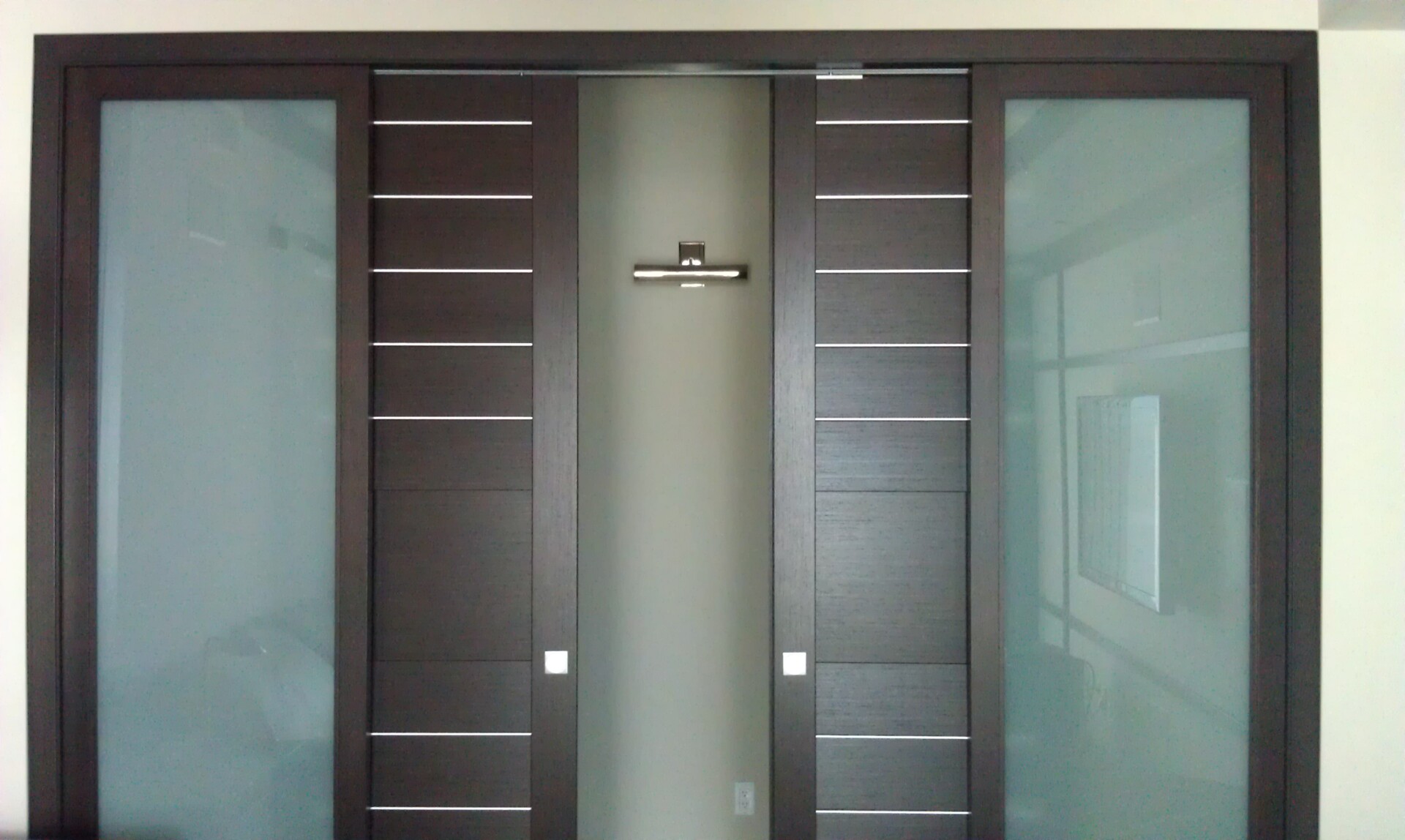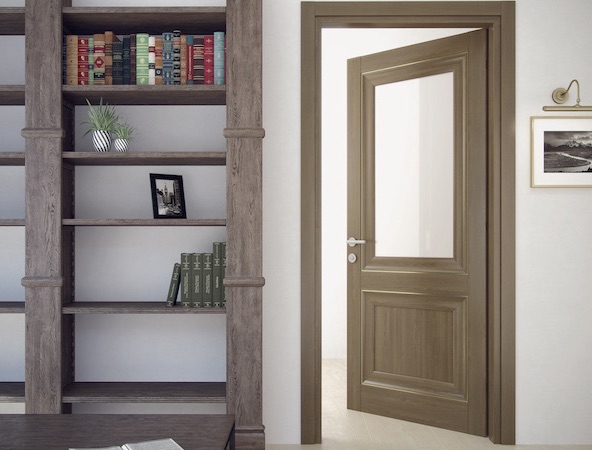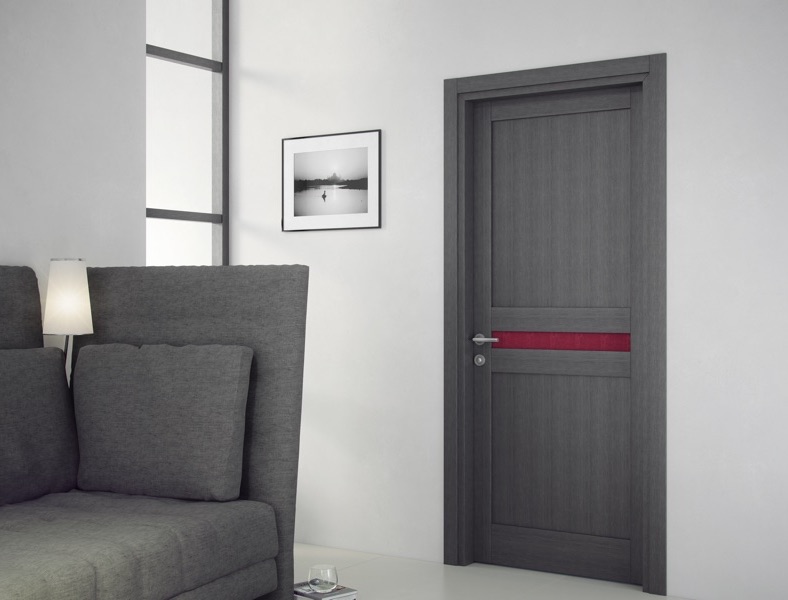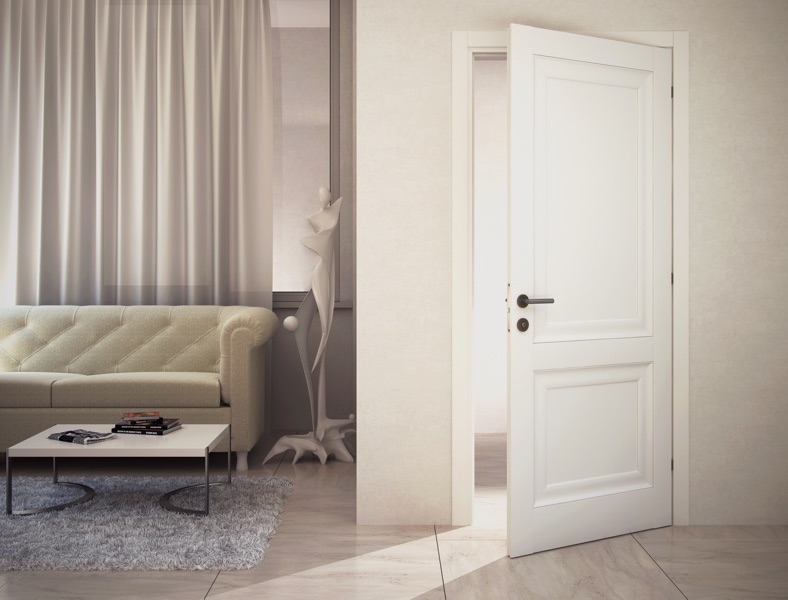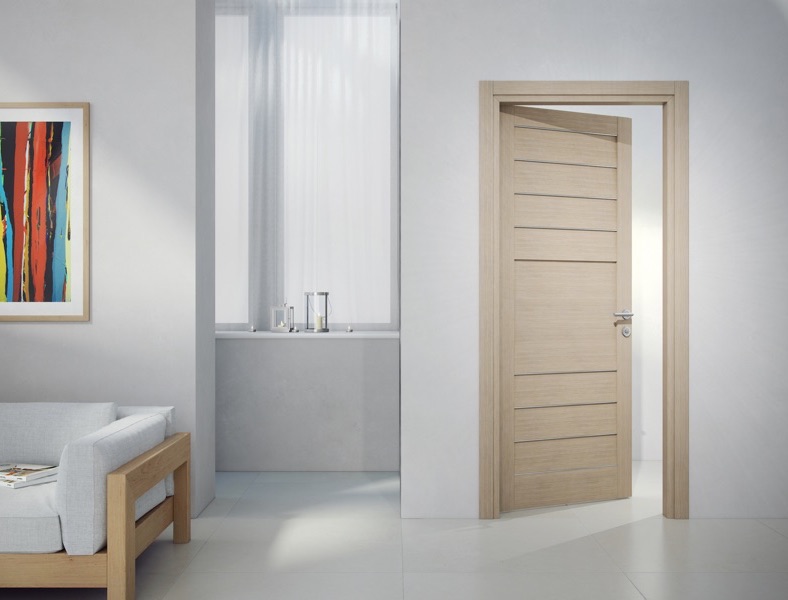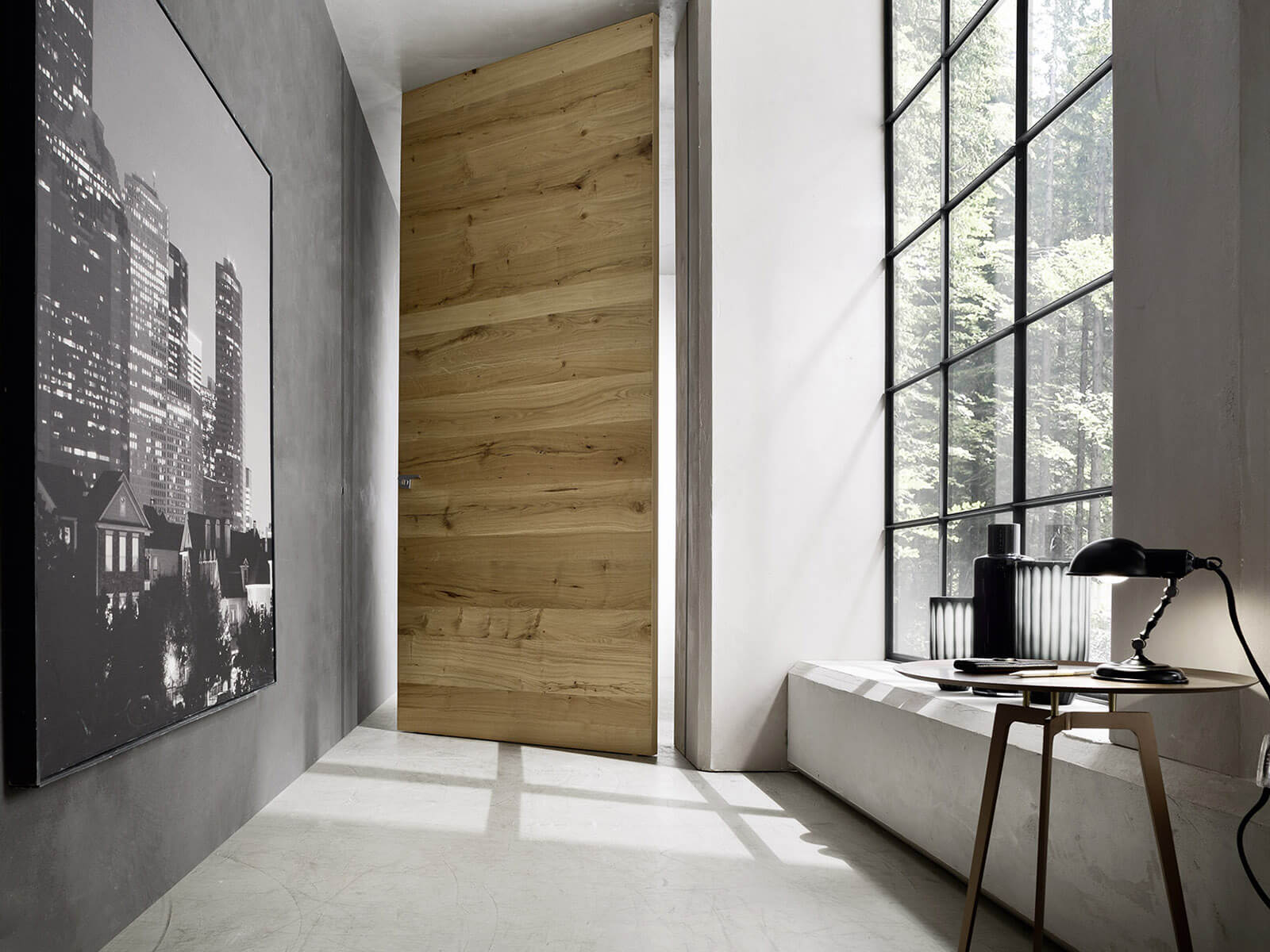
Many homeowners assume that a door is simply a finishing detail, but the truth is that the type of interior door you choose directly affects how a room feels, functions, sounds, and flows from one area to the next. In this guide, we will compare the most important interior door types in practical terms, from how they open and where they work best to what style they support and what tradeoffs they involve, while also showing how ITALdoors makes it possible to match refined Italian design with the right opening system instead of forcing a choice between beauty and function.
Why choosing the right interior door type matters
A door affects more than appearance
Interior doors do much more than close off one room from another. They shape the rhythm of everyday movement, influence how much privacy each area offers, and affect whether a home feels open and seamless or awkward and interrupted. That is why choosing a door type should never be treated as an afterthought.
A well-chosen interior door contributes to the overall usability of a space in ways that many people do not initially notice during planning. When the wrong type is selected, the problem often only becomes obvious after installation, once furniture is in place, routines begin, and the house starts being used in real life.
The right door type can influence all of the following:
- circulation and traffic flow between rooms
- visual openness or separation
- privacy in bedrooms, bathrooms, and offices
- acoustic separation and noise control
- available wall and floor space
- furniture placement and layout flexibility
- the overall consistency of the interior design language
For example, a standard swing door may work beautifully in a spacious primary bedroom, where there is enough room for the panel to open comfortably without interfering with a bed, dresser, or side tables. In a small powder room, however, the same door type may feel clumsy, taking up valuable clearance and making the room feel tighter than it already is.
Door type also plays a major role in how intentional a home feels. In well-designed interiors, the opening style of each door is usually connected to the purpose of the room. A closet may use a bypass system for efficiency, a bathroom may benefit from a pocket door, and a statement transition between major spaces may call for a large pivot or sliding system. When these decisions are made thoughtfully, the entire home feels more custom and more resolved.
Another important point is that interior door type affects visual balance. Doors occupy significant vertical surface area, and because they appear throughout the home, they strongly influence the architectural rhythm of the walls. If the opening style feels out of place, the room can appear disjointed even if the finish itself is attractive.
In practical terms, a door is part of both the architecture and the daily experience of the home. It is touched constantly, opened and closed repeatedly, and relied on for privacy, convenience, and comfort. That is why choosing the right door type matters just as much as choosing the right finish, material, or hardware.
The wrong door type creates practical problems
A poorly chosen interior door does not usually fail because it looks bad on its own. More often, it creates friction in the way the room functions. It may interrupt movement, reduce usable space, or deliver less privacy than expected. These issues are especially frustrating because they often become permanent once the door system is installed.
Some of the most common real-world problems include:
- swing doors hitting nightstands, vanities, or sofas
- double swing doors requiring more clearance than the room can comfortably support
- barn doors leaving gaps that reduce privacy in bedrooms or bathrooms
- sliding doors performing well visually but offering less sound control than hinged doors
- pocket doors requiring specific wall conditions that were not planned early enough
- bypass closet doors limiting full access to the opening at one time
- pivot doors being oversized or underspecified for the space
- mismatched door types disrupting design consistency across the home
Consider a small home office located near a hallway. A traditional swing door may appear to be the easiest option, but if the desk placement depends on that same wall area, the swing arc can create a constant annoyance. In another scenario, a homeowner may choose a barn door because it looks dramatic in photos, only to realize later that the visible gaps around the perimeter make it less suitable for a bathroom or guest room than expected.
Pocket doors present a different type of issue. They are excellent for saving space, but they are not simply a decorative switch from a standard door. They require planning inside the wall, proper framing conditions, and careful hardware selection. If those factors are overlooked, the installation becomes more complicated and the long-term performance may suffer.
Bypass doors are another example of a highly functional solution that still has limitations. They are excellent for closets because they save space and slide efficiently, but they do not allow the entire opening to be accessed at once. For some storage situations, that is perfectly acceptable. For others, it can become inconvenient.
Pivot doors can also be misunderstood. They are visually impressive and highly architectural, but they are not automatically the best solution for every opening. They require correct scale, proper hardware engineering, and a design context that supports their dramatic presence. Without that, they can feel oversized, unnecessary, or disconnected from the rest of the interior.
In short, the wrong interior door type can create problems in five key areas:
- room usability
- privacy and sound control
- furniture planning
- installation complexity
- visual harmony
That is why the decision should be made based on both aesthetics and performance, not on appearance alone.
The best door choice balances form and function
The best interior door is not always the most dramatic, the most expensive, or the most minimal. It is the one that fits the room properly, supports the way the space is used, and still contributes to a cohesive design vision throughout the home.
A smart door decision balances several factors at once:
- the size of the room
- the shape and width of the opening
- daily frequency of use
- privacy requirements
- acoustic expectations
- available wall and floor clearance
- desired design style
- installation conditions
- budget and lead time
This is why there is no one universal answer to the question of which interior door type is best. A swing door may be ideal in one room and inefficient in the next. A pocket door may solve a serious layout problem in a compact area, while a pivot door may elevate a large, design-driven space where visual impact matters most.
| Door type | How it opens | Best for | Privacy level | Space-saving level | Design impact | Customization potential |
|---|---|---|---|---|---|---|
| Swing door | Opens inward or outward on side hinges | Bedrooms, bathrooms, offices, standard room entries | High | Moderate | Classic to modern, depending on design | Very high |
| Sliding door | Moves horizontally along a wall-mounted or guided track | Small rooms, room dividers, modern layouts | Moderate | High | Clean and contemporary | High |
| Pocket door | Slides into a cavity inside the wall | Powder rooms, en suites, compact spaces, narrow transitions | Moderate | Very high | Minimal and streamlined | High |
| Barn door | Slides along an exposed wall-mounted track | Decorative transitions, offices, bedrooms, pantries | Low to moderate | High | Strong visual statement | High |
| Pivot door | Rotates on a pivot mechanism rather than side hinges | Luxury interiors, oversized openings, feature spaces | Moderate to high, depending on design | Moderate | Very high | Very high |
| Bypass door | Panels slide past one another on parallel tracks | Closets, storage areas, tight circulation zones | Moderate | High | Subtle and practical | Moderate to high |

How to choose the best interior door type for each room
Choosing the best interior door type becomes much easier when the decision is tied to the function of the room. Different rooms ask for different things. Some need privacy and sound control. Others need space efficiency. Some are practical first, while others benefit from stronger visual impact.
A room-by-room approach is often the most useful way to decide.
Bedrooms
Bedrooms usually prioritize three things above all:
- privacy
- noise reduction
- compatibility with furniture placement
For this reason, swing doors often remain the leading choice. They close securely, provide good separation, and feel familiar in daily use. In a standard bedroom with enough clearance, a swing door is often the strongest overall solution.
That said, sliding systems can also be useful in tighter bedroom layouts, especially when a swing arc would interfere with:
- nightstands
- wardrobes
- circulation near the bed
- compact ensuite transitions
Barn doors may be used in bedrooms when design impact is a priority and the privacy tradeoff is acceptable. Pocket doors can also work in compact plans, though sound control should still be considered.
Bathrooms and powder rooms
Bathrooms and powder rooms require a careful balance of privacy, clearance, and practicality. Humidity also matters, which makes material quality and construction especially important over time.
In many cases, the best options are:
- swing doors for stronger privacy and closure
- pocket doors for compact layouts where space is limited
A full swing door often works best in larger bathrooms, especially when sealing and privacy matter most. A pocket door can be excellent in powder rooms or tighter ensuites where the swing path would feel wasteful.
Barn doors are less ideal for bathrooms in many cases because of the perimeter gaps and lower acoustic privacy. They may still work in certain design-led projects, but they should not be treated as the default bathroom solution.
Closets
Closets are one of the clearest examples of how door type should be matched to use. Since closets usually benefit from space efficiency more than full enclosure, sliding-based systems are often the strongest fit.
The main contenders are:
- bypass doors
- double magnet closet doors
- sliding doors
- occasionally pocket or barn doors, depending on layout and design intent
Bypass doors are often the most practical for everyday closet access in bedrooms and hallways. Double magnet closet doors may be preferable in projects seeking a more integrated closet-specific solution. Barn doors can work when the closet should also serve as a design feature. Pocket doors may suit certain built-in or custom layouts where a recessed solution is feasible.
Home offices
Home offices need a more careful balance between privacy, acoustics, and appearance. The best choice depends heavily on how the space is used.
A swing door is often strongest when:
- meetings happen regularly
- concentration is important
- sound control matters
- the office functions as a true separate room
A sliding door may be useful when:
- the home office is part of a more flexible open-plan arrangement
- swing clearance is limited
- the user wants a lighter threshold
Glass doors can also be very effective in home offices, particularly when the goal is to define the room without making it feel visually closed off. They work especially well in interiors where natural light flow matters.
Laundry and utility rooms
Laundry and utility rooms benefit from compact practicality. In these areas, the door usually does not need to be dramatic. It needs to function efficiently and fit the available space.
Good options often include:
- swing doors in standard layouts
- pocket doors in tighter plans
- sliding solutions where clearance is limited
Since these rooms often contain appliances, cabinetry, or narrow circulation areas, door swing should be considered carefully. A standard swing door may still be ideal, but in some homes a pocket or sliding system can noticeably improve usability.
Open-plan spaces and room dividers
Open-plan areas often benefit most from door systems that allow flexibility. The goal in these spaces is not always full-time separation, but the ability to create it when needed.
The strongest options often include:
- sliding doors
- barn doors
- larger specialty systems
- in certain premium applications, pivot doors
Sliding systems are especially effective because they can preserve openness when retracted and define space when closed. Barn doors can work when the transition should feel more decorative and expressive. Larger specialty systems may suit luxury interiors or custom projects where the opening itself plays a major architectural role.
What to consider before selecting an interior door type
A beautiful door is not automatically the right door. Before selecting any interior door type, homeowners and professionals should evaluate a series of practical criteria that influence how the door will perform over time.
Available floor space
Floor space is one of the first and most important planning factors. A swing door needs a clear arc. If that arc conflicts with furniture, circulation, or fixtures, the room may function poorly even if the door itself looks excellent.
Reviewing floor space means thinking about:
- door swing radius
- daily walking paths
- furniture placement
- how the room feels when the door is open as well as closed
Available wall space
Wall space matters especially for barn, sliding, and pocket systems.
For example:
- a barn or wall-mounted sliding door needs clear wall beside the opening
- a pocket door needs enough unobstructed wall depth to accommodate the recessed panel
- decorative elements, switches, casework, or structural constraints may affect feasibility
This is why space planning should always include both floor and wall analysis.
Privacy and sound control
Not all door types perform equally in terms of privacy and acoustics. This is one of the most common mistakes homeowners overlook when choosing based on appearance alone.
In general:
- swing doors offer stronger privacy and better sound separation
- pocket and sliding doors offer moderate privacy
- barn doors usually offer the least acoustic isolation because of perimeter gaps
The right choice depends on the room’s needs, not just on style preference.
Opening size and proportions
The size and shape of the opening affect which systems make sense. Standard openings may suit swing or sliding doors easily, while larger or taller openings may benefit from double-door or pivot solutions.
Opening proportions are especially important for:
- double swing doors
- pivot doors
- custom and specialty applications
- oversized openings where scale affects visual balance
Hardware and daily usability
Hardware matters far more than many buyers expect. It affects not only the appearance of the door, but also how refined and reliable it feels in daily use.
Key considerations include:
- concealed hinges
- magnetic latches
- handle style
- lock type
- smoothness of operation
- ease of opening and closing
A well-designed door with poor hardware rarely feels truly premium. A strong hardware package helps translate design into real-world quality.
Material quality and construction
Material quality influences durability, stability, and long-term performance. This is especially important in climates or conditions where inferior door construction may lead to sagging, surface wear, or reduced operational consistency over time.
ITALdoors positions itself strongly here by focusing on premium materials, refined finishes, and quality construction that support a longer-lasting result.
Lead time and project schedule
Lead time can have a direct effect on project planning, especially in renovations, multifamily work, and custom homes where installation timing matters.
This is an area where the difference between in-stock and specialty options becomes especially important:
- in-stock interior doors can be installed in as little as 2 to 4 weeks
- specialty and custom doors may require longer lead times, especially when custom finishes or advanced configurations are involved
Understanding that distinction early helps prevent delays and allows the door selection process to align with the broader construction schedule.
Interior door types and design styles
A door type should work with the style of the interior, not against it. Even the most functional door system can feel wrong if its proportions, finish, and operational character do not match the surrounding architecture.
Modern interiors
Modern interiors tend to favor clarity, simplicity, and visual control. The best fits often include:
- flat panel doors
- frameless doors
- pivot doors
- pocket doors
- minimalist sliding systems
These door types support clean lines, reduced visual clutter, and a more architectural feel.
Transitional interiors
Transitional interiors balance warmth and refinement, so the strongest door choices are usually those that feel clean without becoming severe.
Good fits include:
- swing doors
- select sliding systems
- subtle barn doors
- glass-accented doors
The goal is often a door that feels current and polished while still maintaining a sense of softness and familiarity.
Luxury interiors
Luxury interiors often benefit from door systems that communicate precision, scale, and restraint.
Strong options include:
- pivot doors
- frameless doors
- oversized doors
- refined swing doors with concealed hardware
In these spaces, the quality of finish and hardware is often just as important as the door type itself.
Small-space interiors
Small-space planning usually prioritizes efficiency. The best door types in these interiors are the ones that reduce wasted movement and preserve usable area.
The strongest fits are often:
- pocket doors
- bypass doors
- sliding doors
These systems help make compact rooms feel more functional without crowding them with unnecessary door swing.
Cohesive whole-home design
One of the most important design principles is that not every door in a home needs to operate the same way. A closet may need bypass doors, a powder room may benefit from a pocket door, and a feature room may call for a pivot or barn system.
What should remain consistent is the broader visual language:
- finish family
- panel design
- hardware character
- overall level of refinement
That is how a home can use multiple door types without feeling disjointed.
Why hardware matters as much as the door type
Many buyers focus first on the door panel and the opening style, but hardware is what determines much of the daily experience. A beautiful door with weak hardware feels disappointing in use. A well-coordinated hardware package, on the other hand, can make the entire installation feel more precise, more premium, and more dependable.
Concealed hinges
Concealed hinges matter because they support cleaner lines and a more modern aesthetic. Instead of introducing visible hinge hardware at the edge of the panel, they allow the door to read more as an architectural plane.
They are especially valuable in:
- modern interiors
- minimalist spaces
- luxury applications where visual refinement matters
Magnetic latches
Magnetic latches improve both the operation and the perceived quality of the door. They tend to create a quieter, smoother, and more precise closing action than more basic latch systems.
This contributes to:
- a better everyday user experience
- a more refined impression
- reduced sense of mechanical harshness
- stronger alignment with premium modern interiors
Handles and locksets
Handles and locksets influence the door every time it is touched. They affect ergonomics, visual character, and the perceived finish level of the opening.
The right hardware can:
- reinforce the style of the room
- improve usability
- make a door feel more substantial
- help unify multiple openings across the project
All-inclusive packages simplify the process
One of the strongest advantages for homeowners and professionals is an all-inclusive package that reduces the guesswork involved in assembling separate parts from multiple suppliers.
A coordinated package may include:
- door panel
- frame
- casings
- concealed hinges
- passage lock
- Italian handle
This kind of system simplifies specification, improves consistency, and makes it easier to achieve a polished final result.
Common mistakes to avoid when choosing interior door types
Choosing the right interior door type is not only about knowing the options. It is also about avoiding common decision-making errors that can undermine the result.
Choosing based on looks alone
A door may look beautiful in isolation and still be wrong for the room. Function should always be considered alongside appearance.
Ignoring furniture clearance
This is one of the most frequent and most avoidable mistakes. A swing door that collides with a bed, vanity, or storage unit can create constant frustration.
Overlooking privacy needs
Some door types offer much stronger privacy and sound control than others. Bedrooms, bathrooms, and offices often require more enclosure than homeowners initially assume.
Forgetting installation complexity
Pocket doors, pivot doors, and some specialty systems require more planning than standard swing doors. Choosing them too late can complicate the project.
Mixing too many door styles without a unifying finish language
A home can absolutely use different door types, but the overall aesthetic still needs consistency. Too many unrelated finishes or hardware styles can make the interior feel fragmented.
Underestimating hardware quality
Poor hardware weakens both operation and appearance. Tracks, hinges, latches, and handles all influence how refined a door feels in everyday use.
Not planning for custom openings early enough
Oversized openings, pivot systems, and specialty configurations should be addressed early in the planning process, not after framing and layout decisions are already locked in.
If you want a home that feels consistent, refined, and carefully planned, it helps to choose a door partner that can support both design and function. ITALdoors makes that easier by offering high-end Italian interior doors in multiple configurations, allowing homeowners and professionals to select the best opening system for each room while preserving a cohesive visual language across the entire project.

Frequently asked questions about Interior Door Types
What are the main types of interior doors?
The main types of interior doors are swing doors, sliding doors, pocket doors, barn doors, pivot doors, and bypass doors. Each type serves a different purpose depending on the room, available space, privacy needs, and design style.
Which interior door type saves the most space?
Pocket doors are often the most space-efficient because they slide into the wall and do not require floor clearance or visible side parking. Sliding, barn, and bypass doors also save space by eliminating swing radius.
What is the difference between sliding, pocket, and barn doors?
A sliding door moves horizontally along a track and usually remains visible beside the opening. A pocket door also slides, but it disappears into a wall cavity. A barn door is a wall-mounted sliding door with visible track hardware, making the hardware part of the design.
Are pivot doors good for interior use?
Yes, pivot doors can be excellent for interior use, especially in luxury homes, oversized openings, and design-led projects where architectural impact matters. They are less common in routine utility spaces because they are usually more specialized and more expensive than standard swing doors.
Are bypass doors only for closets?
Bypass doors are most commonly used for closets, but they can also work for other storage openings and compact interior areas where swing clearance is inconvenient. Their strongest use case remains closet and storage applications.
Which interior door type is best for bedrooms?
Swing doors are often the best overall choice for bedrooms because they offer strong privacy, better sound control, and reliable closure. In tighter layouts, sliding or pocket doors may also work well if space efficiency is a higher priority.
Which door type offers the most privacy?
Swing doors generally offer the most privacy because they close into a frame more fully than most sliding systems and usually provide better sound separation as well.