Not every expensive door deserves to be called luxurious, and not every product marketed as upscale delivers the performance, precision, and long-term value buyers expect from true luxury interior doors. This guide explains what separates ordinary premium-looking products from genuinely high-performing luxury modern interior doors and luxury Italian doors, so homeowners, designers, builders, and developers can make a more informed investment.
Why luxury modern interior doors are in such high demand
The increasing demand for luxury modern interior doors is not just a passing style preference. It reflects a broader shift in how people think about interiors, architecture, and everyday living quality. Buyers are paying closer attention to the details that shape the atmosphere of a space, and doors have become one of those details.
Modern luxury is especially attractive because it offers refinement without excess. Rather than relying on ornate decoration, it focuses on cleaner lines, more disciplined forms, better materials, and carefully resolved functionality. That makes luxury modern doors appealing not only to designers, but also to homeowners who want their spaces to feel more intentional and more current.
Clean lines and architectural simplicity
One of the strongest reasons luxury modern interior doors are in demand is that they align with the direction of contemporary design. Across residential, multifamily, and even hospitality spaces, there is a growing preference for interiors that feel calm, open, cohesive, and visually controlled. Doors with flush surfaces, restrained detailing, and refined hardware support exactly that effect.
Modern luxury doors often appeal because they emphasize:
- flush or flat profiles
- minimal detailing
- concealed hardware
- refined surfaces
- visual continuity across walls and openings
This simplicity is not a sign of lesser design effort. In fact, it often requires more precision. The fewer decorative distractions there are, the more visible every edge, reveal, and alignment becomes. This is why luxury modern doors must be executed at a higher level. Clean design exposes flaws more easily, so better engineering and better craftsmanship become essential.
The result is a door that feels quieter, sharper, and more architectural. It does not compete aggressively for attention, yet it improves the entire space.
Doors now play a bigger role in interior design
For many years, interior doors were chosen late in the design process and treated mostly as practical necessities. That approach has changed. In higher-end homes and design-led projects, doors are now considered part of the visual identity of the interior from the start.
This shift has happened because people increasingly notice how much surface area doors occupy and how often they appear within the visual field. A poorly chosen door can interrupt an otherwise elegant room, while a well-chosen one can reinforce proportion, rhythm, and finish consistency throughout the home.
Today, doors are expected to do more than divide rooms. They are expected to:
- contribute to the interior style
- strengthen architectural character
- support material and color harmony
- reflect the quality level of the project
- create a more finished and custom impression
This is especially true in luxury renovations and new builds, where clients no longer accept the idea that premium kitchens, flooring, and lighting should be paired with mediocre doors. The door has become part of the design conversation because it plays a meaningful role in the lived and visual experience of the space.
The rise of integrated design systems
Another major reason for the growth of luxury modern interior doors is the increasing demand for complete, coordinated solutions. Buyers are less interested in sourcing a slab from one supplier, hinges from another, handles from a third, and then hoping everything works together once installation begins.
This fragmented process can create design inconsistency, technical incompatibility, project delays, and unnecessary stress. In contrast, integrated door systems offer greater clarity and efficiency. They are designed to be specified as a complete package, with finishes, frame details, hardware, and function aligned from the beginning.
That integrated approach has several advantages:
- more consistent design results
- fewer compatibility issues
- clearer pricing structure
- simpler planning and procurement
- more predictable installation outcomes
This is where brands like ITALdoors speak directly to current buyer expectations. By offering an inclusive package with door panel, frame, casings, concealed hinges, passage lock, and Italian handle, the company addresses a real market need. Buyers increasingly value not just the door itself, but the confidence that the entire system has been thought through.
| Luxury feature | Why it matters | What it adds to the interior |
|---|---|---|
| Premium materials and engineered construction | Engineered cores, durable structural composition, and stable surface materials such as veneer, lacquer, or laminate help reduce warping, sagging, and long-term movement. | Greater stability, longer lifespan, and a more dependable luxury feel that holds up under daily use and changing interior conditions. |
| Precision craftsmanship and cleaner detailing | Crisp edges, even reveals, better joinery, and refined integration with the frame and casing create a more controlled and consistent final result. | A calmer, more architectural appearance with less visual noise and stronger consistency from room to room. |
| High-end hardware | Concealed hinges, magnetic latches, premium Italian handles, and smart features improve movement, reduce noise, and create a more seamless user experience. | Smoother operation, quieter closing, and a cleaner modern look that feels more refined in everyday use. |
| Superior finishes and color consistency | Higher-quality finishes provide richer texture, more even tone, stronger wear resistance, and better harmony across multiple doors in the same project. | A more polished and cohesive design language that works better with flooring, cabinetry, wall color, and natural light. |
| Custom fit and customization options | Custom sizes, finish options, oversized formats, and specialty configurations allow the door to match the space more precisely instead of forcing the project into a standard limitation. | A more tailored, intentional, and high-end result that supports the architecture of the home or commercial space. |
| Better everyday performance | Luxury doors improve privacy, reduce noise, open and close more smoothly, and maintain alignment more reliably over time. | Greater comfort, visual calm, and a better daily living experience that makes the investment feel worthwhile long after installation. |
| Complete system integration | A luxury door performs best when the panel, frame, casings, hinges, lock, and handle are designed to work together rather than sourced separately. | A more predictable installation, cleaner final look, and fewer compatibility issues throughout the project. |

Luxury Italian doors: why Italian craftsmanship stands out
The phrase luxury Italian doors carries strong appeal in the market, and that appeal is not based on image alone. Italian design has long been associated with a sophisticated balance of elegance, technical thought, material awareness, and proportion. In the context of interior doors, that reputation matters because these are products that must succeed both visually and functionally.
Luxury Italian doors are often chosen by buyers who want more than a standard solution. They are looking for a door that contributes to a distinctive interior language while also delivering a better tactile and operational experience. The value lies not just in origin, but in how that origin informs design philosophy and execution.
What buyers expect from Italian design
When buyers look specifically for Italian-made or Italian-inspired doors, they are usually responding to a set of expectations that has developed over time. Italian design is widely associated with a polished but controlled aesthetic, one that feels elevated without appearing excessive.
Common expectations surrounding Italian design include:
- refined aesthetics
- material sophistication
- design-forward thinking
- balance between form and function
In the best cases, those expectations are justified. A strong Italian door system is not luxurious because it is loud or complicated. It is luxurious because it feels resolved. The proportions are more disciplined, the finishes are more considered, and the details are handled in a way that suggests maturity rather than trend chasing.
For buyers, that translates into a product that is easier to incorporate into high-end spaces. It tends to feel more architectural, more intentional, and more aligned with the standards of upscale residential and professional design.
Italian doors as a blend of beauty and engineering
One reason luxury Italian doors remain so desirable is that they often sit at the intersection of beauty and practicality. Good Italian craftsmanship does not treat function as something secondary. Instead, it integrates functionality into the design itself.
That matters especially in doors, because beauty alone is never enough. A door must align properly, move smoothly, resist distortion, coordinate with surrounding finishes, and maintain its integrity through repeated use. The most successful luxury products are those that can meet all of these expectations at once.
Italian doors often stand out when they combine:
- refined surface design
- precise structural execution
- elegant but practical hardware integration
- proportionate profiles and details
- a stronger user experience in daily life
This blend is what gives the category its enduring value. Buyers are not simply paying for style. They are paying for a product where style and performance have been developed together.
Why buyers often worry about wait times and hidden costs
Despite the appeal of luxury Italian doors, many buyers hesitate because of concerns that are entirely understandable. Imported premium products are often associated with long lead times, difficult ordering processes, unclear specifications, and final invoices that exceed expectations. These concerns are especially relevant for builders, developers, and homeowners working within construction schedules.
The most common worries include:
- long lead times
- delays tied to imported product logistics
- unclear final pricing
- hidden fees or tariff-related surprises
These concerns can discourage otherwise qualified buyers from choosing a premium Italian door system, even when it is the design direction they truly want. In this context, trust and transparency become just as important as craftsmanship.
This is why ITALdoors’ market position is relevant. The brand’s message of affordable luxury, premium in-stock Italian doors, installation in as little as 2 to 4 weeks, competitive pricing, and no hidden fees or tariff surprises addresses one of the most important pain points in the luxury door category. It reframes Italian luxury as something more practical, accessible, and project-friendly.
How ITALdoors makes luxury more accessible
A luxury product becomes much more compelling when it is supported by a business model that understands real-world project needs. This is one of the reasons ITALdoors occupies a useful place in the market. Rather than presenting luxury as something distant, slow, or difficult to obtain, the company presents it as something deliverable, understandable, and grounded in construction realities.
That positioning is strengthened by several aspects of the brand story:
- family-owned business background
- roots in construction
- established production in Italy
- focus on dependable service and quality products
- pricing intended to keep luxury more accessible
- solutions for homeowners, multifamily, and commercial projects
The company’s story also helps explain the practical logic behind its offerings. ITALdoors was shaped by recognition of a market gap: authentic Italian doors were often too expensive, too slow to arrive, or not locally available in a workable form. By building a system around better availability, competitive pricing, and professional support, the brand aims to remove some of the obstacles that traditionally prevent buyers from choosing luxury Italian doors.
That does not diminish the premium nature of the product. If anything, it strengthens it, because true luxury is more convincing when it is paired with clarity, dependability, and support.
Types of luxury interior doors to consider
Luxury interior doors are not a single product category with one visual language. They include a wide range of styles and configurations, each suited to different architectural contexts and practical needs. Choosing the right type depends on how the space is designed, how the door will function, and what kind of visual statement the project requires.
Flush and flat panel doors
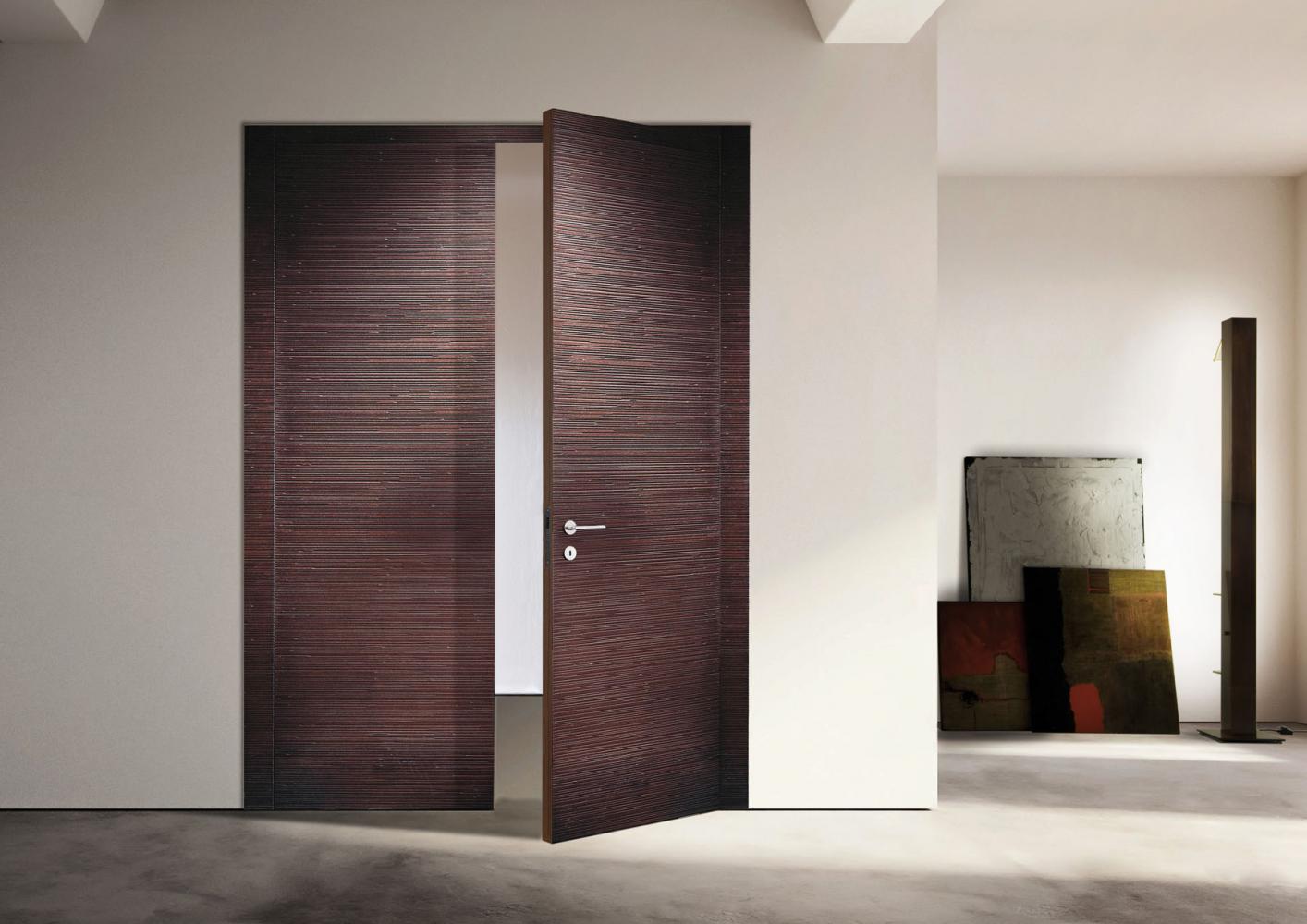
Flush and flat panel doors are among the most recognizable expressions of luxury modern interior design. Their appeal lies in their restraint. Instead of relying on ornamental detail, they focus on clean planes, proportion, finish quality, and subtle precision.
These doors are especially popular because they offer:
- a minimalist look
- clean lines
- easy integration into modern and transitional interiors
Their simplicity makes them extremely versatile. In matte white, light grey, or soft oak tones, they can almost disappear into a contemporary interior while still contributing to its refinement. In darker finishes such as walnut or wenge, they can create stronger contrast and visual depth.
Because the design is so clean, the quality of execution becomes especially important. Flush and flat panel doors look luxurious only when the reveals are controlled, the finish is consistent, and the hardware is chosen carefully.
Framed and frameless doors
Framed and frameless doors create different visual effects, and each can feel luxurious when used appropriately. Framed doors usually offer a more defined architectural boundary. They can bring a sense of structure, rhythm, and finished detail, especially in interiors where trim and transition lines are part of the design story.
Frameless doors, by contrast, are often chosen for a more minimalist and integrated appearance. They reduce visual interruption and can make the wall and door relationship feel more seamless. In certain high-end contemporary interiors, frameless systems are especially effective because they support a cleaner, more gallery-like environment.
The choice between the two often depends on:
- the architectural style of the home
- whether the design emphasizes contrast or continuity
- the role of trim and casing in the overall interior
- how minimal or expressive the final result should feel
In either case, the perceived luxury comes from execution. A framed door feels luxurious when detailing is precise and balanced. A frameless door feels luxurious when integration is exact and visually calm.
Glass interior doors
Glass interior doors can add sophistication when used strategically. They are particularly useful in interiors where light flow, visual openness, or a softer boundary between spaces is desired. When carefully specified, glass doors feel architectural rather than purely decorative.
They work especially well in:
- home offices
- transitional spaces
- rooms that benefit from light transfer
In upscale interiors, glass doors are often chosen to maintain a sense of openness without fully sacrificing separation. They can help a workspace feel bright, allow circulation areas to borrow natural light, or create a more elegant connection between adjacent zones.
The luxurious effect depends on proportion, frame design, glass clarity or treatment, and hardware quality. A glass door should feel intentional and refined, never flimsy or purely utilitarian.
Sliding and pocket doors
Sliding and pocket doors are often associated with smart space planning, but in luxury interiors they can also be highly expressive design tools. They allow for flexibility in how rooms open, close, and connect, which makes them especially valuable in homes where layout fluidity matters.
Their value in upscale interiors often includes:
- more efficient use of space
- greater flexibility in room separation
- cleaner circulation patterns
- the ability to create a more custom feel
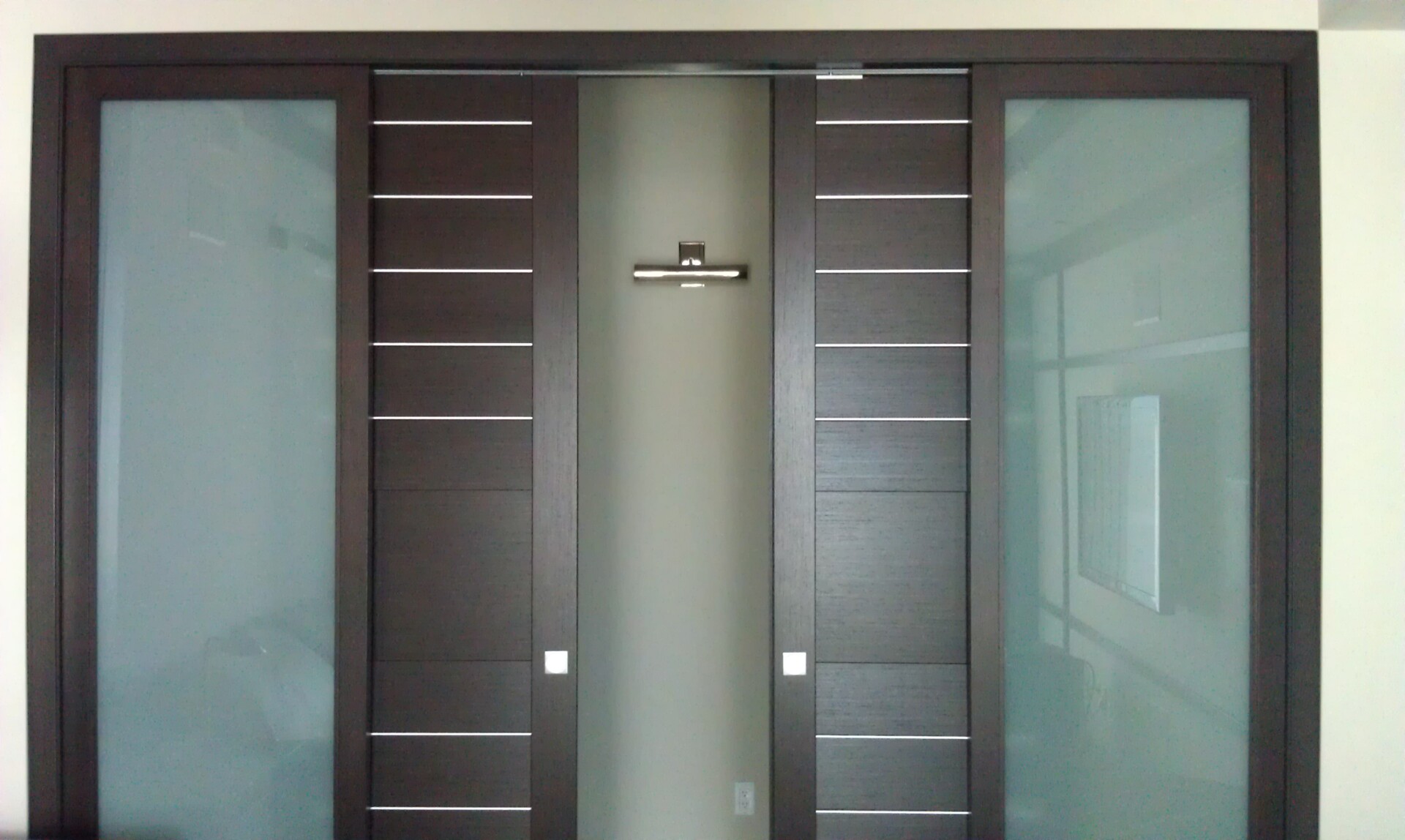
Wall-mount sliding systems can make a strong visual statement, especially when paired with refined modern materials and hardware. Pocket doors, on the other hand, are usually favored when the goal is discretion and spatial efficiency. Both can elevate a project when they are integrated thoughtfully and specified as part of the broader architectural plan.
Specialty statement doors
Some luxury projects call for more than a standard swing or sliding solution. In those cases, specialty doors become an important category because they allow the door itself to act as a defining architectural feature.
Higher-end statement options can include:
- pivot doors
- oversized doors
- integrated wall panel systems
- wallpaper-integrated frameless systems
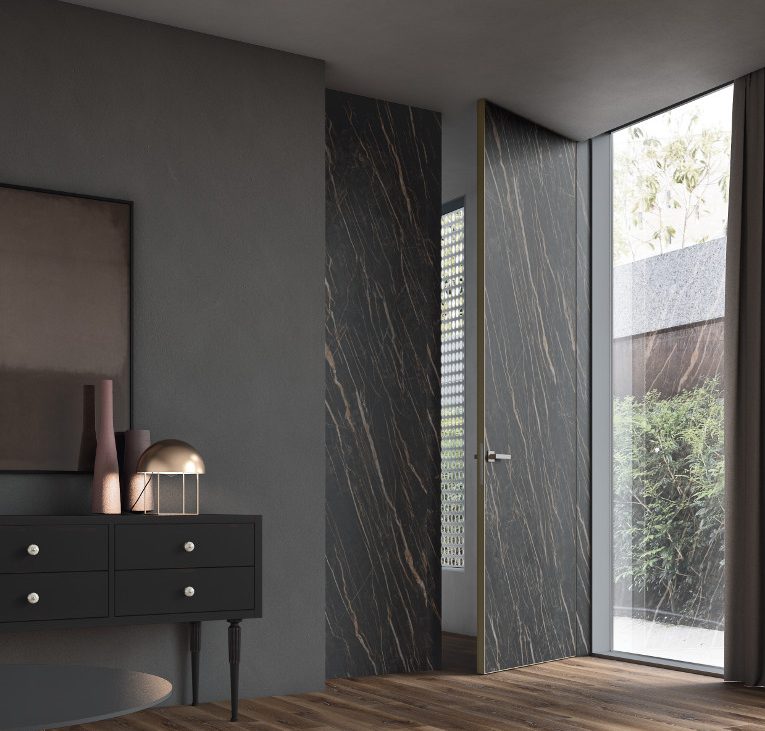
These types of doors are particularly effective in custom homes, design-driven renovations, and commercial environments where scale, continuity, or visual drama play a larger role. A pivot door can create a more sculptural entry into a room. An oversized door can emphasize ceiling height and proportion. Integrated wall panel systems can blur the boundary between door and wall, producing a cleaner and more immersive visual effect.
ITALdoors’ specialty and custom offerings are especially relevant here. The brand highlights options such as pivot doors, sliding doors, frameless doors that can be integrated with wall panels or wallpapers, and oversized or custom-finish doors shipped directly from Italy for special-order projects. These are exactly the kinds of products that help distinguish a truly premium door program from a more conventional one.
What separates a luxury door package from a basic door purchase?
Many buyers think they are comparing similar products when they look at prices, but in reality they are often comparing two very different levels of offering. A basic purchase may include little more than the door itself, while a luxury package is usually a coordinated system designed to look better, function better, and reduce risk throughout the project.
The difference between buying a slab and buying a complete solution
One of the most common mistakes in the door-buying process is comparing a bare slab to a complete premium system as if they were equivalent. At first glance, the slab-only option almost always looks more affordable, but that initial impression can be misleading because it excludes many of the elements that actually determine how the finished door will look, operate, and integrate into the space.
A slab is only one part of the final result. It does not, by itself, determine alignment, hardware compatibility, visual consistency, or installation quality. Once buyers begin adding the frame, casings, hinges, lock components, handle, finish coordination, and labor required to make everything work together, the real cost picture becomes much more complex. In many cases, the cheaper-looking option stops looking so economical once all required parts and coordination are accounted for.
That is why luxury buyers often prefer complete systems. A full package offers more than convenience. It creates a more predictable outcome. Instead of assembling critical components from different suppliers and hoping they work together properly, the buyer is selecting a system designed to perform as a whole.
The difference is especially important in modern interiors, where precision is highly visible. Clean lines, flush profiles, concealed hinges, and controlled reveals leave less room for error. A slab-only purchase places more responsibility on the installer and project team to solve those details independently. A complete solution reduces that burden and usually improves the final result.
What should be included in a true premium package
A true premium package should include the essential architectural and functional components required to create a finished, high-quality installation. Buyers should not assume these items are automatically included, because many door suppliers advertise a product attractively while leaving out important elements that must later be sourced separately.
At a minimum, a luxury interior door package should clearly define whether it includes:
- door panel
- frame
- casings
- concealed hinges
- passage lock or magnetic lock
- Italian handle
These components matter because they shape not only the visual outcome, but also the tactile experience and long-term performance of the door. If one of them is missing or downgraded, the entire system can feel less refined. For example, an elegant door panel paired with basic visible hinges or low-quality handle hardware will not produce a truly luxury result.
This is one of the practical strengths of ITALdoors. The company offers a totally inclusive package that typically includes the door panel, door frame, casings, concealed hinges, passage lock, and Italian handle. That simplifies planning significantly because it reduces procurement friction, minimizes compatibility concerns, and gives buyers a clearer understanding of what they are actually receiving.
For homeowners, that means fewer moving parts to manage. For designers and contractors, it means easier specification and a more dependable path from selection to installation. In both cases, the value lies not only in the product itself, but in the clarity of the package.
Why all-in-one packages save time, money, and coordination stress
An all-in-one package is not simply a matter of convenience. It is a practical way to reduce the hidden inefficiencies that often undermine door projects. When the panel, hardware, frame, and finishing components are sourced separately, the project becomes more vulnerable to mismatch, delay, pricing creep, and installation complications.
That fragmentation can create avoidable stress at several stages. The design team may spend extra time confirming compatibility. The contractor may need to adjust installation methods on site. The client may face added costs because components do not align as expected. Even small inconsistencies can become expensive when repeated across multiple openings.
A coordinated luxury package helps prevent these issues because it offers:
- reduced specification errors
- better compatibility between parts
- fewer installation surprises
- clearer budgeting
- smoother project planning
- more consistent finished appearance
This matters even more in larger residential, multifamily, and hospitality settings where consistency across many doors is essential. A complete package supports better standardization without making the project feel generic. It also shortens decision-making because fewer elements need to be individually sourced and reviewed.
In practical terms, a buyer who chooses an integrated premium package is often paying not only for better materials and design, but also for greater predictability. That predictability has real value. It saves time, reduces uncertainty, and helps ensure the final installed product reflects the quality level that was originally intended.
Why homeowners, designers, and builders choose ITALdoors
ITALdoors appeals to a wide range of buyers because it addresses both the design and practical realities of a premium door purchase. The company is not simply selling a European aesthetic. It is offering a more workable path to authentic Italian craftsmanship, modern detailing, and a complete system that fits real project timelines.
That combination matters because luxury buyers do not only want a beautiful product. They also want clarity, support, and confidence that the order process will not become unnecessarily complicated.
Affordable luxury without the usual import headaches
One of the strongest parts of the ITALdoors proposition is that it addresses the frustrations that often discourage buyers from choosing imported premium doors. Many customers worry that authentic Italian products will involve excessive delays, unclear pricing, or unexpected additional costs.
ITALdoors responds to those concerns through a value proposition built around:
- authentic Italian craftsmanship
- premium in-stock Italian doors
- fast installation in as little as 2 to 4 weeks
- no hidden fees or tariff surprises
That positioning is important because it makes the luxury category feel more practical and accessible. Buyers can pursue a more elevated design direction without automatically assuming that the process will be slow or unpredictable.
A current collection with broad design flexibility
Luxury buyers want choice, but they also want that choice to feel curated and relevant. ITALdoors supports this by offering a range of collections that reflect different design needs while still maintaining a modern, architectural identity.
The brand’s collections include:
- Modern
- Transitional
- Eco
- Flat Panel
In addition, ITALdoors offers more than 100 door design options and gives buyers the ability to install models across multiple door types. This is a meaningful advantage because it allows the design language of the project to remain consistent even when different openings require different solutions.
A model may potentially be adapted for configurations such as:
- single standard swing
- double swing
- double bypass sliding
- double magnet
- pocket door
- wall-mount sliding applications
This kind of design flexibility is especially useful for larger homes, multifamily developments, and professionally designed interiors where continuity matters.
One-stop support from product selection to installation
A premium door purchase often involves more stakeholders than buyers first expect. Homeowners may need help understanding design and function. Architects and designers may need specification clarity. Contractors need products that can be installed efficiently and correctly. Industry professionals need dependable coordination.
ITALdoors positions itself as a one-stop resource for:
- homeowners
- architects
- designers
- contractors
- industry professionals
That support has practical value because it reduces friction during the project. Instead of leaving each party to solve different parts of the process independently, the company offers guidance from selection through installation. That is particularly important when dealing with specialty doors, custom finishes, and projects where multiple openings must be coordinated at once.
A luxury product with practical service behind it
Many premium brands focus heavily on the product image but offer limited reassurance about the service experience. ITALdoors strengthens trust by grounding its offer in a story that combines design ambition with real construction understanding.
The brand’s positioning is reinforced by:
- family-owned background
- construction roots
- local market understanding
- dependable service
- personalized attention
- support through specification and installation
This matters because buyers often need more than a catalog. They need responsive communication, practical guidance, and a partner who understands both the design goal and the realities of getting the door installed correctly. A luxury product becomes much more compelling when it is backed by service that feels informed and reliable.
Frequently asked questions about luxury interior doors
What makes interior doors luxurious?
Luxury interior doors stand out through better materials, engineered construction, refined craftsmanship, higher-end hardware, superior finish quality, customization options, and stronger everyday performance.
Are luxury interior doors worth it?
They are often worth it in long-term homes, design-focused renovations, and premium projects where durability, daily comfort, visual consistency, and overall quality matter.
What is the difference between standard and luxury modern interior doors?
Luxury modern interior doors usually offer better construction, cleaner detailing, superior hardware, more consistent finishes, and a more complete system rather than just a basic slab.
Why are luxury Italian doors so popular?
They are popular because buyers associate them with refined design, strong craftsmanship, thoughtful engineering, and premium finishes that feel both elegant and practical.
Do luxury interior doors come with hardware and frame?
Some do and some do not, which is why buyers should always compare complete packages rather than slab-only pricing; ITALdoors offers an inclusive package that simplifies this process.