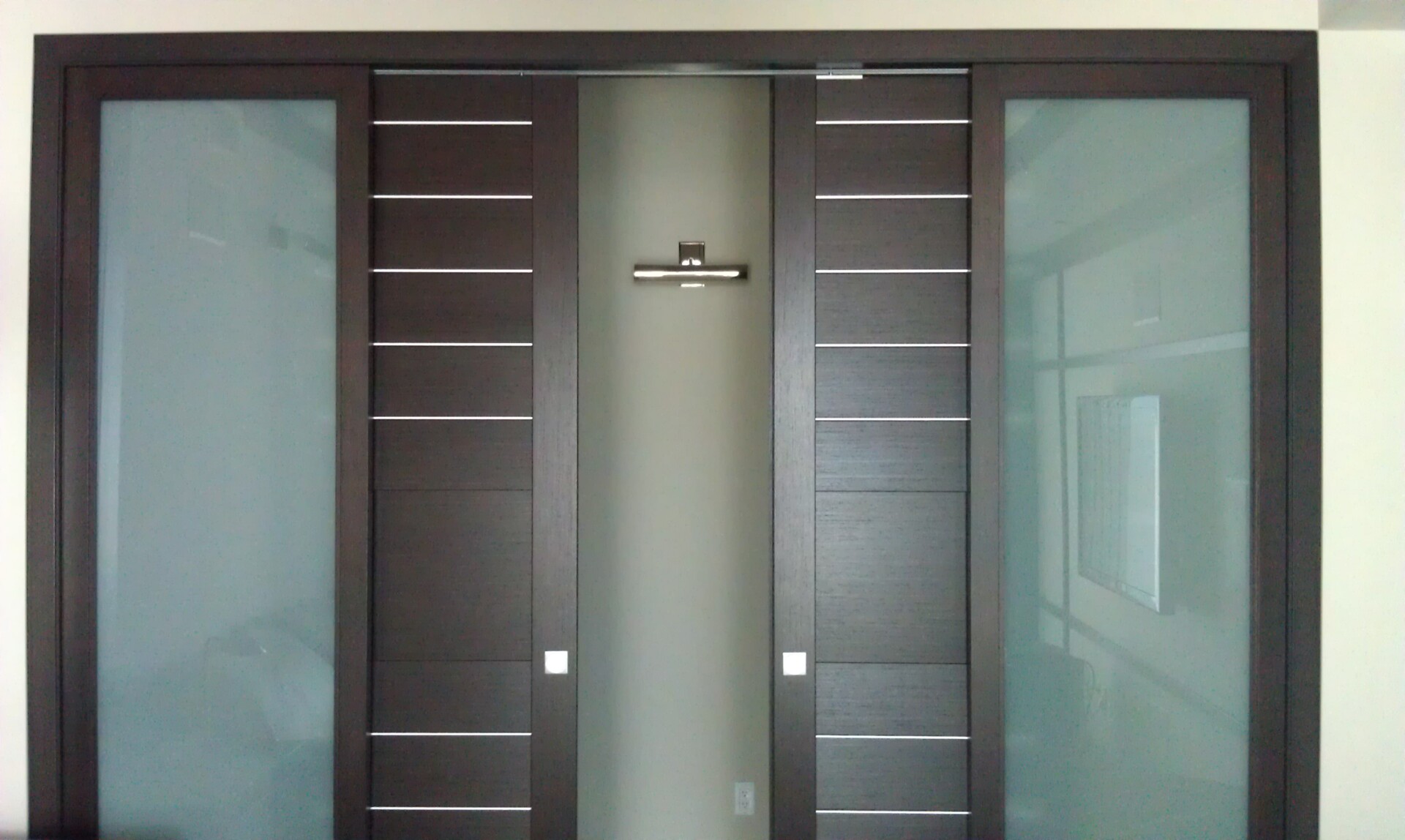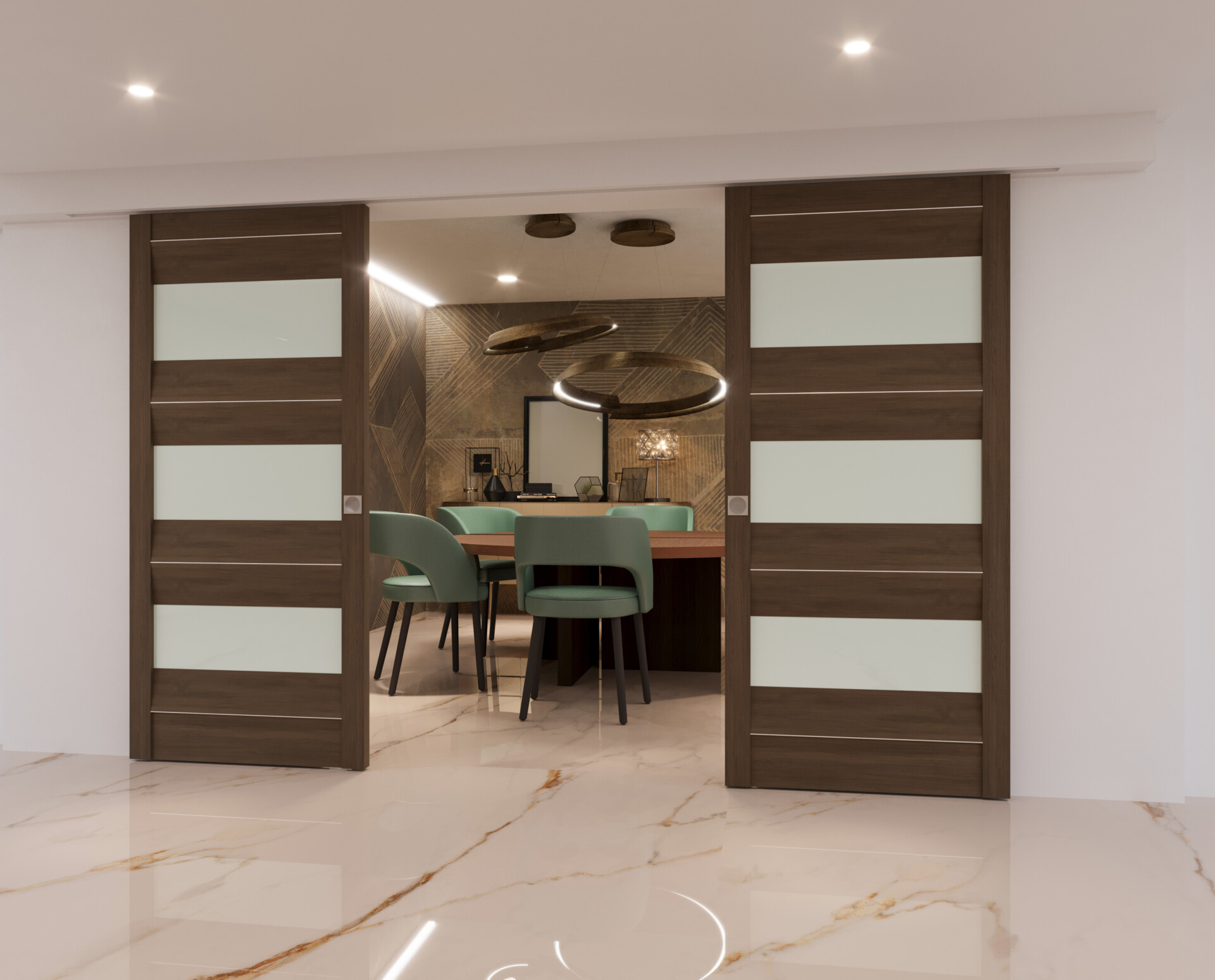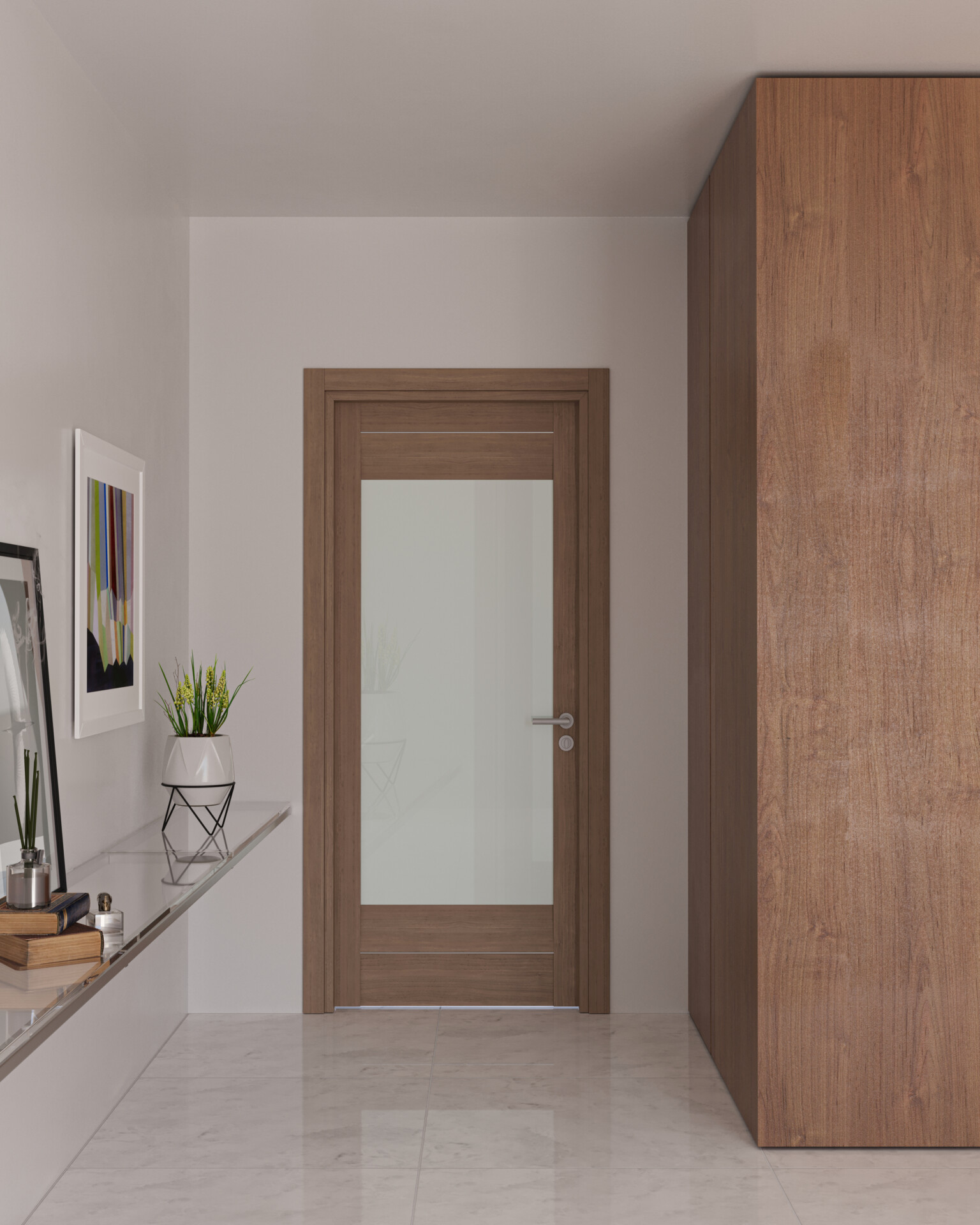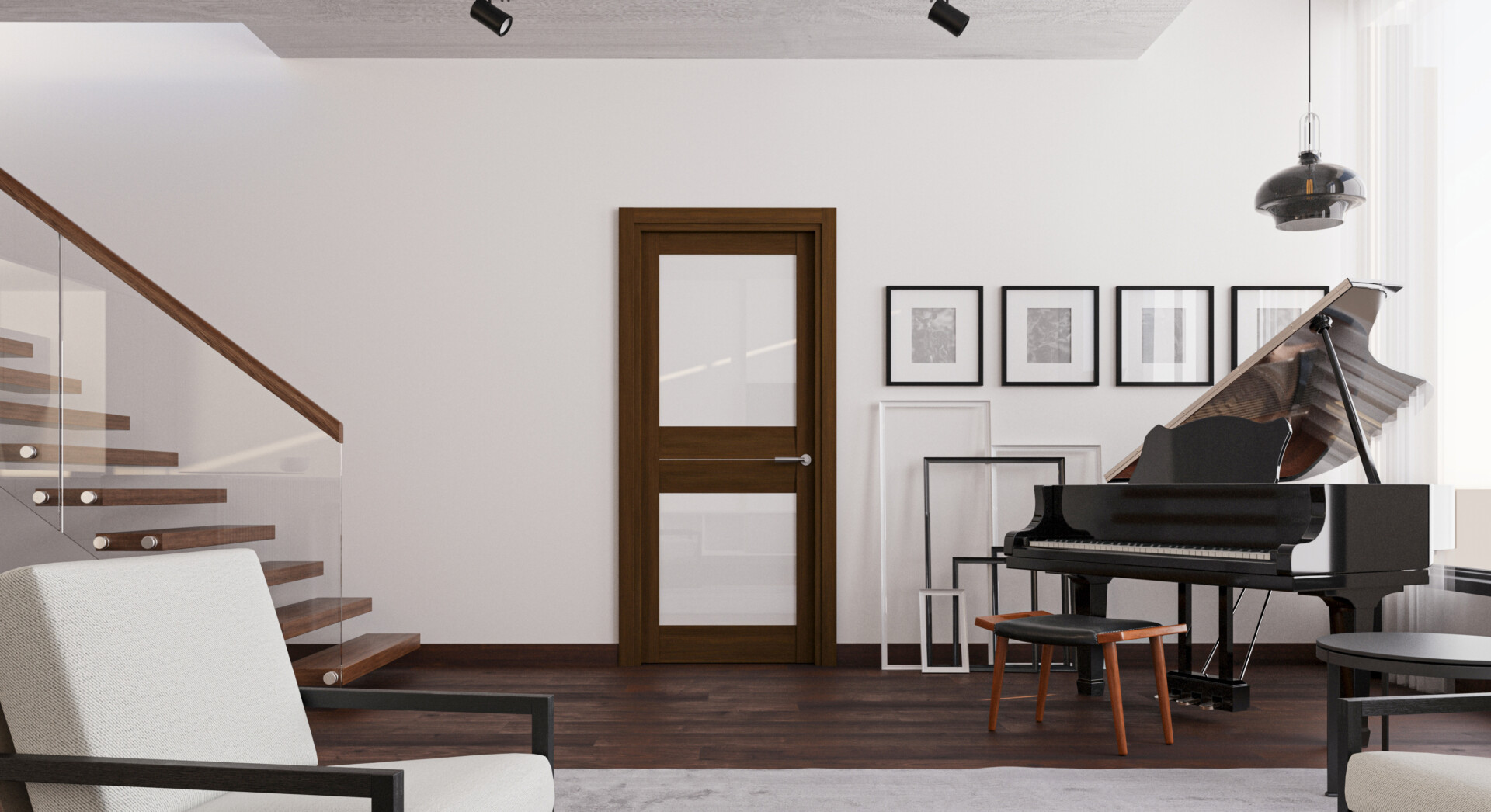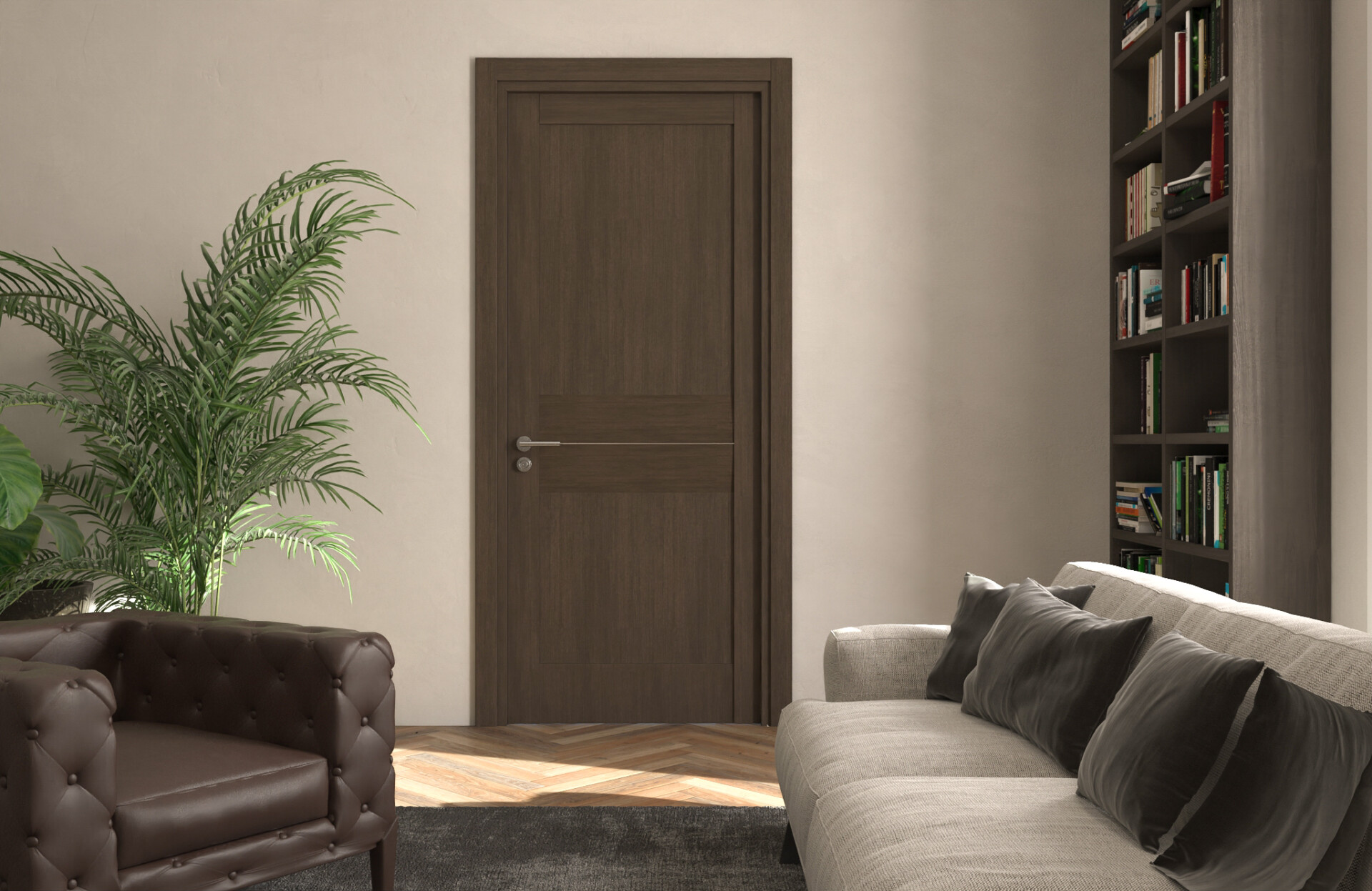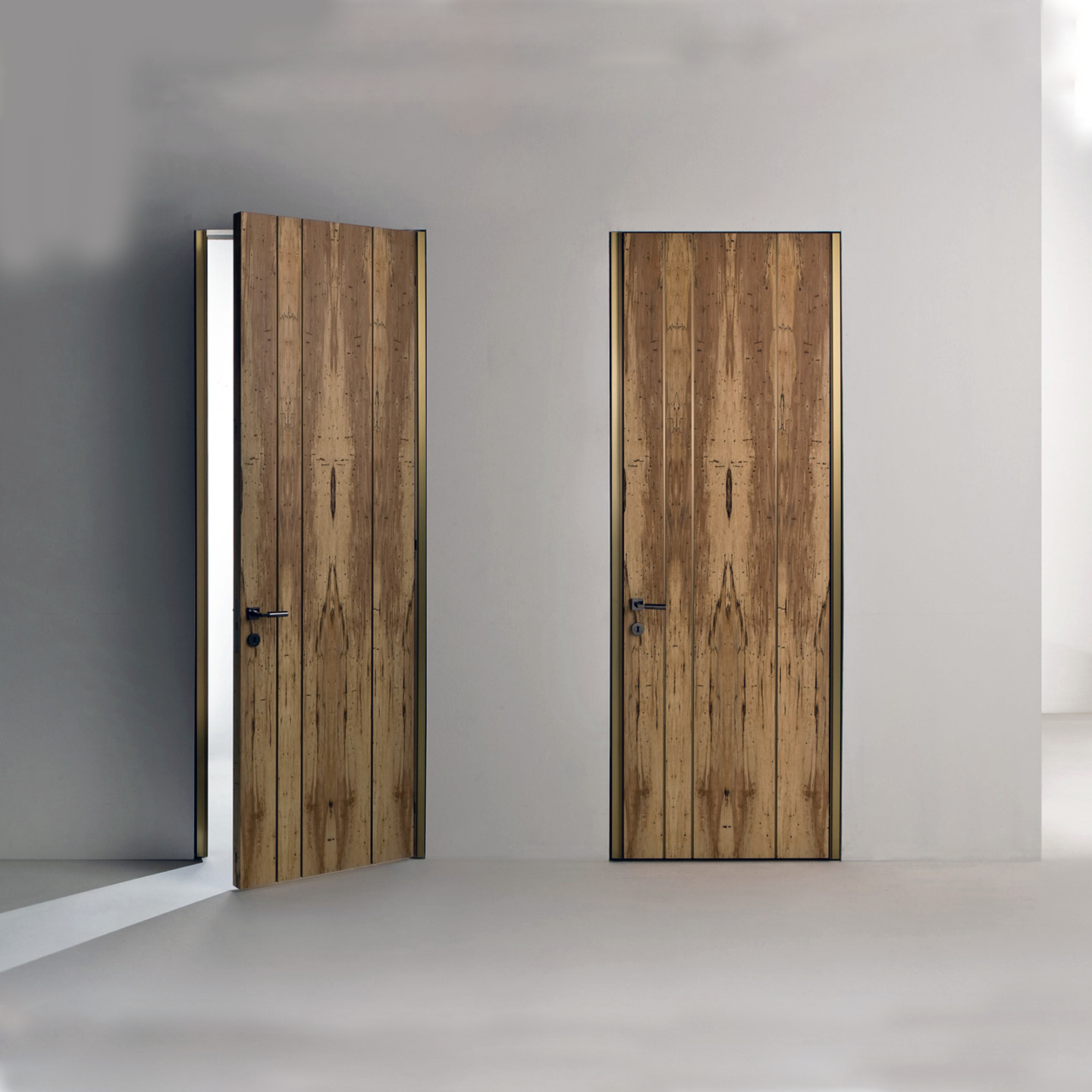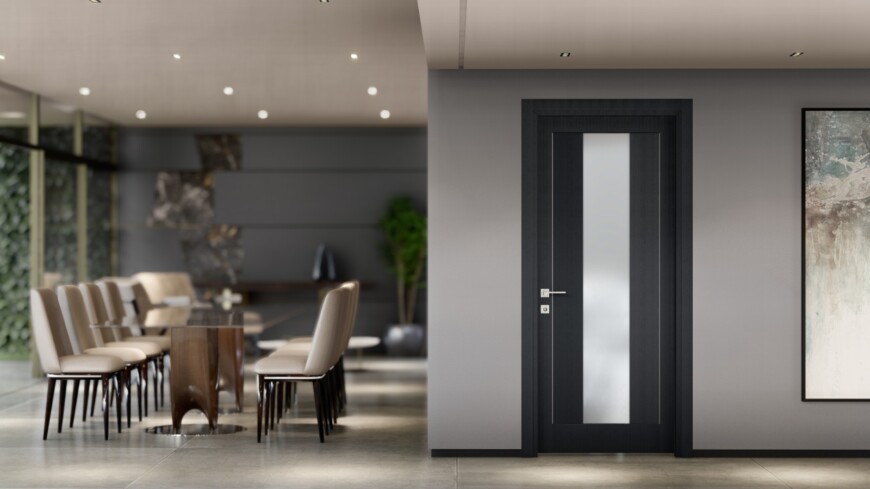
Finding the right mid-century modern interior doors in 2026 is no longer just about locating something flat and wood-toned, but about choosing doors that capture the style’s clean architectural character while still delivering reliable performance, refined hardware, reasonable lead times, and installation-ready convenience.
This guide explains what mid-century modern interior doors really look like, which materials and door types make the most sense today, where to buy them, what kind of quality and pricing to expect, and why ITALdoors stands out for buyers who want authentic design without the usual delays and uncertainty.
What makes an interior door look mid-century modern?
Mid-century modern interior doors are often misunderstood because many people reduce the style to a simple idea: a plain slab in a wood finish. In reality, the look is much more precise than that. A true mid-century modern door is not defined by ornament, carved profiles, or excessive detail, but by proportion, restraint, material honesty, and a sense of visual balance. It should feel intentional, architectural, and calm.
This style remains so desirable because it solves two goals at once. On one hand, it introduces warmth through wood tones, subtle grain, and natural texture. On the other, it preserves clarity through flat planes, clean edges, and minimal interruptions. That combination makes the door feel less like a decorative accessory and more like part of the architecture itself.
The defining visual traits of mid-century modern interior doors
The first and most important trait is clean linework. Mid-century modern interiors rely on order, proportion, and simplicity, and doors play a major role in maintaining that rhythm. Instead of heavy moldings or elaborate panel arrangements, these doors tend to feature smooth surfaces, well-defined edges, and a controlled visual presence.
A well-designed mid-century modern interior door usually includes several core characteristics:
- flat or nearly flat surfaces
- little to no ornamentation
- visible wood character or a finish that evokes natural material warmth
- balanced proportions
- discreet, modern hardware
- detail that feels architectural rather than decorative
Another defining quality is minimal ornamentation. This does not mean the door has to be bland. It means the interest comes from material, scale, grain direction, finish depth, and hardware refinement instead of from decorative profiling. A flush door in walnut, for example, can feel more sophisticated and more faithful to the style than a heavily detailed door with multiple raised panels.
Natural wood character also plays a major role. Mid-century modern design has always maintained a strong relationship with organic materials, especially wood. Oak-inspired looks, walnut tones, and other warm finishes work particularly well because they soften the geometry of the room. The best examples feel rich but not rustic, warm but not busy.
Flush or low-profile surfaces are another essential marker. In a true mid-century-inspired interior, the surface of the door should help create a smooth visual field rather than interrupt the room with unnecessary shadow lines. That is why flush doors remain such a strong fit. They allow the grain, finish, and hardware to speak without competing elements.
It is also important to understand the role of geometric restraint. Mid-century design certainly appreciates geometry, but it does not usually express it through overworked ornament. Instead of deeply carved panels or busy surface patterns, it favors cleaner compositions. If there is geometry, it is more likely to appear in thoughtful panel placement, glass alignment, or the overall relationship between vertical and horizontal lines.
Most importantly, a true mid-century modern door balances warmth and simplicity. Too much minimalism and the door can feel cold, generic, or commercial. Too much texture or decorative styling and it can lose the architectural clarity that makes the style so appealing. The right door sits in the middle: visually calm, materially rich, and proportionally confident.
Why these doors still work so well in 2026 homes
Mid-century modern interior doors continue to perform well in 2026 because they are one of the few design choices that feel both distinctive and flexible. They work beautifully in authentic mid-century homes, of course, but their appeal now reaches far beyond original postwar architecture.
In restored mid-century properties, these doors support the home’s original visual language. They reinforce the open flow, low-profile elegance, and indoor-outdoor sensibility that define the style. A properly selected flush or glazed wood door can strengthen the character of the entire home without looking forced or overly themed.
In newer homes, the same doors help create order and warmth. Contemporary spaces often risk feeling too sharp, too monochromatic, or too anonymous. Mid-century modern interior doors introduce texture and material depth without cluttering the space. Transitional interiors benefit in a similar way because these doors bridge classic warmth and modern simplicity.
Their continued relevance in 2026 also comes from the way people now design interiors. Many homes feature more open-plan layouts, sightlines between rooms, and a stronger emphasis on visual continuity. In that context, doors are no longer isolated background elements. They are seen repeatedly from multiple angles throughout the house. A mid-century-inspired door style works well because it stays refined and consistent without becoming visually exhausting.
| Trend area | What is trending in 2026 | Why it matters in mid-century modern interiors |
|---|---|---|
| Warm wood tones | Light to medium oak-inspired finishes, medium walnut tones, darker wood looks, and matte or low-sheen surfaces are leading the category. | Warm wood tones add natural depth without visual heaviness and reinforce the classic balance between clean geometry and organic material. |
| Flush door profiles | Flush doors continue to dominate because buyers want flat, uninterrupted surfaces that feel architecturally correct and easy to coordinate across multiple rooms. | Flush profiles support clean lines, visual calm, and stronger material expression while avoiding traditional paneling that can weaken the mid-century look. |
| Strategic use of glass | Clear, frosted, fluted, and textured glass are being used more intentionally in offices, studies, dining areas, hallway transitions, and other connected spaces. | Glass helps extend light, soften room transitions, and create openness without making the door feel decorative or disconnected from the architecture. |
| Minimal hardware | Concealed hinges, magnetic latches, slim Italian handles, matte black finishes, brushed metal, and warmer metallic tones are increasingly preferred. | Minimal hardware sharpens the silhouette of the door and preserves its simplicity, while bulky or generic hardware can instantly undermine the design. |
| Flexible door types | Homeowners are choosing from single swing, double doors, pocket doors, bypass sliding doors, and wall-mount sliding doors depending on layout and function. | Flexible configurations allow the same design language to carry through the home while adapting to different rooms, storage needs, and space constraints. |
| Total system thinking | Buyers increasingly want complete door systems with coordinated slab style, finish, frame, hardware, and operating configuration rather than treating the slab as a standalone product. | A more complete system creates a cleaner, more cohesive architectural result and helps the door feel intentional rather than pieced together. |

Best materials for mid century interior doors
Material choice is one of the most important decisions in the buying process because it affects not only the look of the door, but also its durability, stability, maintenance demands, and long-term value. A mid-century modern interior door should never be judged by appearance alone. The material system behind that appearance determines whether the door will still look and function properly years after installation.
Solid wood look vs engineered stability
Many buyers are drawn immediately to the visual warmth of oak and walnut tones, and for good reason. These looks are strongly associated with mid-century modern design and can dramatically improve the richness of the interior. Yet appearance alone is not enough. A good interior door must also perform well over time.
This is where the distinction between a solid wood look and engineered stability becomes important. Buyers often use the phrase “solid wood” to mean premium quality, but the real question is broader: how stable is the door, how well is it constructed, and how likely is it to resist warping, sagging, and alignment problems over time?
In practical terms, buyers are often looking for two things at once:
- the visual warmth and grain depth associated with wood
- construction quality that supports reliable daily function
A high-quality door system is valuable because it reduces many of the issues that frustrate homeowners later, including:
- movement from environmental changes
- sagging over time
- poor closure performance
- edge wear
- mismatched fit between slab and frame
That is why performance matters just as much as appearance. A mid-century modern door that looks correct on day one but quickly loses alignment or visual crispness is not a good investment. Buyers should think in terms of total system quality, not surface appeal alone.
Laminate, veneer, and lacquered finishes explained
The finish of a door has a major effect on how formal, warm, modern, practical, or luxurious it feels. In the mid-century modern category, laminate, veneer, and lacquered finishes can all work, but they serve different priorities.
Laminate finishes are often chosen for durability, consistency, and ease of maintenance. A good laminate can provide a clean and stable appearance, especially in busy homes or larger-scale residential projects where practicality matters. The best laminates can offer convincing wood-inspired visuals while also standing up well to regular use.
Veneer finishes are especially attractive when the goal is a richer and more authentic wood character. Veneer can deliver more natural variation and a stronger sense of material depth, which often suits mid-century interiors very well. It tends to be a strong option for homeowners who want the warmth of wood to be more visually expressive.
Lacquered finishes create a different effect. They can work beautifully when the design direction is cleaner, more minimal, or more sharply contemporary. In the right color and sheen level, lacquer can still align with mid-century principles, especially when used in restrained palettes. However, it must be selected carefully. If it is too glossy or too cold, it can push the door away from the natural warmth that gives mid-century interiors their inviting character.
Each finish type offers different strengths:
- laminate for durability, consistency, and easier maintenance
- veneer for deeper wood character and a more natural visual impression
- lacquer for crisp minimalism and a more tailored contemporary effect
The best choice depends on the project priorities, including budget, wear expectations, desired warmth, and overall interior palette. Busy households and multifamily environments may benefit from more durable finish solutions, while design-focused residential projects may prioritize richer visual depth and material expression.
When glass inserts make sense
Glass inserts can be one of the most effective tools in a mid-century modern interior, but only when used thoughtfully. The purpose of glass should be functional as well as aesthetic. It should improve light, openness, or flow, not simply add decoration.
Clear glass is ideal where visual continuity is beneficial and privacy is not a concern. It works especially well in home offices, transitional living areas, and certain dining room applications. Frosted glass is useful when light is still desired but the room needs greater screening. Textured or fluted glass offers an appealing middle ground because it adds privacy while still allowing light to move through the space.
The decision should always consider both openness and privacy. Too much transparency in the wrong room can feel uncomfortable. Too much opacity can make the layout feel heavier than necessary.
Glass inserts often make the most sense in:
- home offices that benefit from borrowed light
- studies where separation is needed without total enclosure
- dining rooms that should feel defined but not closed off
- hall transitions where darkness is a concern
- select bedroom-adjacent areas where partial privacy is acceptable
The key is integration. The glass should feel like a natural part of the door design, not an afterthought.
What to avoid if you want a true mid-century result
A successful mid-century modern door depends as much on what you avoid as on what you choose. Several common styles and details can quickly push the interior in the wrong direction.
Over-panelled traditional doors are among the biggest mistakes. They introduce too much historical or decorative language and immediately weaken the mid-century effect. Fake rustic textures are another problem because they shift the look toward farmhouse or lodge-inspired interiors rather than clean modern warmth.
Overly glossy finishes can also be risky, especially when the room relies on natural wood tones and softer modernism. High gloss is not always wrong, but in many cases it feels too sharp or too artificial for the desired mood. Bulky hardware is another frequent issue. Even a good slab can look visually confused when paired with oversized handles, clumsy hinges, or generic trim.
Cheap hollow-feeling slabs with weak detailing are perhaps the most damaging of all because they fail on both aesthetic and functional levels. They may look acceptable in a thumbnail or product listing, but in real interiors they often feel insubstantial and unsatisfying.
To protect the authenticity of the result, avoid:
- heavily traditional panel patterns
- distressed or faux-rustic textures
- finishes with the wrong sheen for the space
- oversized or visually loud hardware
- low-grade slabs that feel thin, weak, or generic
The best styles of mid-century modern interior doors for different rooms
The best mid-century modern door choice often depends on where the door will be used. A style that works beautifully in a hallway may not be the best solution for a bedroom or closet. The goal is not just to repeat the same slab everywhere without thought, but to create a consistent architectural language that still responds to each room’s function.
Living room and hallway doors
In living rooms and hallways, the priority is often visual continuity. These are highly visible parts of the home, so the doors in these areas influence the overall rhythm of the interior more than buyers sometimes expect. A warm finish, a clean profile, and well-resolved hardware help these spaces feel more complete and more intentionally designed.
Glass can be especially useful where natural light is limited. A thoughtfully glazed door may help a hallway feel less enclosed or allow a connected room to contribute light to adjacent areas. At the same time, the door should not dominate the space too aggressively. The best statement doors in these zones are confident but controlled.
The strongest choices often include:
- flush woodgrain slabs
- refined oak or walnut-inspired finishes
- discreet glazed doors where more light is needed
- minimal hardware that supports visual calm
Bedroom doors
Bedroom doors need to balance style with privacy and comfort. In these spaces, the quieter side of mid-century modern design becomes especially important. Flush woodgrain models tend to work very well because they feel warm and settled without becoming too visually busy.
Acoustic value matters more here than in some other rooms, so buyers should think beyond appearance and consider the quality of the overall door system. A bedroom door should close well, feel substantial, and contribute to a sense of personal retreat.
Coordinating all bedroom doors is also important. The goal is to create consistency across the home without making each room feel mechanically identical. This can be achieved by keeping the slab family and hardware language consistent while allowing subtle variation through placement, orientation, or adjacent trim conditions.
Good bedroom choices usually prioritize:
- privacy
- solid and reliable closure
- calm wood finishes
- flush surfaces
- understated, cohesive hardware
Home office and study doors
Home offices and studies often benefit most from glazed solutions. These rooms frequently need a balance between separation and openness. Too solid a door can make the area feel boxed in, while too transparent a door can reduce the sense of focus and privacy.
That is why frosted or reeded glass is often particularly effective in these spaces. It allows light to pass through while softening views and preserving a sense of enclosure. Sliding or pocket doors are also useful where square footage is limited and swing clearance becomes impractical.
For office and study applications, the most effective options often include:
- glazed flush doors
- frosted glass for privacy
- textured or fluted glass for softer visibility
- pocket doors in compact layouts
- sliding options where flexibility matters
Closet and wardrobe doors
Closet and wardrobe doors should feel integrated into the architecture, not like separate utility elements that interrupt the room. That is why flush closet doors work especially well in mid-century-inspired interiors. They preserve cleaner wall lines and help storage recede visually.
Double bypass sliding doors are practical for wider wardrobe openings where space in front of the closet is limited. Double magnet closet doors can also offer a neat and functional solution depending on the layout. The important point is that the closet treatment should match the rest of the home in finish and simplicity.
The best closet solutions usually focus on:
- minimal visual interruption
- slab consistency with nearby room doors
- practical operation for the available space
- a finish that helps storage blend into the architecture
Open-concept homes and transitional spaces
In open-concept homes, every visible element matters more because there are fewer visual breaks. This is one reason mid-century modern interior doors work so well in these settings. When fewer visible door details are used, the architecture reads more clearly and the eye moves more smoothly through the home.
In these layouts, doors should reduce clutter rather than add to it. Flush surfaces, consistent finishes, and limited hardware projection all help maintain a more composed interior. Transitional spaces such as hall links, study entries, and semi-separated living zones benefit especially from doors that feel integrated rather than ornamental.
These spaces reward design discipline. The less the door calls unnecessary attention to itself, the stronger the architecture tends to feel.
Where to find mid-century modern interior doors in 2026
Finding the right source is often just as important as finding the right style. Many buyers already know roughly what they want visually, but run into problems when they start comparing actual suppliers. Some sources offer convenience but not enough design precision. Others offer customization but require long waits or unpredictable coordination. In 2026, buyers are increasingly looking for a balance of style, quality, support, and realistic lead times.
Big box stores
Big box retailers can be convenient because they are easy to access and often provide a familiar buying process. For some entry-level projects, they may offer a quick starting point. However, when the goal is a true mid-century modern interior door with strong finish quality and refined hardware, they often fall short.
The most common limitations include:
- lower design precision
- more generic slab proportions
- limited finish sophistication
- fewer premium hardware options
- standard sizing that may not suit the project properly
They also frequently miss the deeper character of the mid-century aesthetic. A door may appear simple on the surface, but still lack the warmth, material credibility, or architectural refinement that the style requires. For buyers who care about the final look in a meaningful way, these limitations can become obvious very quickly.
Custom millwork shops and local door fabricators
Custom millwork shops and local fabricators can offer strong customization potential, which makes them appealing for buyers with unusual dimensions, very specific design preferences, or one-of-a-kind architectural situations. In the right hands, this route can produce an excellent result.
However, it also comes with trade-offs. Cost is often higher. Lead times can be much longer. Quality can vary significantly depending on the experience, systems, and design sensitivity of the shop. Some fabricators are excellent at traditional work but less convincing in modern detailing. Others may deliver the desired look visually but struggle with finish consistency or installation precision.
This route is usually best for buyers who:
- need extensive customization
- are prepared for a longer timeline
- understand the importance of vetting the fabricator carefully
- are comfortable managing a more involved specification process
Specialty modern door companies
For buyers who care about both design and performance, specialty modern door companies are often the strongest option. These suppliers are more likely to understand the visual language of mid-century and modern interiors, and they usually offer a more coherent product ecosystem.
Compared with more generic sources, they often provide:
- broader finish options
- better hardware packages
- slab and frame systems designed to work together
- more consistent modern detailing
- more professional guidance through selection and installation
This matters because a door project is rarely just about the slab. It is about how the slab, frame, casings, hinges, latch, handle, finish, and installation all come together. Specialty companies are better positioned to manage that full picture, which reduces friction and improves the final outcome.
Why Italian interior doors work especially well for mid-century modern design
Italian interior doors work especially well for mid-century modern interiors because both traditions value restraint, proportion, and material expression. The connection is not accidental. Italian design has long emphasized the idea that useful objects should also be visually disciplined, technically resolved, and integrated into the architecture around them. That is exactly what good mid-century interior doors are expected to do.
The connection between Italian design and mid-century principles
There is a natural relationship between Italian design thinking and mid-century modern principles. Both tend to reject unnecessary ornament and instead focus on how line, scale, material, and detail come together to create a coherent whole.
Simplicity is one shared principle. In both traditions, simplicity is not emptiness. It is control. It means that every visible detail serves a purpose and contributes to the final composition.
Proportion is equally important. A door should not just have the right finish. It should feel visually balanced within the opening and in relation to nearby walls, trim, and furnishings. This concern with proportion is central to both Italian design and mid-century modern interiors.
Material quality matters because simple forms leave very little to hide behind. When the design is reduced, the quality of the surface, the precision of the edges, and the credibility of the finish all become more visible. Refined detailing and architectural coherence complete the picture. The best doors feel like they belong to the space rather than being added to it as an afterthought.
How ITALdoors combines style and practicality
ITALdoors combines style and practicality by pairing a refined Italian design sensibility with a buying process that is more realistic for actual homeowners, designers, and builders. Many buyers pursuing mid-century modern doors are not simply looking for beauty. They want a product that can be specified confidently, delivered in a reasonable time frame, and installed without unnecessary chaos.
The company’s in-stock collections help address this directly. Buyers can access premium interior door options without automatically entering a long custom timeline. At the same time, custom fit options remain available for projects that require more flexibility in finish or specification.
Premium materials, strong hardware integration, and thoughtful package structure all support the visual goals of the project, while practical considerations such as fast turnaround and transparent pricing help support the construction process. ITALdoors also emphasizes energy-saving qualities and a family-owned service model, which adds another layer of trust and responsiveness for buyers who want more than a transactional purchase.
Expert guidance is another important advantage. Selection through installation is where many projects either succeed or become unnecessarily difficult. Having support through that full path makes the process more manageable and helps protect the final result.
Collections and options that fit the look
One reason ITALdoors works well for this category is the breadth of styles and applications available within a coherent modern design language. Buyers are not limited to one narrow interpretation of mid-century modern. Instead, they can choose from collections and door types that support different versions of the look while still maintaining architectural consistency.
The most relevant categories for mid-century-inspired projects include:
- modern collections for clean-lined, design-forward interiors
- transitional options for homes blending warmth and simplicity
- flat panel doors for the most classic mid-century effect
- specialty doors for highly customized needs
- sliding doors for closets and flexible partitions
- framed doors where structure needs more definition
- frameless doors for cleaner, more integrated wall effects
- glass doors for light flow and visual openness
This range allows buyers to stay consistent in style while adapting to different room functions and opening conditions.

Frequently asked questions about mid century modern interior doors
What are mid-century modern interior doors?
Mid-century modern interior doors are doors designed around clean lines, minimal ornamentation, warm material character, and simple architectural forms. They are typically more restrained than traditional panel doors and often feature flush surfaces, refined hardware, and natural-looking finishes.
What is the best wood finish for mid-century interior doors?
There is no single best finish for every home, but oak-inspired and walnut-toned finishes are among the strongest options. The right choice depends on the surrounding flooring, trim, cabinetry, and how light or dark you want the interior to feel.
Are flush doors good for mid-century modern homes?
Yes. Flush doors are one of the best matches for mid-century modern interiors because they support clean lines, visual calm, and material-focused design. They are often the safest and most versatile choice in this category.
Can glass interior doors still feel mid-century modern?
Yes, when they are proportioned and integrated properly. Glass can enhance light flow and openness while still fitting the style, especially in offices, studies, dining transitions, and other connected spaces.
How much do mid-century modern interior doors cost in 2026?
Costs vary depending on construction quality, finish type, glass, hardware, configuration, and whether the door is stock or custom. Entry-level slabs are available, but better-spec complete systems offer a stronger balance of design quality, performance, and value.