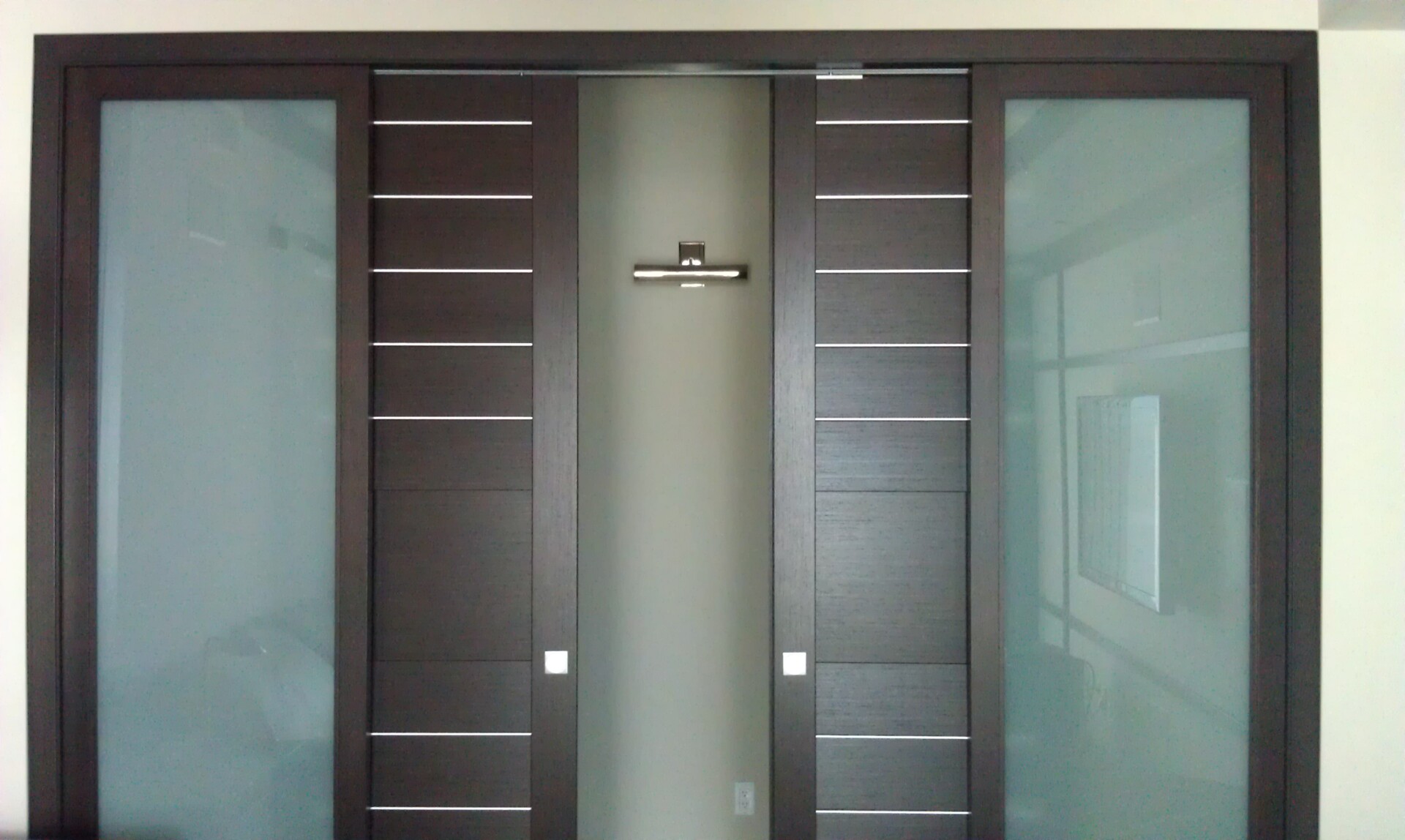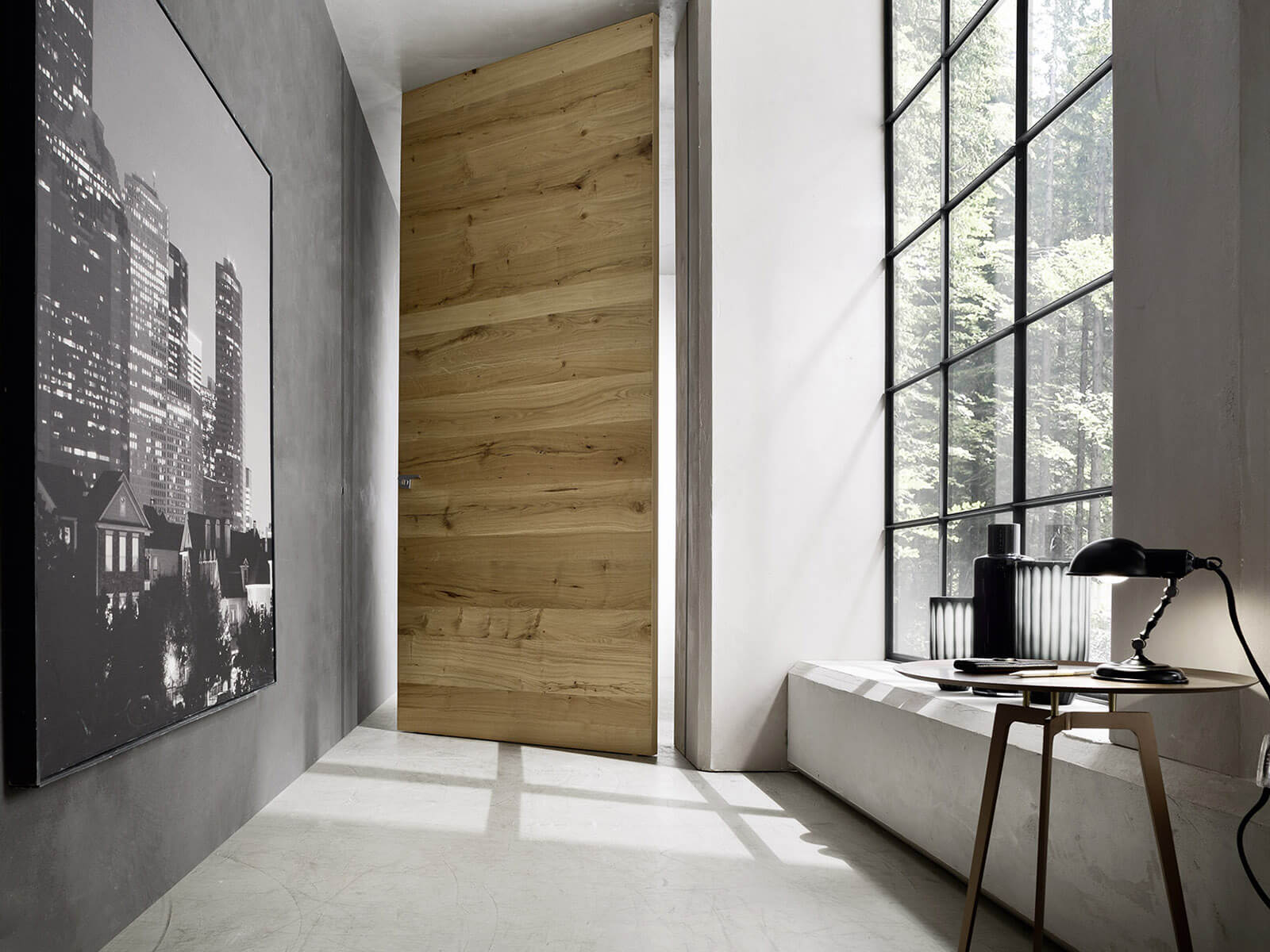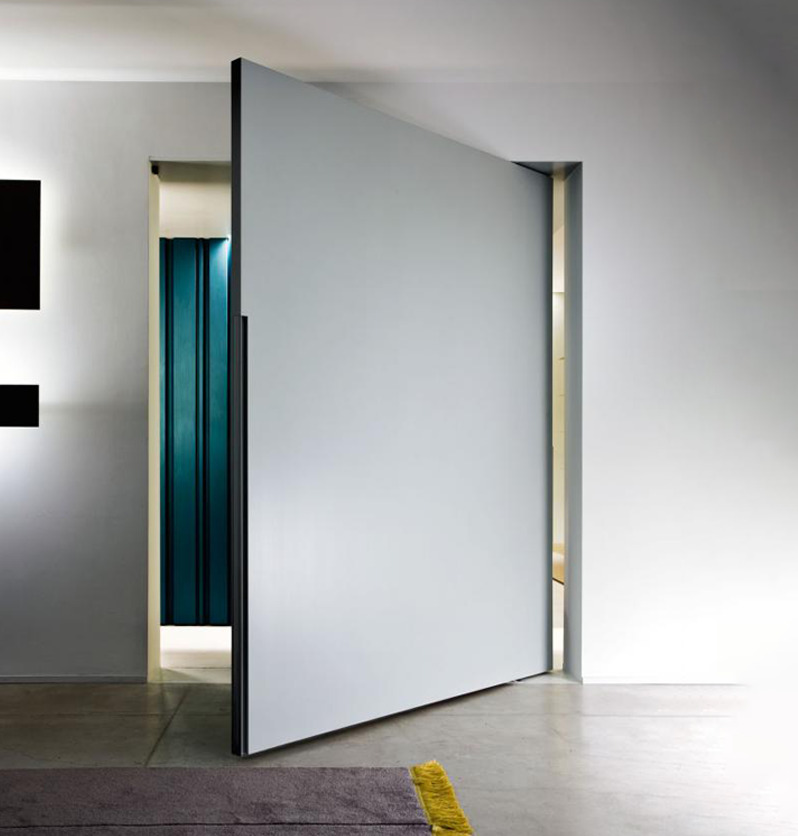
A pivot door is one of the most visually powerful architectural choices you can make because it combines dramatic scale, clean geometry, and a premium modern feel in a way a standard hinged door rarely can. In this guide, we will walk through exactly what buyers want to know before choosing one, from sizing and materials to cost, installation, and how ITALdoors helps bring custom Italian pivot door projects to life with expert guidance and transparent pricing.
Standard and custom pivot door sizes
Sizing is one of the most important topics in any pivot door project because it is directly tied to design impact, structural performance, user comfort, and total cost. Many buyers start searching for a pivot door because they want a larger and more dramatic opening than a typical hinged system can provide, but the right size is not just about choosing something big. It is about choosing proportions that make sense for the architecture, the material, the hardware, and the way the space will actually be used.
Are there standard pivot door sizes?
Some pivot doors are available in standard or near-standard formats, but many are specified as custom because the whole appeal of a pivot door often lies in its ability to solve unique design situations. Unlike basic interior swing doors, pivot doors are frequently selected for openings where proportion matters more than convention.
That is why many pivot door projects move quickly into custom territory. Even when the width or height starts near a familiar range, the final specification may still need to account for:
- wall thickness
- structural support
- floor condition
- ceiling condition
- hardware type
- interior or exterior exposure
- finish requirements
- visual proportion relative to the facade or room
In many cases, a standard swing door would technically fit the opening, but it would not deliver the desired visual balance. This is one of the main reasons a custom pivot door becomes attractive. It is not simply about filling an opening. It is about creating the right scale and architectural presence.
Typical pivot door width and height ranges
Pivot doors can be made in a wide range of dimensions, but their feasibility depends on more than just the slab size. Material composition, core stability, hardware quality, and site conditions all matter.
In practical design terms, pivot doors often fall into several broad categories.
Typical single pivot doors
These are used when the goal is to achieve a more refined modern look without pushing fully into oversized territory. They often suit homes or interior spaces where the proportions are elegant but controlled.
This category works well for:
- premium residential entries
- interior feature doors
- contemporary office doors
- transitional spaces that need a subtle statement
Wider statement doors
A wider pivot door creates a stronger sense of arrival and a more architectural opening. This is where the system begins to show one of its biggest strengths, which is handling a slab that feels more substantial than a conventional door.
These widths are often chosen for:
- modern front entries
- open-plan luxury interiors
- oversized room transitions
- design-forward commercial spaces
Tall contemporary doors
Height has enormous influence on how a door is perceived. Even more than width, it can make the opening feel elegant, dramatic, and custom. Tall pivot doors often pair naturally with modern architecture because they reinforce vertical lines and create a more expansive feeling.
They are especially effective in:
- homes with high ceilings
- entryways with large facades
- interior spaces where scale is part of the design story
- projects with flush or minimalist wall treatments
Oversized applications
This is where pivot doors often become the preferred system. Oversized slabs require thoughtful engineering, and not every project should automatically go as large as possible. But when done well, an oversized pivot door creates a result that is difficult to match with a standard hinged alternative.
The key point is that viable dimensions depend on the complete system, including:
- door construction
- panel weight
- pivot hardware capacity
- wall and floor conditions
- weather exposure for exterior use
- installation precision
A door that looks impressive on paper may not be the right choice if the material, support structure, or usage pattern is not compatible with that scale.
Maximum dimensions for glass pivot doors
Glass pivot doors require especially careful dimensioning because transparency creates visual lightness, but the system still needs real structural and movement control. According to the provided Vitrum Bilico and Box Door information, certain glass pivot door systems are designed for a maximum width of up to 39 1/2 inches and a maximum height of up to 106 inches.
These specifications are important because they give a realistic sense of what a refined glass pivot system can achieve while preserving reliable performance. In the provided material, the pivot and bidirectional glass door concepts are associated with:
- width up to 39 1/2 inches
- height up to 106 inches
- bidirectional opening
- pull and push functionality
- installation depending on system type and substrate
- compatibility with plasterboard or brick wall applications in certain cases
This kind of dimensioning is ideal for interior glass divisions where the goal is to create elegance and fluid movement rather than massive exterior scale. It supports a highly contemporary style while maintaining controlled operation.
What makes a custom pivot door different
A custom pivot door differs from a standard door not just because of its size, but because the entire door is specified around the project rather than forced into a generic format. That affects how the opening looks, how the door performs, and how well it integrates with the surrounding architecture.
A custom pivot door can be tailored through:
- exact width and height
- panel thickness and composition
- wood, glass, or mixed material selection
- finish choice
- hardware specification
- handle style
- smart entry integration
- coordination with wall paneling or surrounding finishes
This level of customization matters because pivot doors are usually highly visible. Small mismatches in proportion, finish, or detailing become much more noticeable when the door is intended to act as a feature.
Custom solutions are especially valuable for:
- oversized openings
- luxury front entries
- unusual architectural proportions
- highly coordinated interiors
- statement doors paired with wall panel systems
- projects with strong design identity
ITALdoors is especially relevant here because the brand’s positioning centers on premium Italian doors, specialty and custom solutions, flexible finish options, and guidance from selection through installation. For a custom pivot door project, those factors matter because the buyer is rarely choosing a slab alone. They are choosing a complete solution.
How to choose the right size for your opening
Choosing the right pivot door size requires more than measuring the opening and selecting the biggest panel that will fit. The right size is the size that works visually, structurally, and functionally.
Opening width and height
The rough dimensions of the opening are the starting point, but they are only the beginning. Final sizing must consider hardware, clearances, frame conditions, and any necessary adjustments for finish levels.
Ceiling height
A pivot door should feel proportional to the vertical scale of the room or facade. In a tall entryway, a shorter door may feel visually disconnected. In a more modest space, an excessively tall slab may feel heavy or out of balance.
Visual proportion
A good pivot door feels intentional. It should be proportioned in a way that supports the architecture rather than overwhelming it. Width, height, handle placement, side panel relationships, and adjacent wall treatments all influence this.
Clearance and swing path
Because pivot doors move differently than standard hinged doors, circulation space matters. The swing path must be evaluated in relation to:
- furniture
- walls
- cabinetry
- traffic flow
- exterior approach zones
- nearby glazing or fixed elements
Door weight
Weight affects hardware selection, installation method, and long-term performance. A larger door can be visually appealing, but it also increases technical demands. This is why material choice and internal construction are just as important as dimensions.
Entry frequency
A front door used multiple times every day may need a different balance of size and movement control than an interior pivot used more occasionally. Daily use patterns should always inform final sizing decisions.
Structural support
The door system has to be supported properly at the top and bottom. Large pivot doors are not simply decorative slabs. They are engineered moving elements that require precise alignment and appropriate structural preparation.
Exterior exposure
If the door is being used as a pivot front door, the surrounding environment matters. Wind, weather exposure, temperature changes, and threshold detailing all affect what size and construction make sense.
| Application | Where it works best | Main advantage |
|---|---|---|
| Pivot front doors | Luxury homes, contemporary residences, custom-built houses, architect-designed entryways, and homes with tall or oversized facade openings | Creates a strong first impression with larger scale, cleaner lines, premium hardware integration, and a more sculptural entry composition |
| Interior pivot doors | Large openings between living and dining areas, hallways and master suites, home offices and common spaces, dressing areas and bedrooms, and private lounges | Adds architectural definition to interior transitions while maintaining a refined, modern, and visually intentional look |
| Glass pivot doors | Home offices, executive offices, modern apartment layouts, meeting rooms, boutique hospitality spaces, and interior zones that need light-sharing separation | Preserves light flow and openness while dividing spaces discreetly through minimalist bidirectional systems |
| Residential use | Private homes where the goal is to create a memorable front entry, match a modern facade, enhance premium interiors, and use larger openings effectively | Delivers design impact and long-term value by turning the door into part of the home’s architectural identity |
| Multifamily use | Upscale common areas, model residences, penthouses, and amenity spaces in premium residential developments | Helps elevate the perceived quality of the development and supports a more design-driven overall presentation |
| Office use | Private offices, conference rooms, executive areas, reception transitions, and flexible workspace divisions | Supports privacy without heaviness, especially in glass pivot systems that preserve visual openness |
| Hospitality and premium retail | Boutique hotels, luxury hospitality interiors, curated retail spaces, and premium customer-facing environments | Strengthens the brand experience by combining refinement, scale, and repeat-use performance |

Pivot door hardware and technical components
The beauty of a pivot door is often what captures attention first, but the hardware and technical components are what determine whether that beauty translates into a smooth, durable, and satisfying long-term experience. In a high-quality pivot door system, the visible panel is only one part of the story; the real performance comes from the precision of the pivot mechanism, the lock and latch configuration, the handle selection, and the way every component is specified to work together.
This is especially important because pivot doors are rarely ordinary doors in ordinary openings. They tend to be larger, heavier, more visible, and more technically demanding than standard hinged doors. That means the supporting hardware cannot be treated as an afterthought. It must be chosen with the same care as the door material and the overall design.
The pivot system itself
At the core of every pivot door is the pivot system that allows the slab to rotate on a vertical axis rather than swing from side-mounted hinges. This is the defining technical element of the entire concept.
Top and bottom pivot points
A pivot door operates through pivot points located at the top and bottom of the door. These points establish the axis around which the panel rotates. Unlike a conventional hinged door, where the slab hangs from hinges mounted along the side jamb, a pivot door is supported and guided by this top-and-bottom system.
This difference changes the mechanics of the entire door. Instead of concentrating all movement and support along the side, the system distributes function through a more engineered rotational setup. That is one of the key reasons pivot doors can support larger, more dramatic slabs when properly specified.
The exact placement of the pivot point also affects how the door behaves visually and functionally. A pivot axis positioned inward from the edge changes:
- how much of the slab projects on either side during opening
- how the door feels in motion
- how much clearance is needed
- how dramatic the final result appears
- how the entry sequence is experienced
Load-bearing function
The load-bearing role of pivot hardware is one of the most important technical distinctions between a pivot door and a traditional swing door. A pivot system is not just there to permit movement. It is there to manage weight.
This matters because many pivot doors are intentionally specified in larger dimensions, with thicker slabs, heavier materials, specialty glass, or high-end exterior construction. The pivot hardware must be able to support that mass consistently and safely.
When the system is designed correctly, the load-bearing function helps provide:
- stable movement
- better control over larger door panels
- reduced strain compared with forcing oversized performance from a conventional hinge setup
- smoother opening and closing
- more confidence in long-term use
In practical terms, the pivot system is what allows a large slab to feel refined rather than awkward. A well-balanced pivot door should not feel like an object that is fighting gravity every time it moves. It should feel controlled, precise, and intentional.
Why hardware quality is critical for performance and feel
Hardware quality has a direct effect on how a pivot door performs and, just as importantly, how it feels to the user. Two doors may look similar in photographs, but the difference in real-world operation can be dramatic.
High-quality pivot hardware improves:
- movement smoothness
- weight handling
- stopping control
- alignment consistency
- long-term durability
- user confidence during operation
Low-quality hardware, by contrast, can undermine even a beautiful door design. It can lead to movement that feels heavy, unstable, noisy, or imprecise. In a product category that is supposed to express refinement and engineering confidence, that is a serious failure.
The feel of the door is part of the luxury experience. Buyers do not only remember what the door looked like. They remember how it opened, how it closed, whether it felt balanced, whether it aligned cleanly, and whether the hardware felt premium. In that sense, the pivot system is not hidden technical infrastructure alone. It is one of the main reasons the finished door feels either ordinary or exceptional.
Concealed hinges, magnetic latches, and smart features
Modern pivot doors are often selected not only for their scale, but also for their clean detailing. This is why supporting hardware elements such as concealed hinges, magnetic latches, and smart entry features matter so much. They reinforce the minimalist look while improving function.
ITALdoors highlights several of these features as part of its broader door offering, including concealed hinges, magnetic latches, and keyless entry options. These are not minor upgrades. They are part of what makes a modern door system feel complete.
Concealed hinges
Although the pivot system itself differs from standard side-mounted hinge configurations, concealed hinge solutions remain highly relevant across modern door systems and are part of the clean visual language associated with high-end contemporary design.
The appeal of concealed hinge hardware is straightforward. It reduces visual clutter and keeps the door looking more architectural. Instead of drawing attention to exposed mechanical parts, it allows the slab, finish, and proportions to remain the focus.
This contributes to:
- a cleaner minimalist appearance
- a more premium modern look
- better alignment with flush walls and contemporary interiors
- more cohesive design language across the project
In upscale interiors especially, visible hardware can sometimes interrupt the intended aesthetic. Concealed systems help preserve visual simplicity.
Magnetic latches
A magnetic latch is another detail that can significantly improve the user experience. It supports cleaner operation and often contributes to a more refined closing action than conventional latching systems.
The value of a magnetic latch lies in both function and feel. It can help create:
- quieter closing
- more precise alignment at closure
- a cleaner hardware profile
- a more sophisticated everyday experience
For a pivot door, which already carries a more custom and premium identity, the quality of the closing action matters a great deal. The opening motion may be dramatic, but the closing moment is often what confirms whether the door feels truly well made.
Keyless entry options
Keyless entry has become an increasingly important consideration, especially for pivot front doors. Because pivot doors are often selected for modern homes and design-forward entries, buyers frequently expect the access system to match the architectural ambition of the slab itself.
Keyless entry can support:
- convenience in everyday use
- a more contemporary user experience
- improved integration with modern home systems
- cleaner hardware appearance in some applications
- enhanced user confidence and perceived security
For a premium entry door, smart access features are often not a luxury add-on in the old sense. They are part of the overall expectation of a modern product.
All-in-one packages that simplify specification
One of the practical advantages of working with a company like ITALdoors is the availability of inclusive door packages. ITALdoors emphasizes a one-stop-shop approach and all-inclusive solutions that may include the door panel, frame, casings, concealed hinges, passage lock, and Italian handle in applicable systems.
This matters because specification is one of the hidden challenges in custom door projects. Buyers often underestimate how many individual decisions must line up correctly. When the package is thoughtfully assembled, it simplifies the process and reduces the risk of mismatch between components.
That kind of integrated approach helps with:
- easier planning
- more predictable design results
- reduced coordination errors
- a cleaner buying experience
- better support for both homeowners and industry professionals
Bidirectional and saloon-style pivot systems
Not all pivot doors are designed to swing in only one direction. Some specialty systems are designed for bidirectional movement, allowing both pull and push operation. This is particularly relevant in modern interior glass door applications.
The provided Vitrum information is valuable here because it illustrates how advanced pivot and saloon-style door concepts can support refined interior space division.
Bidirectional opening
Certain Vitrum Bilico and Vitrum Box systems feature bidirectional opening. This means the door can open in both directions, which is especially useful in modern interiors where fluid circulation and flexible movement are priorities.
A bidirectional system can make the door feel lighter and more adaptive in use, especially in spaces where the door acts as a semi-open divider rather than a hard separation.
This is beneficial in:
- shared interior circulation zones
- executive office spaces
- meeting rooms
- contemporary residential interiors
- transitional spaces that need both definition and openness
Pull and push functionality
The ability to both pull and push the door is not only convenient. It also changes how the door participates in the surrounding space. It becomes less rigid and more responsive to movement patterns.
In design terms, this contributes to a more effortless architectural feel. In practical terms, it helps support spaces where people may approach the door from different directions and need a door system that feels intuitive.
90-degree stopper
The provided Vitrum information notes that select hinge systems ensure bidirectional movement with the door stopper at 90 degrees. This is an important technical feature because stopping control improves usability.
A 90-degree stop helps:
- define the opening position clearly
- prevent uncontrolled motion
- improve comfort during operation
- protect adjacent surfaces and circulation zones
- add a sense of control to lightweight glass systems
In premium interiors, small details like stopping behavior make a significant difference in how refined the final product feels.
Automatic lock in select systems
The Vitrum material also notes that an automatic lock may be installed in pairs in certain systems. This adds another layer of functional sophistication, especially where controlled closure and secure positioning are important.
In modern glass interior applications, this kind of system can help balance openness with reliability. It is particularly useful when the door needs to feel elegant and minimal without sacrificing controlled everyday performance.
Use cases for interior glass doors
Bidirectional and saloon-style pivot systems are especially well suited for interior glass doors where the goal is subtle division rather than heavy separation.
Strong use cases include:
- home office enclosures
- hospitality interiors
- luxury dressing spaces
- modern kitchen and dining transitions
- executive office entries
- rooms inside rooms concepts in open-plan interiors
These systems work best when the project calls for movement, openness, light sharing, and a distinctly contemporary expression.
Handles and finish options
Handle selection is one of the most underestimated parts of a pivot door design. Because the slab is usually simple and architectural, the handle often becomes one of the few visible details that can either reinforce or weaken the entire design direction.
The provided Vitrum data includes multiple hardware and handle references, along with a range of finishes such as glossy chrome, satin chrome, satin stainless steel, satinized nickel, and anodized aluminium. These details show how hardware finish can subtly but powerfully shape the final appearance.
Range of hardware and finish aesthetics
Modern pivot door hardware can range from understated and minimal to expressive and sculptural. The finish of the handle and associated visible hardware affects whether the door reads as warmer, cooler, softer, sharper, more contemporary, or more transitional.
Different finish choices can support different design goals:
- satin metallic finishes often feel restrained and architectural
- polished finishes can feel more formal or more visually pronounced
- darker tones can increase contrast and drama
- lighter metallics can support a cleaner minimalist look
The right hardware finish should not be chosen in isolation. It should relate to the wider palette of the project, including flooring, wall finishes, lighting, cabinetry, and other architectural hardware.
Matching handle finish to the overall design language
A handle should feel like part of the architectural concept, not an unrelated accessory. For that reason, matching the handle finish to the broader design language is critical.
A well-matched handle helps create:
- visual consistency
- stronger material harmony
- better perceived quality
- a more intentional custom appearance
- a more coherent contemporary identity
For example, a warm wood door may call for a different hardware expression than a smoked glass pivot door or a matte lacquered entry slab. The handle should support the character of the door, not compete with it.
Why hardware selection changes the perceived style of the finished door
Hardware influences style more than many buyers expect because it affects both how the door looks and how it is used. A simple slab can feel drastically more luxurious, minimal, or architectural depending on the hardware selected.
This happens for several reasons:
- the handle is often one of the few visible touchpoints
- the finish reflects light differently
- the proportion of the handle changes the scale reading of the slab
- the operation feel contributes to quality perception
- modern doors rely heavily on precise detailing rather than ornament
In short, the handle and hardware do not merely complete the pivot door. They help define its personality.
How ITALdoors approaches pricing and value
ITALdoors positions itself around a value proposition that matters strongly in this category: premium Italian craftsmanship combined with more accessible lead times, competitive pricing, and transparent project support.
Several of the brand points are especially relevant for pivot door buyers.
Competitive pricing
Pivot doors are premium products, but premium does not need to mean vague or inflated pricing. ITALdoors emphasizes competitive pricing as part of making luxury more accessible.
No hidden fees
Unexpected add-ons are one of the biggest sources of frustration in custom building products. ITALdoors directly addresses this concern through a transparent pricing approach.
No tariff surprises
This is a meaningful trust factor for buyers considering imported or Italian-made products. Clear pricing without late-stage surprises makes planning much easier.
Premium Italian craftsmanship
The value side of the equation is not just about lower cost. It is about what the buyer receives for the investment. Italian craftsmanship, premium materials, and strong design quality matter because they affect both visual result and long-term satisfaction.
In-stock options where applicable
ITALdoors offers in-stock solutions in many categories, which can significantly improve timelines for appropriate projects. Faster access can create major value, especially when compared with the long waits many buyers expect from specialty door sourcing.
Special-order customization for advanced needs
For more complex pivot door projects, ITALdoors also offers specialty and custom solutions, including pivot doors, with special order lead times when customization and special finishes are involved.
Guidance from selection through installation
This is one of the most important value drivers of all. Buyers do not just need a product. They need guidance. ITALdoors emphasizes support through specification and installation, which helps reduce mistakes and improves project outcomes.
What affects pivot door installation?
Pivot door installation is one of the most critical parts of the entire project because even the most beautiful slab and the best hardware will underperform if the installation is not executed correctly. In fact, many of the problems people associate with specialty doors are not caused by the concept itself, but by poor planning, inaccurate preparation, or inadequate installation.
Why pivot door installation is more technical than standard door installation
A pivot door is more technical to install than a standard hinged door because the system is less forgiving. The larger the slab and the more custom the opening, the more important precision becomes.
Weight distribution
The door’s weight must be handled correctly by the pivot system and the surrounding structure. This is especially important for larger or heavier doors, where balance and support determine how refined the movement feels.
Precise alignment requirements
Alignment matters enormously. A pivot door must rotate correctly, stop correctly, close correctly, and sit correctly in the opening. Small deviations can affect performance, aesthetics, or both.
Floor and ceiling preparation
Because the pivot system depends on top and bottom support conditions, floor and ceiling readiness must be evaluated carefully. This is not just a matter of attaching a slab to a side jamb.
Structural considerations
A pivot door interacts with the building differently than a standard swing door. Support, anchoring, and substrate readiness all matter more.
Clearance and swing calculations
The swing geometry of a pivot door must be planned precisely. The opening arc is different, and circulation must be evaluated before installation begins.
Structural planning before installation
Good pivot door installation begins long before the slab arrives on site. Planning is where many future problems are either prevented or unintentionally created.
Important factors include:
- rough opening accuracy
- finished floor conditions
- ceiling support
- wall type
- exterior weather exposure if used as a front door
- framing preparation
- site readiness
The rough opening must be correct not only in dimension, but in squareness and readiness for the system being installed. Finished floor level matters because pivot point alignment can be affected by even modest changes in final floor thickness.
Ceiling and upper support conditions are equally important, especially where the pivot system and visual lines depend on clean geometry. Wall type also matters because substrate conditions influence how securely and accurately the door system can be integrated.
For exterior front doors, planning must also consider environmental exposure. A pivot front door needs careful attention to threshold conditions, sealing strategy, and the realities of long-term exterior performance.
Installation steps at a high level
While specific installation procedures vary by product and project, the overall process typically follows a logical sequence.
Site measurement
The opening is measured carefully and evaluated in relation to floor, wall, and ceiling conditions.
Door specification
The final door configuration is determined, including size, material, finish, hardware, and usage requirements.
Hardware preparation
The pivot system, locking elements, and associated components are prepared in relation to the chosen door and opening.
Frame or support alignment
The frame or supporting conditions are checked and aligned to ensure the door will sit and operate correctly.
Pivot placement
Top and bottom pivot points are positioned precisely according to the specified system.
Door hanging
The door slab is installed into the prepared system with careful control and support.
Fine adjustment
Movement, alignment, closing behavior, clearances, and visual fit are adjusted.
Lock and handle setup
Handles, latches, locks, and any smart access features are installed and tested.
Final testing
The complete door is checked for smooth operation, correct stopping behavior, alignment, and user confidence.
Common installation mistakes to avoid
Many pivot door problems can be traced back to a small number of avoidable mistakes. These errors often create consequences that affect both appearance and performance.
Common mistakes include:
- wrong dimensions
- poor substrate preparation
- underestimating door weight
- incorrect pivot placement
- low-quality hardware
- misaligned frame
- not planning for finish flooring changes
Wrong dimensions create obvious fit problems, but even near-correct dimensions can lead to issues if tolerances are not respected. Poor substrate preparation can compromise stability and alignment. Underestimating door weight can lead to hardware stress and disappointing performance.
Incorrect pivot placement changes the door’s movement and may undermine both appearance and usability. Low-quality hardware often fails to deliver the expected smoothness and durability. Misaligned frames cause both visual and functional problems. Failure to account for flooring changes can alter clearances and compromise final operation.
Why expert installation matters for long-term performance
Pivot doors reward precision. That is why expert installation is not a luxury extra, but a major part of protecting the investment.
ITALdoors emphasizes personalized guidance and support through the specification and installation process. This is valuable because the project outcome depends not only on the product, but on how well the product is matched to the opening and installed in real conditions.
Expert installation improves:
- long-term movement quality
- alignment stability
- visual finish
- day-to-day user confidence
- performance consistency
- overall design satisfaction
For both homeowners and professionals, support across the entire process usually leads to better results than treating the door as an isolated product purchase.
Why homeowners, designers, and builders choose ITALdoors for pivot doors
A pivot door is rarely an impulse purchase. It is usually part of a larger design vision, and buyers want confidence that the product, the guidance, and the project support are all strong enough to justify the investment. This is where ITALdoors stands out.
Italian craftsmanship without the usual delays
ITALdoors was built around a clear market need: authentic Italian design and craftsmanship without the excessive delays, uncertainty, and inflated pricing many buyers expect from imported specialty products.
That matters because many people love the look and quality associated with Italian doors, but hesitate because they assume the process will be slow, complicated, or financially unpredictable. ITALdoors addresses that hesitation directly by combining premium products with more practical timelines.
For pivot door buyers, this is especially valuable because specialty door projects already involve enough decision-making. Knowing that the supplier understands both design expectations and project timelines makes the process much easier to trust.
ITALdoors also offers in-stock availability in many door categories and special-order options for customized needs. That combination helps serve both buyers who need a faster solution and those pursuing a more advanced custom concept.
Transparent pricing and inclusive packages
Transparency is one of the strongest competitive advantages in the door category. Buyers often become frustrated not because premium products are expensive, but because the total scope is unclear until late in the process.
ITALdoors addresses this through:
- no hidden fees
- no tariff surprises
- inclusive package options with frame, hardware, and more
- easier planning for homeowners and professionals
This is especially important in pivot door projects, where hardware, installation considerations, and customization can create confusion if the quote is not clearly structured.
Design flexibility for modern projects
ITALdoors offers more than 100 door design options and works across interior, exterior, specialty doors, and wall paneling. That breadth matters because pivot doors are rarely chosen in isolation. They are usually part of a larger design story.
Design flexibility supports:
- custom sizes
- tailored finishes
- hardware variation
- integration with surrounding architectural language
- style solutions that work across modern and transitional concepts
For buyers designing a complete space, this kind of flexibility is often more valuable than choosing from a narrow range of fixed products.
Personalized guidance from selection to installation
Finally, one of the most important reasons people choose ITALdoors is the level of support. The company emphasizes site visits, technical guidance, product selection support, and help through installation and project execution.
That level of involvement matters because a pivot door must be more than attractive. It must fit the project, work correctly, and deliver the experience the buyer expects every time it is used.
Frequently asked questions about pivot doors
Are pivot doors more expensive than hinged doors?
Yes, in most cases pivot doors are more expensive than standard hinged doors because they use specialized hardware, often involve larger custom sizes, and usually require more technical installation. The final cost depends on size, material, finish, hardware, and whether the door is for interior or exterior use.
What is the ideal size for a pivot front door?
There is no single ideal size because the right dimensions depend on the opening, ceiling height, facade proportions, and structural conditions. In general, a pivot front door works best when it feels balanced with the architecture rather than simply oversized.
Can a pivot door be used inside the home?
Yes, pivot doors are often an excellent interior option for large openings, home offices, living areas, closets, and design-focused transitions. They are especially useful when you want a more architectural look than a standard swing door can provide.
Are custom pivot doors worth it?
For many projects, yes, because a custom pivot door usually offers a better fit, stronger visual impact, and more design flexibility than a stock option. It often costs more upfront, but it can deliver much better long-term satisfaction in high-visibility spaces.
Do pivot doors seal well enough for exterior use?
They can, but exterior performance depends on proper design, detailing, materials, and installation. A pivot front door needs careful planning for threshold conditions, weather sealing, and overall structural integration.