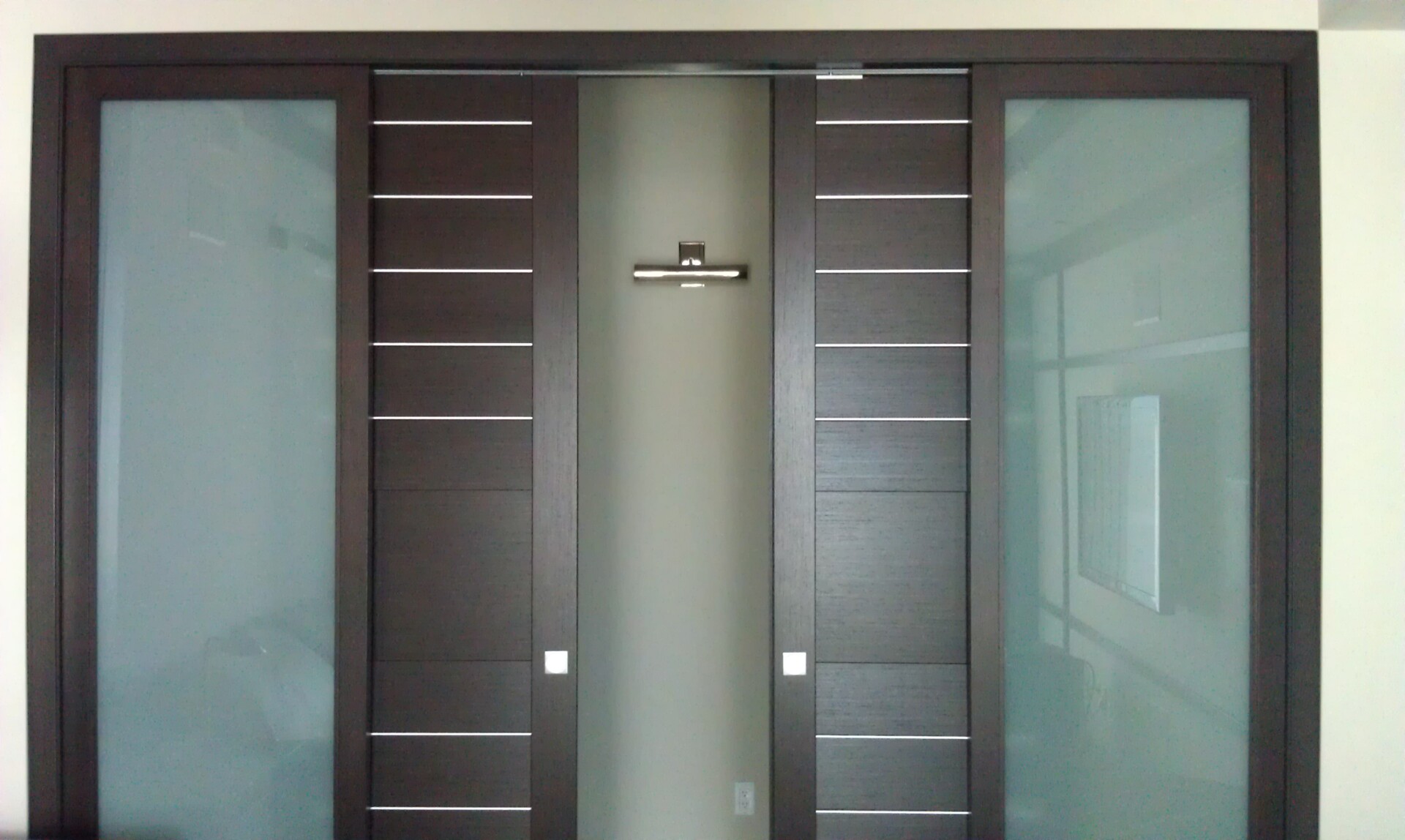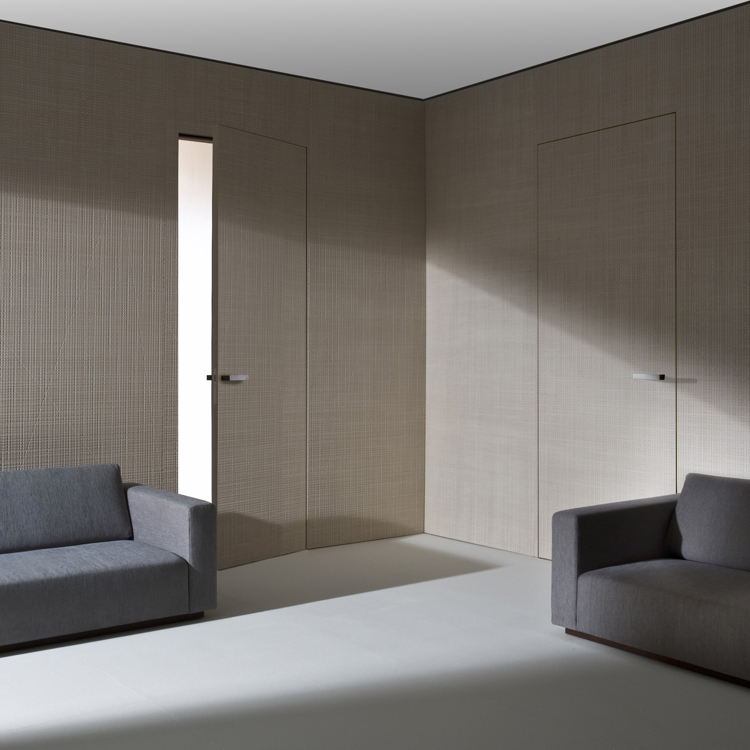
Italian doors and American-made doors may appear similar at a glance, but the real comparison goes far beyond style and reaches into construction logic, hardware integration, finish consistency, installation planning, and long-term value. In 2026, buyers are no longer choosing only a door panel, but a complete architectural solution that influences design, performance, timeline, and total project cost.
Craftsmanship philosophy: European system design vs. conventional domestic door production
Italian door craftsmanship is design-led and system-based
Italian doors are often valued because they are conceived as part of the architecture, not merely as functional separators between rooms. That difference may sound subtle, but in practice it changes the entire product. A design-led door system is developed with close attention to line, proportion, finish, edge condition, hardware visibility, and the way the door sits within the wall opening. The goal is not only to close a room, but to strengthen the character of the interior.
This is one of the defining qualities associated with Italian manufacturing in the door industry. The product is usually approached as a coordinated system in which the panel, frame, casings, hinges, lock, and handle contribute to one visual and technical result. The clean appearance that buyers associate with Italian interiors does not come from one decorative feature. It comes from disciplined consistency across all the components.
That system-based mindset is especially visible in modern interiors, where visual clutter stands out immediately. If the frame proportions feel heavy, the hinges are exposed, the latch is bulky, or the finish between adjacent components is inconsistent, the whole composition loses refinement. Italian door design tends to reduce that friction by treating the opening as a complete architectural detail rather than a collection of parts assembled from different sources.
This is precisely where ITALdoors has a strong market position. The company was built to bring authentic Italian craftsmanship to the U.S. market while removing the barriers that have historically discouraged buyers, especially long waits, inflated costs, and uncertainty around availability. Instead of presenting Italian doors as rare, difficult luxury products, ITALdoors frames them as a practical and accessible way to achieve a high-end European result.
For the buyer, the outcome is not just a more stylish door. It is a more unified interior environment. When every opening throughout a home, condo, office, or multifamily development feels visually coordinated, the overall project reads as intentional, polished, and more expensive than it may actually be.
American-made doors often follow a broader range of construction standards
American-made doors can absolutely be good, and in premium custom millwork they can be excellent. The challenge is that the category includes a very broad spectrum of products, and that makes quality less predictable unless the buyer already knows the specific manufacturer, material standard, and package scope. Domestic production includes everything from basic doors intended for cost-sensitive builds to highly tailored custom pieces designed for luxury homes.
Because of that wide range, buyers often encounter more inconsistency in the U.S. market. One product may look acceptable on a showroom wall but feel ordinary in daily use. Another may have a decent slab but less refined frame construction. Another may rely on standard exposed hinges and conventional latch hardware that do the job functionally but do not support a clean modern look. In many cases, the visual and technical outcome depends heavily on how many separate suppliers are involved.
This is a major distinction in the domestic market. Doors are often purchased in a fragmented way, with the slab sourced from one place, the frame from another, the lockset from another, and the trim selected later. While that process can work, especially with experienced professionals, it creates more room for mismatch. Alignment, edge treatment, hardware finish, operating feel, and final appearance can all vary depending on the coordination skills of the installer and the compatibility of the chosen components.
The issue is not that American-made products are inherently inferior. It is that the category does not point to one consistent standard. Buyers must do more filtering, more comparing, and more decision-making to reach the same level of confidence. That is one reason why some projects using domestic doors feel highly refined while others feel more pieced together, even if the initial price did not seem dramatically different.
Why craftsmanship shows up in daily use, not just in the showroom
Craftsmanship is easy to underestimate because many buyers first evaluate a door visually, often in a quick showroom setting or from product photos online. In that moment, the decision may seem mostly aesthetic. Yet doors are among the most frequently used architectural elements in any building. They are opened and closed constantly, viewed from multiple angles, touched by hand every day, and seen under changing light conditions. Small differences in precision become very noticeable over time.
A well-crafted door usually reveals itself in practical ways, such as:
- smoother opening and closing
- cleaner alignment between panel and frame
- tighter, more intentional reveals
- more consistent finish from one component to the next
- a quieter, more controlled closing experience
- a stronger sense that the door belongs to the architecture
These details affect how a space feels. A door that closes softly and aligns neatly contributes to a sense of order and quality. A door with inconsistent edges, visible hardware clutter, or mediocre fit can subtly diminish the room, even if the buyer cannot immediately explain why.
This is why craftsmanship should never be reduced to visual beauty alone. It is part of the lived experience of the space. The best door systems do not just photograph well; they continue to feel right in daily use, which is ultimately where long-term value becomes real.
| Comparison point | American-made doors | Italian doors |
|---|---|---|
| Craftsmanship philosophy | Quality varies widely, from builder-grade doors to premium custom millwork, with many products sourced as separate components | Design-led, system-based construction focused on architectural consistency, precision detailing, and a more unified final result |
| Design style | Often well suited to traditional, suburban, and transitional interiors with more familiar domestic styling | Built for modern and contemporary interiors with clean lines, minimalist detailing, and a more intentional visual language |
| Hardware sophistication | Frequently rely on more standard visible hinges, conventional latches, and hardware selected separately | Often include concealed hinges, magnetic latches, and refined hardware that improve both appearance and daily use |
| Completeness of package | Slab, frame, trim, hinges, and lockset may come from different vendors, increasing coordination demands | More often sold as a complete architectural package with panel, frame, casings, hardware, and better system compatibility |
| Finish consistency | Can require more site-level coordination, touch-up work, or finish matching depending on brand and sourcing method | Curated, design-focused finishes that create a more cohesive and polished look throughout the project |
| Customization options | Customization is available in higher-end domestic millwork, but often with more complexity, longer coordination, and variable system integration | Strong flexibility across standard, sliding, pocket, pivot, frameless, and specialty door types while maintaining a unified design language |
| Lead time | Lead times depend heavily on manufacturer, customization level, and local sourcing, with quality and availability varying widely | Historically slower, but improved significantly through ITALdoors with premium in-stock models and installation in as little as 2 to 4 weeks |
| Project coordination | More fragmented sourcing can create added decision fatigue, installation uncertainty, and mismatched results | More predictable planning and cleaner execution thanks to integrated packages and support through selection and installation |
| Perceived luxury | Premium examples exist, but many mass-market options feel more utilitarian or visually conventional | Stronger premium impression due to refined proportions, minimalist detailing, and better hardware integration |
| Long-term value | Lower upfront cost can be appealing, but upgrades, replacements, and coordination costs may reduce overall value over time | Often better long-term value for modern projects when buyers prioritize design quality, system completeness, durability, and daily user experience |

Hardware and door system engineering: One of the biggest real-world differences
Italian doors are often sold as a complete architectural package
One of the most practical reasons buyers choose Italian door systems is that they are often offered as a complete package rather than as an incomplete starting point. This is where the difference becomes very tangible. A buyer is not just selecting a panel design, but a coordinated opening solution designed to work together visually and technically.
ITALdoors is especially strong in this area because its all-inclusive package includes:
- door panel
- door frame
- casings
- concealed hinges
- passage lock
- Italian handle
This matters more than many first-time buyers realize. When the key parts of the door are already designed and specified as one package, the process becomes clearer and more predictable. The result is usually cleaner because the components are intended to work together from the beginning rather than being assembled later through a series of separate choices.
A complete package also makes the buying experience easier. Instead of asking multiple vendors whether their hardware, frames, and trims are compatible, the customer can move forward with greater confidence. That reduces uncertainty in both design and installation. It is particularly helpful for buyers who want a premium result but do not want the stress of managing a fragmented process.
For professionals, the advantage is just as important. A more inclusive package saves time during specification, minimizes coordination issues, and supports a smoother path from planning to installation. In projects with many openings, that efficiency quickly becomes a meaningful part of the total value.
Concealed hinges and magnetic latches create a cleaner modern result
Some of the most important features of a premium door are not dramatic on their own, but together they transform the experience of the product. Concealed hinges and magnetic latches are strong examples. They are not decorative gimmicks. They are technical choices that shape both the appearance and the feel of the door.
ITALdoors highlights smart features such as keyless entry, magnetic latch, and concealed hinges, and these details align closely with what modern buyers increasingly expect from higher-end architectural products.
Concealed hinges matter because they protect the visual clarity of the opening. In a contemporary interior, exposed hardware can interrupt the clean geometry of the door and draw attention away from the surface, finish, and overall composition. Hidden hinges support a more seamless appearance, allowing the door to read as a refined plane rather than a standard utility object.
Magnetic latches add value in a different way. They improve the closing action and generally create a cleaner, more controlled interaction. Instead of the harsher feel often associated with conventional latch systems, magnetic latches contribute to a quieter and more premium impression. This may seem like a small detail, but it becomes noticeable very quickly in everyday use, especially in high-end residential spaces where tactile quality matters.
Together, these hardware choices support a door experience that feels more advanced and more intentional. They also reinforce the modern design language buyers are usually seeking when they search for italian doors for sale. The value is not only visual. It is operational and sensory as well.
American doors are often purchased in a more fragmented way
In many domestic purchasing scenarios, the door slab, hinges, lockset, frame, and trim do not arrive as a fully resolved system. Instead, they are assembled through a chain of separate decisions. This approach can be workable, but it introduces more opportunities for inconsistency.
Common challenges in a fragmented purchase path include:
- more time spent comparing parts from different suppliers
- higher risk of mismatched finishes or proportions
- uncertainty about how all components will perform together
- greater installation dependence on field adjustments
- more room for aesthetic compromise
- hidden labor costs tied to coordination and correction
This fragmented approach often affects both appearance and efficiency. A buyer may save money at one stage, only to spend more time and effort later resolving compatibility questions or trying to achieve a cleaner final look.
For remodels and larger projects, this issue becomes even more significant. Every additional decision point creates more complexity, and complexity has a cost even when it does not immediately appear on the invoice. Time, uncertainty, and aesthetic inconsistency all affect the final value calculation.
This is one reason a complete system often feels more premium even before considering material or craftsmanship. The product arrives with more of the thinking already done. That clarity is part of what many buyers are truly paying for.
Design language: Why Italian doors often look more modern and intentional
Italian doors are built for contemporary architecture
Italian doors are strongly associated with contemporary architecture because their design language tends to prioritize proportion, restraint, texture, and precision. Rather than depending on decorative excess, they create impact through clean surfaces, disciplined lines, and thoughtful detailing. This makes them especially well suited to interiors where simplicity is meant to feel elevated rather than plain.
That design direction aligns closely with the ITALdoors product range, which includes modern, transitional, eco, and flat panel collections. These categories reflect an understanding that today’s buyers want more than a functional divider between rooms. They want the door to contribute to the architectural identity of the space.
In many modern homes and condos, the door is visible within an open, connected interior rather than hidden behind heavier trim and more traditional room separation. Because of that, its visual role becomes more important. A refined modern door can support:
- cleaner spatial continuity
- stronger alignment with cabinetry and wall treatments
- a more upscale atmosphere
- better integration with minimalist interiors
- a more intentional balance between warmth and precision
This is one reason Italian doors are so attractive in design-led renovations, luxury condominiums, multifamily developments, and upscale single-family homes. They help the space feel curated. Even when the rest of the interior is restrained, the doors continue to signal quality because they do not read as generic background elements.
American-made doors often dominate in traditional and transitional domestic construction
American-made doors remain highly relevant in the domestic market because many homes are still designed around traditional or transitional construction language. Raised panels, conventional casing profiles, standard hardware, and more familiar suburban aesthetics continue to serve a large segment of the housing market.
In that context, domestic doors may be entirely appropriate. A traditional home with classic trim packages and heritage-inspired detailing may not need or benefit from a highly minimalist European system. The design goal may be warmth, familiarity, and continuity with existing architectural conventions.
That does not make American-made doors worse. It means they often answer a different design brief. The problem appears when buyers are trying to create a European-modern interior but choose a more builder-grade domestic option that belongs to a different aesthetic category. The door may function well enough, yet still feel visually dated, too busy, or simply out of step with the surrounding design.
This disconnect is common in renovations where the homeowner upgrades flooring, lighting, kitchens, and wall treatments to a much more contemporary level, but leaves the interior openings at a more conventional specification. The result can weaken the whole project. Doors occupy too much visual territory to be treated as neutral background when the rest of the design is moving in a different direction.
Why the door should match the architecture, not fight it
A door affects the tone of every room more than many buyers expect. It is one of the few architectural elements repeated throughout the entire project, which means its style, finish, and detailing have cumulative power. Even a beautiful door can feel wrong if it does not belong to the overall architecture.
Interior doors help define privacy, reduce noise, create transitions, and support the rhythm of the home or building. Because they are repeated across bedrooms, bathrooms, closets, offices, and shared living spaces, they influence the visual language of the interior at scale. A mismatched door does not stay isolated. It repeats the mismatch from room to room.
This is why the best choice always depends on the desired result. If the project aims for a classic domestic aesthetic, many American-made options may fit naturally. But when the goal is a modern, intentional, design-led interior, Italian door systems often provide a more coherent architectural answer.
The key is not to choose the trendiest option in isolation, but to choose the door that reinforces the identity of the space. In well-designed interiors, the door should feel like it belongs there completely. It should not compete with the architecture, and it should not dilute it either.
Lead times, availability, and project planning
The old stereotype: Italian means beautiful but slow
One of the most common objections buyers raise when considering Italian doors has very little to do with style or price at first. It has to do with time. For years, the category has carried a familiar stereotype: authentic imported products may look exceptional, but they are assumed to come with long waits, shipping uncertainty, and a level of planning complexity that many homeowners, designers, and builders would rather avoid.
That concern is understandable. In construction and renovation, delays rarely stay isolated. A door package that arrives late can affect paint schedules, trim installation, flooring transitions, cabinetry alignment, hardware coordination, punch-list timing, and even final occupancy expectations. What begins as a product decision can quickly become a timeline problem.
For homeowners, this uncertainty creates anxiety because door installation often happens at a stage when the project already feels close to completion. Delays at that point are especially frustrating because the visual finish line is in sight. A beautiful door no longer feels exciting if it causes weeks of preventable disruption or leaves rooms incomplete while the rest of the home is ready.
For industry professionals, the issue is even more serious. Builders, developers, and designers do not just think in terms of product desirability. They think in terms of scheduling reliability, labor sequencing, procurement risk, and client communication. Even a superior product can become difficult to specify if its availability is unpredictable or if the lead time is too vague to build into the project calendar with confidence.
This is why lead time is not a secondary issue in the conversation around italian doors. It is one of the central decision factors. Buyers are not only asking whether the doors look better or perform better. They are asking whether they can get that level of quality without exposing the entire project to avoidable delays.
In that sense, timing is part of value. A door that arrives beautifully made but too late may undermine the project experience. A door that combines strong design with reliable availability becomes far more attractive because it respects both the design vision and the practical realities of construction.
ITALdoors solves the timing problem with in-stock models and quick ship
This is where ITALdoors creates one of its strongest competitive advantages. Instead of treating imported Italian doors as products that buyers must simply wait for, the company has structured its offering around accessibility, speed, and planning clarity. That matters because it directly addresses the biggest historic friction point attached to the category.
ITALdoors offers premium in-stock Italian doors designed to move much faster than buyers typically expect from imported architectural products. With installation possible in as little as 2 to 4 weeks for qualifying in-stock options, the company turns what many people assume will be a slow, complicated procurement process into something far more practical and project-friendly.
That speed becomes even more meaningful when combined with the breadth of the available catalog. With over 100 door design options, ITALdoors gives buyers meaningful choice without forcing them into the delays often associated with purely made-to-order programs. The result is a better balance between customization, style, and real-world scheduling.
In practical terms, abbreviated lead times matter because they help reduce several common project pressures:
- fewer delays across finishing trades
- less schedule risk for homeowners and contractors
- easier coordination with flooring, paint, cabinetry, and trim
- more predictable installation planning
- smoother communication with clients and stakeholders
- better momentum at the final stages of a project
These are not small benefits. In many projects, the ability to install doors on time affects the overall rhythm of completion. Trim carpentry, hardware installation, wall finishing, closet completion, and final styling often depend on the openings being fully resolved. When doors arrive within a reliable window, the rest of the work can move with less friction.
For contractors and developers, this predictability is especially valuable because it reduces one of the most frustrating forms of jobsite inefficiency: waiting on a visually critical item that has already been sold to the client but has not yet been delivered. When a supplier can offer a premium look with a realistic turnaround, the entire specification process becomes easier to defend and easier to repeat across multiple projects.
For homeowners, it changes the emotional tone of the purchase. The doors stop feeling like a luxury gamble and start feeling like a smart, elevated choice that still respects the practical timeline of the renovation or build.
Special orders still require planning, but the process is transparent
Of course, not every project fits neatly into an in-stock program. Some buyers need oversized doors, unusual configurations, tailored finishes, or specialty formats such as pivot, frameless, or highly customized integrated solutions. In those cases, additional lead time is not only expected, but appropriate.
ITALdoors communicates this clearly by distinguishing between quick-ship in-stock offerings and special order products. For specialty doors, custom finishes, and oversized or highly tailored configurations, lead times are typically in the 12 to 16 week range. Importantly, this is not presented as vague delay language. It is tied directly to the reality of customization and to the fact that these products are being produced and shipped with a higher level of individual specification.
That transparency matters. Buyers are generally willing to wait longer when three things are true:
- the reason for the added time is clear
- the timeline is communicated honestly
- the customization genuinely adds value to the project
This is a healthier model than promising unrealistic speed for highly customized work and then disappointing the client later. In high-end residential and commercial design, longer lead times are often completely acceptable when they are linked to meaningful customization rather than poor planning.
The advantage here is that ITALdoors gives buyers both paths. Those who need speed can explore premium in-stock options, while those who need a more tailored solution can move forward with custom work knowing the process is structured and the expectations are defined from the beginning.
That clarity is part of the brand’s value. It shows that the company understands that good project planning is not only about having beautiful products. It is about helping buyers match product type to timeline reality with confidence.
Why ITALdoors makes Italian doors more accessible than buyers expect
ITALdoors is compelling because it does more than sell stylish doors. It solves the exact problems that historically prevented many buyers from choosing authentic Italian products in the first place. That practical positioning gives the brand real credibility in the U.S. market.
As a family-owned business with deep roots in construction, ITALdoors understands something many purely design-led brands overlook: a beautiful product is only truly valuable when it fits the realities of planning, budgeting, procurement, and installation. That construction background shapes the company’s approach and helps explain why its offering feels more grounded than aspirational.
The business was founded to address a real gap in the market. Authentic Italian doors were often perceived as too expensive, too slow to arrive, or simply unavailable in a way that made them realistic for American projects. Rather than accepting that limitation, ITALdoors established production in Italy with the goal of bringing beautifully crafted, competitively priced, and more readily available Italian doors to the U.S.
That foundation still shapes the brand today. ITALdoors has become a trusted name in Italian doors and architectural hardware by focusing on the combination buyers actually want:
- authentic Italian craftsmanship
- practical accessibility
- transparent pricing
- abbreviated lead times
- strong product variety
- dependable customer support
The scope of the offering reinforces that credibility. With over 100 design options, the company can support a wide range of aesthetic and functional needs without losing its core design identity. Buyers can explore in-stock models for speed, or move into custom and specialty solutions when the project calls for something more tailored.
The support model is equally important. ITALdoors does not position itself as a simple catalog supplier. It supports homeowners and industry professionals through specification, product selection, and installation guidance. That kind of involvement reduces friction for clients who want professional help turning product interest into a fully resolved result.
This one-stop-shop value is strengthened further by the inclusive package structure, which helps simplify planning and reduces the sourcing confusion buyers often face elsewhere. When a customer can source the door panel, frame, casings, concealed hinges, lock, and handle through one coordinated source, the process becomes more efficient and more reliable.
The company’s 18+ years of manufacturing and service experience also matter. Longevity in this category signals more than survival. It suggests a working understanding of how door projects actually unfold, what clients worry about, and what it takes to keep quality and service aligned across different project types.
That experience allows ITALdoors to support:
- single-family homes
- multifamily developments
- commercial spaces
- design-driven renovations
- specialty architectural applications
This breadth makes the brand relevant to both end users and trade professionals. A homeowner may appreciate the showroom experience and guided selection process, while a contractor or designer may value the site-visit support and clearer specification pathway.
All of this helps explain why ITALdoors feels more accessible than buyers often expect from the Italian door category. It preserves the appeal of authentic European craftsmanship while removing much of the delay, confusion, and cost uncertainty that used to keep buyers from moving forward.

Frequently asked questions about Italian Doors vs. American-Made Doors
Are Italian doors worth it?
Yes, especially for buyers who want modern design, premium hardware, long-term durability, and a complete architectural package instead of a basic slab-only solution.
What is the difference between Italian doors and American-made doors?
The main differences are usually in craftsmanship, construction philosophy, hardware integration, finish refinement, visual style, and whether the door is sold as a complete system or as separate components.
Are Italian doors more expensive than American-made doors?
They can appear more premium upfront, but the real value depends on what is included, how much coordination is required, and whether the alternative needs added upgrades later.
Why do Italian doors look more modern?
They often use clean lines, minimalist detailing, concealed hardware, refined finishes, and a system-based design approach that creates a more architectural look.
Can I buy Italian doors in the U.S. without long lead times?
Yes. Through suppliers like ITALdoors, buyers can access premium in-stock Italian doors with installation in as little as 2 to 4 weeks on qualifying models.