A frameless door is a door system designed to sit flush with the wall, using a concealed structural frame and minimal visible detailing so the opening looks clean, integrated, and architectural rather than decorative. In this guide, we will explain what frameless interior doors are, how they work, where they perform best, what buyers should know before ordering, and why ITALdoors has become a trusted source for premium Italian frameless doors, specialty systems, and expert support from selection to installation.
What is a frameless door?
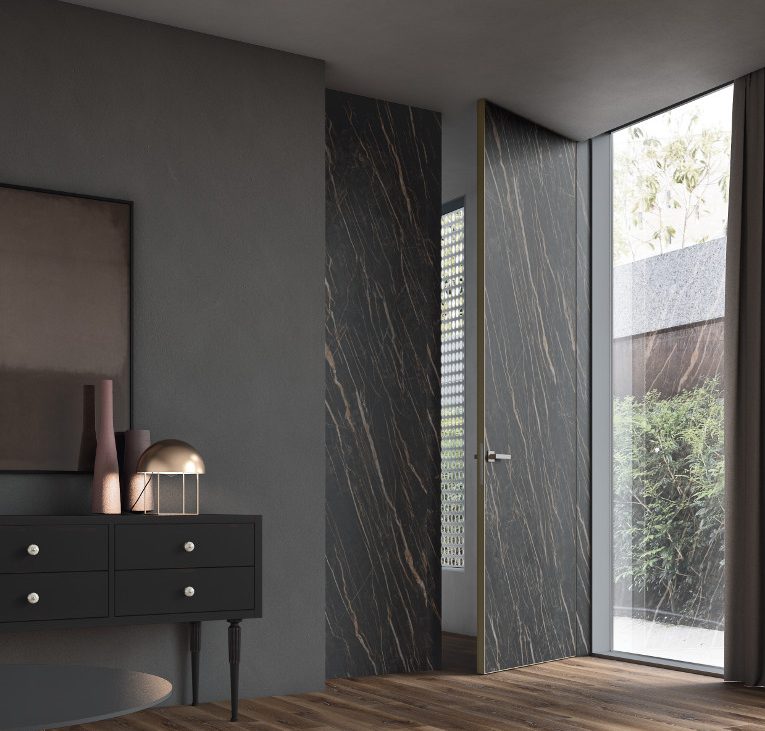
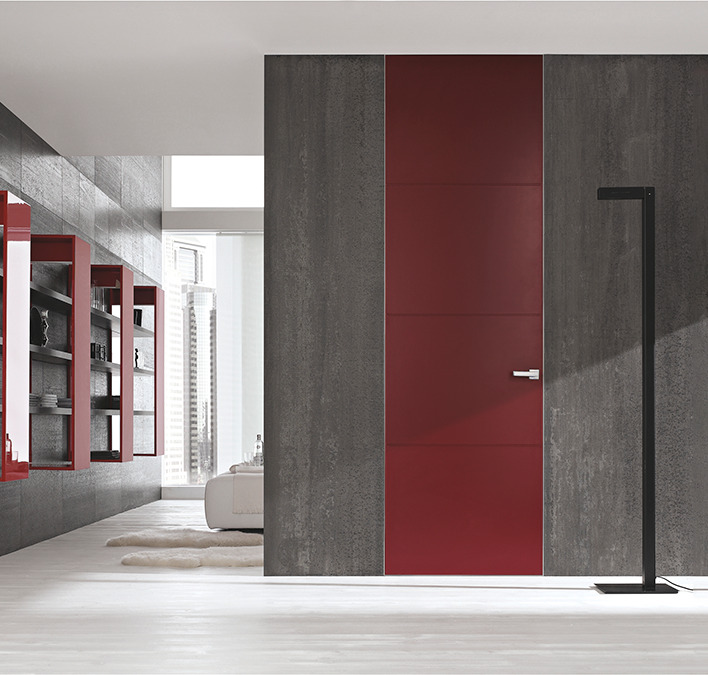
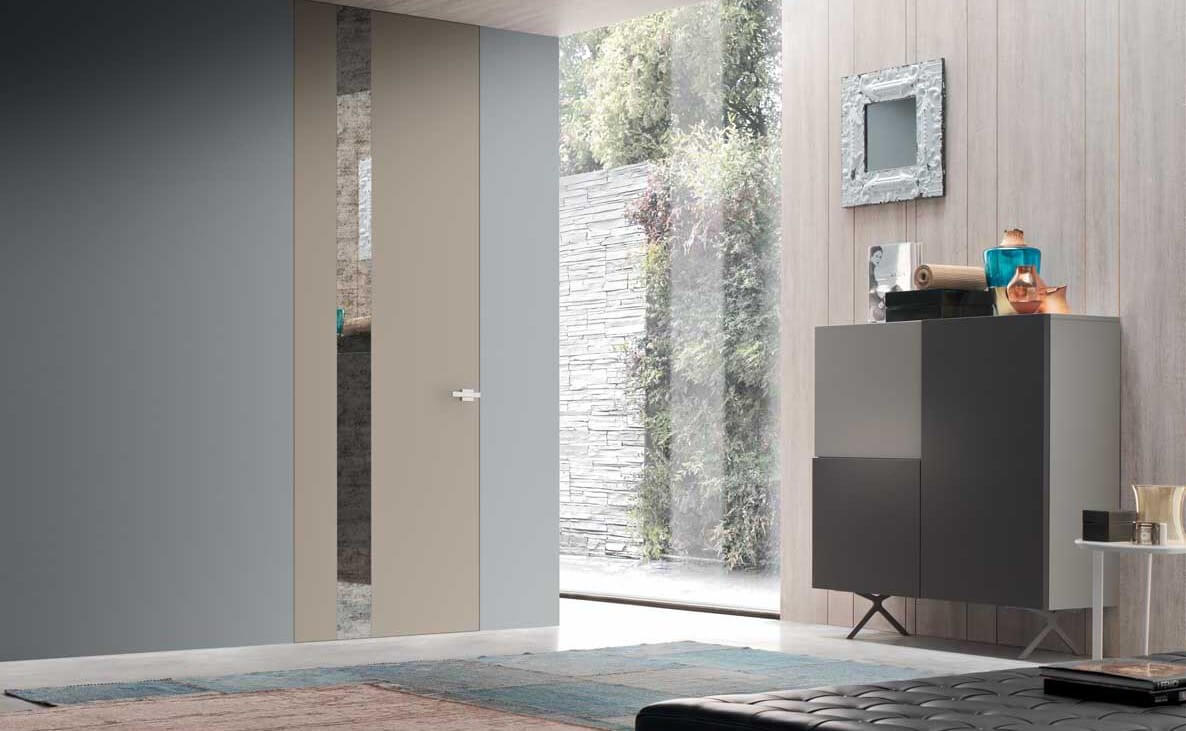
A frameless door is a door designed to create the visual effect of a door without the usual visible frame, trim, and casing that most people associate with a standard interior opening. When installed correctly, the door sits nearly level with the wall surface, allowing the slab and surrounding wall plane to read as one continuous composition rather than two separate elements.
This is where many people misunderstand the concept. A frameless door is not literally a door with no frame at all. It is a door with a concealed frame system, usually integrated into the wall during construction or renovation, so the eye no longer focuses on the jamb, trim, or projecting edges. What remains visible is a much quieter opening, a flatter surface, and a far more refined overall appearance.
In practical terms, frameless interior doors are chosen for the same reason people choose high-end millwork, hidden lighting details, or flush baseboards: they reduce visual noise. Instead of adding bulk around the opening, the system allows the wall to remain dominant and the door to become part of the architecture.
A true frameless door is usually defined by several characteristics working together:
- a hidden or nearly invisible frame
- a door panel that aligns flush with the wall
- concealed hinges
- minimal shadow gaps and cleaner reveals
- reduced or eliminated casing and trim
- hardware selected to preserve the minimalist look
The result is not simply modern for the sake of being modern. It is a more disciplined, intentional way of designing transitions between rooms.
Why the term can be confusing
The phrase “frameless door” sounds simple, but it often creates the wrong mental picture. Many buyers imagine a slab somehow suspended inside an opening with no structural support around it. Others assume the term refers only to glass systems, because frameless shower doors and frameless partitions are already familiar in residential and commercial design. In interior architecture, however, the meaning is different and more precise.
Most frameless doors still rely on an engineered frame. The difference is that the frame is not meant to remain visually dominant. In high-quality systems, the structural frame is built into the wall so that after finishing, paint, or other surface treatment, it becomes almost unnoticeable. This is why the term “hidden frame door” is often used alongside “frameless door.” The structure exists, but it is visually absorbed into the architecture.
This distinction matters because it changes buyer expectations. Someone who assumes a frameless door is just a slab may overlook the importance of planning, wall conditions, hardware compatibility, and installation sequencing. In reality, the beauty of a frameless door depends on precision at every level. The wall build-up, the reveal, the swing direction, and the finishing details all affect the final look.
This is also why not all products marketed as frameless deliver the same result. Some systems are merely low-profile. Others are genuinely flush to wall and designed from the start as architectural door systems. The better the engineering, the cleaner the final effect.
Frameless door vs flush door
These two terms are often used interchangeably, but they do not mean exactly the same thing. Understanding the difference helps buyers evaluate products more accurately and avoid confusion when comparing collections.
A flush door describes the surface of the door panel. It means the panel is flat, smooth, and free of raised moldings or recessed panel detailing. Flush doors can look very modern, but they are not automatically frameless. A flush slab can still be installed in a very traditional frame with visible jambs, casing, and standard hinges.
A frameless door, by contrast, refers primarily to the relationship between the door and the wall. It is about how the opening is detailed, how the frame is concealed, and how the door integrates into the surrounding architecture.
The overlap is significant because many frameless doors are also flush doors. That combination is part of what creates the seamless appearance buyers want. Still, the difference is important:
- a flush door is defined by a flat door face
- a frameless door is defined by minimal visible frame and flush wall integration
- many frameless doors are flush, but not every flush door is frameless
This distinction also explains why a standard flat slab from a big-box store does not produce the same result as a true frameless Italian door system. The slab alone is not the whole story. The frame engineering, the reveal detail, the hinge selection, and the installation method are what transform a flat door into a frameless architectural feature.
Why frameless interior doors are trending
Frameless interior doors are growing in popularity because they answer several design priorities at once. They support minimalist interiors, but they also work beautifully in luxury contemporary spaces, upscale transitional homes, design-forward multifamily developments, and refined office environments. Their appeal is broader than many people assume.
One major reason for the trend is the shift toward cleaner architectural lines. In many current interiors, walls are treated less as neutral backgrounds and more as continuous design surfaces. When you remove bulky trim and visible framing around a door, the wall reads more clearly, the room feels calmer, and the interior looks more tailored.
Frameless doors are especially attractive in projects where design intent depends on restraint. Rather than drawing attention through ornament, they create impact through proportion, alignment, material quality, and precision. That is a very different kind of luxury from traditional carved panels or highly decorative millwork. It feels quieter, but often more expensive.
Their popularity is also connected to the rise of these interior priorities:
- minimalism, where fewer visual interruptions create a calmer environment
- clean wall lines, especially in homes with modern lighting and custom millwork
- a high-end architectural look associated with luxury European interiors
- visual continuity between adjacent rooms, corridors, and open-plan spaces
- better compatibility with modern, transitional, and upscale commercial interiors
| Comparison point | Standard framed doors | Frameless doors |
|---|---|---|
| Visual appearance | Usually show visible jambs, casings, trim profiles, exposed hinges, and more pronounced gaps around the door slab, creating a more layered and visually noticeable opening. | Reduce or eliminate visual interruption with a flatter, cleaner plane, refined reveals, and a more seamless transition from wall to door. |
| Architectural feel | Typically read as a separate product inserted into the wall, with visible edges and transitions that clearly distinguish the opening from the surrounding surface. | Feel integrated into the wall composition, supporting the room’s geometry and creating a more architectural, design-forward result. |
| Hardware and detailing | Often rely on exposed hinges, conventional strike preparations, and standard locksets or levers that make the system feel more utilitarian and visually busy. | Use more deliberate hardware solutions such as concealed hinges, magnetic latch systems, minimal handles, and cleaner frame profiles. |
| Installation complexity | More forgiving during installation because casing and trim can help hide minor field inconsistencies or uneven wall conditions. | Require more planning and precision because wall finish build-up, reveal consistency, swing direction, and exact leveling are far more visible. |
| Overall design value | Functional and familiar, but usually deliver a more conventional finish level with less impact on the overall architectural quality of the room. | Are widely seen as a premium upgrade thanks to cleaner detailing, stronger design continuity, broader finish flexibility, and a more luxurious overall impression. |

How does a frameless door work?
The hidden frame system
At the heart of a frameless door is the hidden frame system. This is the technical foundation that makes the minimalist look possible. Without it, the door would either lack stability or fall back into the visual language of a standard framed opening.
In premium frameless systems, the frame is commonly made from aluminum. This material is especially well suited to flush-to-wall construction because it is stable, strong, and slim enough to support precise detailing without adding unnecessary bulk. Once installed into the wall opening, the aluminum frame becomes part of the construction assembly. After finishing, it is largely concealed, allowing the door to sit in visual alignment with the wall.
This is where collections like the B-Line system become especially relevant. The B-Line concept is built around decor, design, and flush-to-wall integration, treating the door not as a separate object but as a recognizable and refined element within the interior. The system uses an aluminum frame that can be supplied with or without an upper beam, depending on the opening and the design intent. This flexibility is important because it allows the system to respond to different wall conditions, ceiling relationships, and project specifications.
The frame is designed for installation in both:
- brickwall construction
- plasterboard construction
That makes it suitable for a wide range of residential and commercial projects, from new builds to carefully planned renovations. Once the frame is in place, wall finishing materials are applied so the structural support visually disappears into the surrounding plane. The result is a door opening that feels integrated rather than added on.
The frame may also be prepared for paint or lacquer finish, allowing the final wall and door composition to remain consistent. This is essential in projects where the goal is to have the door almost vanish into the surface, or at least avoid obvious transitions between the wall and the opening.
What buyers should understand is that the hidden frame is not just a visual trick. It is what makes the system perform properly while preserving the frameless effect. It supports the slab, holds tolerances, receives the concealed hinges, and creates the clean reveal lines that define the finished look.
Push and pull opening options
Another important part of how a frameless door works is the way it opens. Unlike basic interior doors that are often specified with little thought beyond left-hand or right-hand swing, frameless systems are typically planned with much more care because the opening direction affects both function and visual continuity.
In high-end systems such as the B-Line collection, each model can be configured as either a push or pull door, with right-hand or left-hand opening available according to the room layout and design goals. This matters because in a flush-to-wall concept, the side of the wall that remains visually seamless is typically the side where the system is designed to sit flush.
For example, if the priority is to maintain a perfectly clean hallway wall, the door may be configured so that from the hallway side it appears flat and integrated, while the swing action occurs into the adjacent room. In another application, the opposite may be preferred. This decision influences not only aesthetics, but also furniture layout, circulation, and hardware use.
The opening direction should always be considered in relation to:
- which side of the wall should appear most seamless
- traffic flow through the room
- privacy requirements
- furniture placement
- available clearance
- how the door interacts with paneling, wallpaper, or adjacent architectural details
This is one reason frameless doors feel more custom than ordinary doors. They are specified as part of the room composition, not simply dropped into an opening.
Concealed hinges and magnetic latch
A frameless door would lose much of its effect if it relied on bulky exposed hinges and ordinary latch hardware. The clean appearance depends heavily on the use of concealed components that preserve the flush geometry of the system.
Concealed hinges are a key part of this. Rather than being visible on the edge of the door and frame when the door is closed, these hinges are recessed into the construction of the system. This allows the door to maintain a much cleaner silhouette and keeps attention focused on the wall plane instead of the mechanics.
Beyond appearance, concealed hinges also support the precision that frameless doors require. They help maintain alignment, contribute to a more sophisticated operation, and reinforce the premium character of the system. In a luxury setting, visible hinge barrels can make even a high-quality slab look ordinary. Concealed hinges eliminate that issue.
The magnetic latch is another important component. Instead of relying on a more conventional latch mechanism that may feel harsher or more visually intrusive, a magnetic system provides a cleaner closing action and more refined edge detailing. The operation feels quieter and more deliberate, which suits the overall design language of frameless doors.
At ITALdoors, this aligns with the broader emphasis on smart features and better hardware integration. The brand highlights details such as:
- concealed hinges
- magnetic latch systems
- refined handle options
- all-in-one packages that simplify planning
These features are not superficial upgrades. They are part of what makes a frameless interior door function like a premium architectural product rather than a standard door slab with a minimal look.
Flush alignment with wall and ceiling
One of the most compelling architectural advantages of a frameless door is its ability to align with the wall plane in a way that feels intentional, disciplined, and highly resolved. Instead of projecting forward with trim, casing, and layered detailing, the door remains visually level with the surrounding wall. That creates a calmer, sharper, and more contemporary composition.
In some systems, the design can go even further by extending the visual logic upward toward the ceiling. The B-Line collection, for example, can reach the ceiling with or without a beam, creating a total sense of linearity between the door panel and the upper wall. This is especially dramatic in tall interiors, luxury residences, boutique commercial spaces, and projects where ceiling height is part of the visual impact.
Ceiling-height frameless doors are popular because they do several things at once:
- they make walls appear taller
- they reduce visual breaks in the elevation
- they support minimalist detailing
- they create a more custom, less builder-grade impression
- they turn the door into an architectural gesture rather than a basic utility item
Even when the door does not run fully to the ceiling, the flush relationship with the wall changes the way the entire room is perceived. The opening feels quieter, more deliberate, and more integrated into the design of the space.
Main components of a frameless door system
Door panel
The door panel is the most visible part of the system, but in frameless design it should be thought of as one element within a larger architectural composition. The panel can be specified in a wide range of finishes and materials depending on whether the goal is to make the door disappear, subtly coordinate with the room, or stand out as a feature.
At a premium level, buyers can choose from finish directions such as:
- matte lacquered surfaces
- glossy lacquered surfaces
- wood and wood-look finishes
- mirror-faced panels
- glass compositions
- stone-inspired surfaces
- gres and other material-effect finishes
- eco-leather and specialty decorative inserts
- metallic and designer finishes
This variety is one reason frameless doors have become so versatile. They are not limited to plain painted slabs. In the B-Line collection, for example, different models can incorporate lacquered glass, mirror, stone, alutes, impact finishes, eco leather, and more. That allows the door to operate either as a hidden architectural plane or as a controlled focal point within the room.
Concealed aluminum frame
The concealed aluminum frame is what makes the system possible. Aluminum is widely used because it offers a rare combination of structural reliability and visual discretion. It is strong enough to support the door precisely, yet slim enough to disappear into the wall assembly.
Its advantages include:
- strong performance without bulky dimensions
- excellent stability
- support for precise alignment
- compatibility with flush-to-wall systems
- suitability for both plasterboard and brickwall conditions
Without a well-designed concealed frame, the door cannot achieve the crisp geometry buyers expect from a true frameless product.
Concealed hinges
Concealed hinges help preserve the minimalist aesthetic while also supporting proper operation. Because they are recessed into the system, they avoid the visual distraction of exposed hinge barrels and reinforce the clean, integrated look of the opening.
Their role is both visual and functional. They help the door operate with the degree of precision expected in a premium system while contributing to the disciplined look that defines frameless design.
Magnetic lock or latch
A magnetic lock or latch contributes to both user experience and visual cleanliness. It allows the door to close more quietly and neatly, and it reduces some of the visual and mechanical heaviness associated with more conventional latch systems.
For buyers seeking a sleek, modern door that still feels substantial and well made, the magnetic latch is one of those smaller details that makes a clear difference in everyday use.
Handle solutions
Handle design on frameless doors should never be an afterthought. Because the system is visually restrained, the handle has a proportionally greater effect on the final aesthetic. It can either reinforce the minimalist concept or disrupt it.
Possible handle approaches include:
- minimal lever handles
- integrated pulls
- recessed handle solutions
- elongated design-forward handles
- finishes coordinated with the door surface or chosen as a subtle contrast
The B-Line collection also emphasizes handle design as part of the overall composition, including ergonomic integrated solutions and premium finishes that support both performance and style.
Wall finishing integration
This is one of the most overlooked aspects of frameless doors, but it is essential. A frameless door works best when specified together with the wall finish, not after the fact. Drywall, plaster, paint, paneling, wallpaper, and decorative surface treatments all affect how the system will look in the final interior.
This is especially true when the goal is to create one of the most sophisticated frameless effects: a door that blends directly into wall paneling, wallpaper, or a custom decorative surface. ITALdoors specifically offers specialty frameless doors that can be integrated with wall panels or wallpapers, allowing the opening to become almost invisible when closed.
In other words, the wall finish is not just background. It is part of the frameless door system.
Types of frameless doors available today
Frameless swing doors
Frameless swing doors are the most common and practical version of the category. They offer the clean visual benefits of frameless design while maintaining the familiar day-to-day functionality of a standard hinged door.
For bedrooms, home offices, hallways, private rooms, and many residential applications, they are often the most balanced solution. They preserve privacy, offer a substantial feel, and integrate beautifully into modern interiors without requiring an unfamiliar method of operation.
Their popularity comes from the fact that they combine architectural refinement with daily convenience.
Frameless doors flush with wall
This is the purest expression of frameless design. A flush-to-wall frameless door is designed so the slab aligns cleanly with the surrounding wall plane, minimizing visible transition and supporting a seamless architectural effect.
This format is especially popular in luxury modern interiors because it creates the disciplined wall elevations associated with custom European design. Instead of seeing doors as interruptions, the user experiences a calmer and more integrated interior.
For many buyers, this is the version they have in mind when they search for frameless interior doors.
Frameless doors integrated with wall paneling or wallpaper
Some of the most sophisticated frameless doors are designed to blend into surrounding finishes so completely that they almost disappear. This is where specialty systems become especially exciting. ITALdoors offers frameless doors that can be integrated with wall panels or wallpaper, allowing the door to function as part of a continuous decorative surface.
This approach works especially well in spaces where the goal is concealment, softness, or uninterrupted wall rhythm. It can be used to hide private rooms, storage areas, dressing spaces, or secondary access points while preserving the design integrity of the wall.
Applications often include:
- paneled living rooms
- luxury bedroom suites
- custom hallways
- dressing areas
- home libraries
- feature walls in modern residences or boutique hospitality spaces
When done well, this type of frameless door feels highly custom and unmistakably high-end.
Frameless glass doors
Frameless glass doors bring the same clean-lined design philosophy into spaces where light transfer and visual openness matter. They are especially relevant for modern offices, conference rooms, interior partitions, and residential areas where transparency or partial openness is desired.
Depending on the system and specification, the glass can be transparent, satin, smoked, or integrated into mixed-material compositions. The effect can range from airy and open to soft and partially concealed.
Glass frameless doors are particularly useful where the design goal is to maintain light flow without sacrificing the clarity of the overall interior architecture.
Frameless mirror doors
Mirror-faced frameless doors offer a highly practical and elegant variation on the concept. In the B-Line collection, the mirror door is described as a minimal system that integrates itself into the wall while also providing the utility of a full-size mirror. Functionally, it remains a door that provides privacy and security through a latch lock system. Aesthetically, it contributes to the room as both architecture and furnishing element.
This type of door is especially useful in:
- dressing rooms
- closets
- bedrooms
- entry zones
- compact interiors where reflective surfaces help expand the perception of space
Because the mirror is built into the door concept rather than added as an accessory, the result is cleaner and more intentional than using a separate wall mirror.
Custom frameless specialty doors
Not all projects fit within standard dimensions or finish programs, which is why custom frameless specialty doors remain an important category. ITALdoors offers specialty and custom doors that include frameless systems, with customization available in finish, size, and overall concept.
Custom frameless doors are especially useful when a project calls for:
- oversized dimensions
- ceiling-height configurations
- special lacquer or veneer finishes
- decorative inserts
- mixed materials such as glass, mirror, stone-inspired surfaces, or eco leather
- a door designed to coordinate with specific wall treatments
- a more project-driven architectural statement
This is also where Italian door manufacturing stands out. It allows the door to move beyond a standard product and become part of the broader interior design language of the space.
Where to buy frameless doors?
A frameless door is not the kind of product most buyers should choose based on appearance alone. Because the category depends so heavily on proper engineering, finish quality, and installation guidance, the supplier matters almost as much as the door itself.
What to look for in a frameless door supplier
Buyers should look for a supplier that offers more than attractive images or a broad catalog. A strong frameless door supplier should provide:
- real expertise in modern door systems
- inclusive hardware packages
- finish flexibility
- installation guidance
- transparent lead times
- strong customer support
These factors matter because frameless doors are specification-sensitive products. A seller that only moves slabs without real technical support may not be enough for buyers who want the end result to actually match the promise.
Why ITALdoors is a strong option for frameless interior doors
ITALdoors stands out because it combines design credibility with practical project support. The company is family-owned, has deep roots in construction, and was built around solving a real market problem: authentic Italian doors were often too expensive, too slow to arrive, or simply not available locally in a reliable way.
According to the brand materials, ITALdoors brings together:
- 17+ years serving the market, with 18+ years of manufacturing and service experience
- a focus on authentic Italian craftsmanship
- both in-stock and custom options
- over 100 door design options
- an all-in-one package
- concealed hinges, magnetic lock, and Italian handle solutions
- fast lead times for many models
- specialty door expertise, including frameless doors
- support for homeowners and industry professionals
- transparent pricing without hidden fees or tariff surprises
That combination is important. It means the buyer is not choosing between design and practicality. They can access premium Italian door aesthetics while also getting a more organized purchasing experience.
Miami showroom and consultation support
ITALdoors also offers the advantage of direct consultation support through its Miami presence. For buyers who want to evaluate finishes, discuss project needs, and get more personalized guidance, the Miami showroom adds real value.
The company also encourages site visits and direct contact, which is particularly useful for frameless door projects where sizing, wall conditions, and finish intent should be discussed with care. That kind of support is helpful not only for homeowners, but also for designers, architects, and builders managing more complex specifications.
Frameless doors for homeowners, designers, architects, and builders
A strong frameless door supplier should be able to support different types of buyers, because each approaches the product from a different angle.
- Homeowners usually need help comparing styles, understanding lead times, and choosing the right functional solution
- designers need finish flexibility, aesthetic consistency, and detail coordination
- architects need systems that can be specified clearly and executed accurately
- builders and developers need dependable lead times, package coordination, and installation support
ITALdoors is well positioned in this broader market because it supports both individual buyers and industry professionals through the process, from selection to installation.

Frequently asked questions about frameless doors
What is a frameless door?
A frameless door is a door system designed to sit flush with the wall using a concealed or minimal frame, so the opening looks cleaner and more integrated than a standard trimmed door.
Are frameless doors actually frame-free?
No. Most frameless doors still use a structural frame, usually concealed within the wall. The term refers to the fact that the frame is visually minimized or hidden, not that it is absent.
Are frameless interior doors more expensive?
Yes, in many cases they are more expensive than basic framed doors because they use concealed frame technology, upgraded hardware, and require more precise installation.
Can frameless doors be installed in drywall?
Yes. Systems such as the B-Line collection are designed for installation in plasterboard as well as brickwall construction, provided the project is planned correctly.
Can frameless doors go to the ceiling?
Yes. Certain frameless systems can extend toward or up to the ceiling, creating a stronger linear and architectural effect that is especially popular in luxury interiors.
Are frameless doors good for closets or hidden rooms?
Yes. Frameless doors are excellent for closets, dressing areas, and hidden-room concepts, especially when integrated with wall paneling, wallpaper, mirror, or coordinated finishes.
What hardware do frameless doors use?
They commonly use concealed hinges, magnetic latches or locks, and minimal or integrated handle solutions that preserve the clean overall appearance.