Miami is one of the few markets where a door has to satisfy design expectations, daily performance demands, and local approval realities at the same time. In South Florida, humidity, salt air, strong A/C differentials, storm exposure, condo rules, and permitting can all influence which door truly belongs in a space, which is why ITALdoors, a Miami-based specialist in Italian interior and exterior doors, approaches each project as a complete system rather than a simple product selection.
Why door shopping in Miami is different from almost anywhere else?
Humidity changes how doors perform over time
A door in Miami does not live in the same conditions as a door in a dry inland market. Even when a home is climate-controlled, South Florida’s surrounding air, moisture load, and constant transitions between cooled interiors and humid exteriors can put pressure on the door slab, frame, finish, and hardware over time. That is why local buyers who choose a door based only on appearance often end up frustrated months later, when alignment changes and surface wear start to appear.
High humidity affects doors in several ways. Moisture in the air can influence dimensional stability, especially when the product is poorly built, improperly finished, or paired with hardware that cannot hold alignment well over time. A door may look perfect on installation day and still become a maintenance problem later if its construction does not match the environment it is being asked to perform in.
The most common complaints Miami-area buyers run into include:
- swelling at the edges or around contact points
- sticking during opening and closing
- subtle or visible slab warping
- sagging caused by hardware strain or poor support
- finish stress, edge deterioration, or premature surface wear
These problems do not always appear suddenly. More often, they build slowly. The door begins to rub slightly, then the latch stops lining up as cleanly as before, then the finish starts looking tired at the edges, and eventually the entire opening feels less precise. This is exactly why material quality and construction method matter more in Miami than many homeowners expect.
A well-chosen interior door for Miami should not be viewed as a decorative panel alone. It should be viewed as a coordinated assembly that includes the slab, frame, finish, hinges, latch behavior, and long-term stability. The better the engineering and manufacturing discipline behind the product, the better the door can maintain its look and function under local conditions.
Hurricanes change what matters for exterior doors
One reason buyers in South Florida often feel confused when researching doors is that searches for interior and exterior products overlap constantly. Someone may start by looking for “interior doors Miami,” then quickly run into results for impact resistance, storm compliance, or hurricane-rated systems. That overlap is understandable, because in Miami, exterior openings are not just design decisions. They are part of a weather-exposed envelope that can involve code, testing, approvals, and installation requirements. Miami-Dade’s guidance for door and window replacement makes this clear by requiring product approval documentation for exterior systems, including current Notice of Acceptance documentation or Florida product approval where applicable.
This distinction matters. Standard room-to-room interior doors do not serve the same role as front entry systems, patio doors, or other openings exposed to weather, wind, and water intrusion. Exterior systems may be subject to product approval and permitting requirements, while typical interior passage doors are evaluated in a completely different practical context. Florida’s product approval system and Miami-Dade’s Product Control framework both focus on approved building products used in the building envelope and related applications.
That is why a strong Miami-focused guide must address both subjects without blending them carelessly. A homeowner replacing bedroom doors should not be overwhelmed by hurricane terminology that does not apply to those openings. At the same time, a buyer replacing a front entry door cannot afford to treat it like an ordinary decorative selection. The two categories may look adjacent in search results, but they are not interchangeable in real projects.
HOAs and condo boards can change what you are allowed to install
Another factor that makes Miami different is the high number of condominiums, managed communities, multifamily buildings, and HOA-controlled properties. In these environments, choosing a door is rarely only a personal taste decision. Building management, association review procedures, uniformity standards, and documentation requirements can shape what is allowed, what must be submitted, and when work can begin.
This is especially important in condo buildings, where a unit owner may assume they are simply replacing a door within their own space, only to discover that the visible side of the opening, the hardware set, the fire-safety expectations, the work schedule, or the building’s design rules require prior approval. The result is often avoidable delay. A project that felt straightforward becomes stalled because the buyer selected first and checked requirements second.
In practical terms, this means a beautiful door can still become the wrong choice if:
- the finish does not meet community standards
- the visible face must match neighboring units
- the building requires specific documentation before approval
- the installer must meet insurance or licensing requirements
- management restricts working hours, delivery procedures, or elevator use
- the opening has technical constraints the buyer did not review in advance
In Miami, that sequence matters. The safest process is not to fall in love with a door first and hope the paperwork works itself out. It is to understand the project conditions early, then choose a system that satisfies both the visual goal and the practical approval path.
| Performance threat | How it affects Miami doors | What buyers should prioritize |
|---|---|---|
| High humidity and moisture exposure | Moisture can cause slight movement in the slab or frame, wear along edges and corners, finish stress, latch misalignment, and doors that no longer close with the same precision over time. | Stable door construction, durable finishes, and a complete system designed to hold alignment and resist everyday humidity-related stress. |
| Salt air and coastal corrosion | Salt-laden air can accelerate corrosion in hinges, latches, and handles, reduce smooth operation, and contribute to premature wear in lower-grade finishes and moving parts. | Premium hardware, concealed hinges, and better latch systems that improve durability, preserve alignment, and reduce maintenance pressure. |
| Constant A/C use and indoor-outdoor climate shifts | Repeated changes between humid outdoor air and cool interior conditions can create expansion-and-contraction stress that affects fit, finish stability, and long-term performance. | Engineered cores, precise manufacturing, and strong frame compatibility so the door continues to close and latch properly despite daily environmental changes. |
| Heavy daily use in homes, condos, and multifamily buildings | Frequent opening and closing increases wear on hardware, affects closing consistency, and makes privacy, sound control, and long-term finish durability far more important. | Reliable hardware, stronger finish durability, and doors built for repeated use so they continue to feel solid and intentional after years of everyday operation. |

How to choose interior doors in Miami that actually hold up?
Start with door construction, not just style
The safest way to choose interior doors in Miami is to begin with construction quality and only then narrow the aesthetic direction. Buyers are often tempted to start with finish color or door profile because those details are easy to imagine visually. But the true long-term value of the selection depends far more on how the system is built.
A strong interior door choice should offer:
- stable, well-engineered construction
- quality surfaces and finish systems
- compatibility between slab and frame
- manufacturing precision that supports clean alignment and consistent gaps
This is where ITALdoors has a practical advantage. Its offering is not positioned as an isolated slab purchase. The company emphasizes an all-inclusive package that can include the door panel, frame, casings, concealed hinges, passage lock, and Italian handle, which helps reduce mismatch between components and simplifies planning for both homeowners and professionals. That package-based approach is especially useful in Miami, where installation precision and long-term alignment matter.
A good-looking door that is poorly coordinated as a system will not stay impressive for long. A better-built door tends to look better longer because its function remains cleaner and more exact.
Look for hardware that performs in humid conditions
Hardware is often underestimated during selection, yet it has a major influence on the lived experience of the door. In Miami interiors, buyers should pay attention to components that improve alignment, preserve a clean appearance, and hold up under daily use.
Three hardware features deserve special attention:
- concealed hinges
- magnetic latches
- durable, well-finished handles
Concealed hinges help support the cleaner European look many Miami buyers want, but they also contribute to a more refined operating experience when properly integrated. Magnetic latches offer a smoother, more precise close compared to lower-grade alternatives, which is especially valuable when buyers want a premium feel throughout the home. Quality handles matter not just visually, but in how consistently the system performs year after year.
ITALdoors specifically highlights smart features such as concealed hinges and magnetic latches as part of its value proposition, which is relevant in a climate where precision and durability need to work together.
Choose finishes that fit the space and maintenance expectations
Finish selection in Miami is not only a style decision. It is also a practical one, because the finish changes how the door interacts visually with strong natural light, modern interior palettes, and the maintenance expectations of the property.
In general:
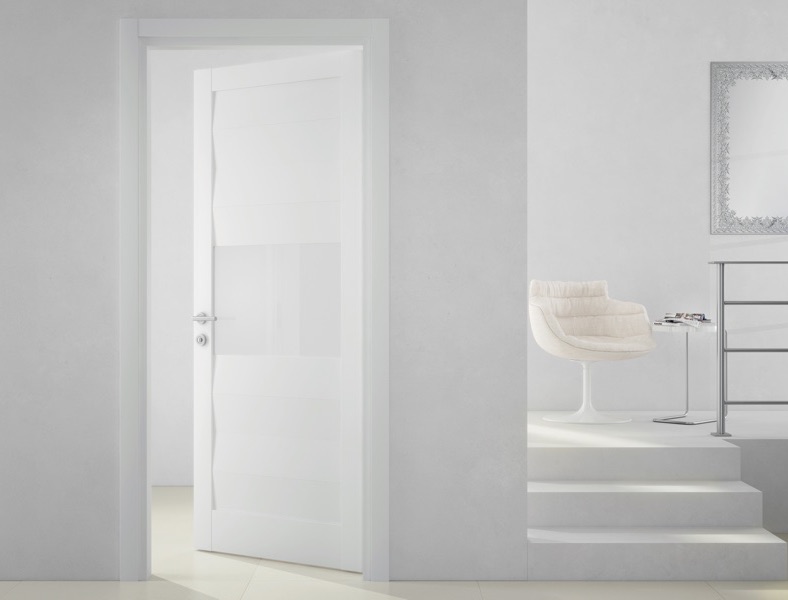
- Matte white works well in bright, modern interiors where homeowners want a clean, quiet architectural look.
- Walnut and light oak introduce warmth and balance in spaces that might otherwise feel too sharp or cool.
- Grey, light grey, linen-inspired textures, and other contemporary neutrals often suit Miami condos especially well because they complement stone, large-format tile, glass, and minimalist cabinetry.
ITALdoors’ standard finish offering includes options such as Wenge, Walnut, Light Oak, Grey, Light Grey, Mahogany, Matte White, Linen Ice, Line Grey, and Hazel in limited quantity, which gives buyers enough range to solve both modern and transitional interiors without forcing a generic look.
In Miami’s light-rich interiors, finish color also affects perception of space. Lighter finishes can make compact condos feel more open and continuous, while darker finishes can create stronger rhythm and contrast in larger homes. The right choice depends on more than trend. It depends on the architecture, the lighting, and how much visual emphasis the owner wants the doors to carry.
Think room by room
The best interior door strategy is rarely one-size-fits-all. In many Miami properties, different rooms demand different functions even when the overall design language stays consistent.
A practical room-by-room approach looks like this:
- Bedrooms: prioritize privacy, quiet, and a reassuring close
- Bathrooms: choose with moisture awareness and easy maintenance in mind
- Closets: consider double bypass or magnetic closet solutions where clearance matters
- Home offices: pay attention to acoustic comfort and a more intentional visual presence
- Open-plan homes: consider sliding or frameless solutions where flow and sightlines matter
This does not mean every room must use a completely different style. It means the opening type and hardware behavior should match the daily function of the room. Good door planning respects both consistency and context.
Match the opening type to the floor plan
A common mistake is choosing a door profile first and only later discovering that the opening type should have been the primary decision. In Miami homes and condos, usable square footage, circulation patterns, and furniture placement often make this a more important planning issue than expected.
Depending on the floor plan, the most suitable solution may be:
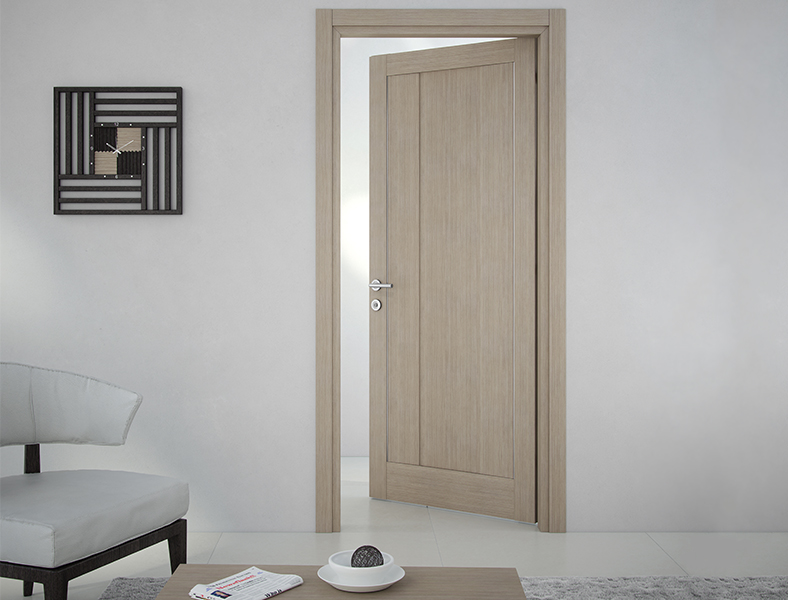
- single swing for straightforward, traditional function
- double swing where scale or access width matters
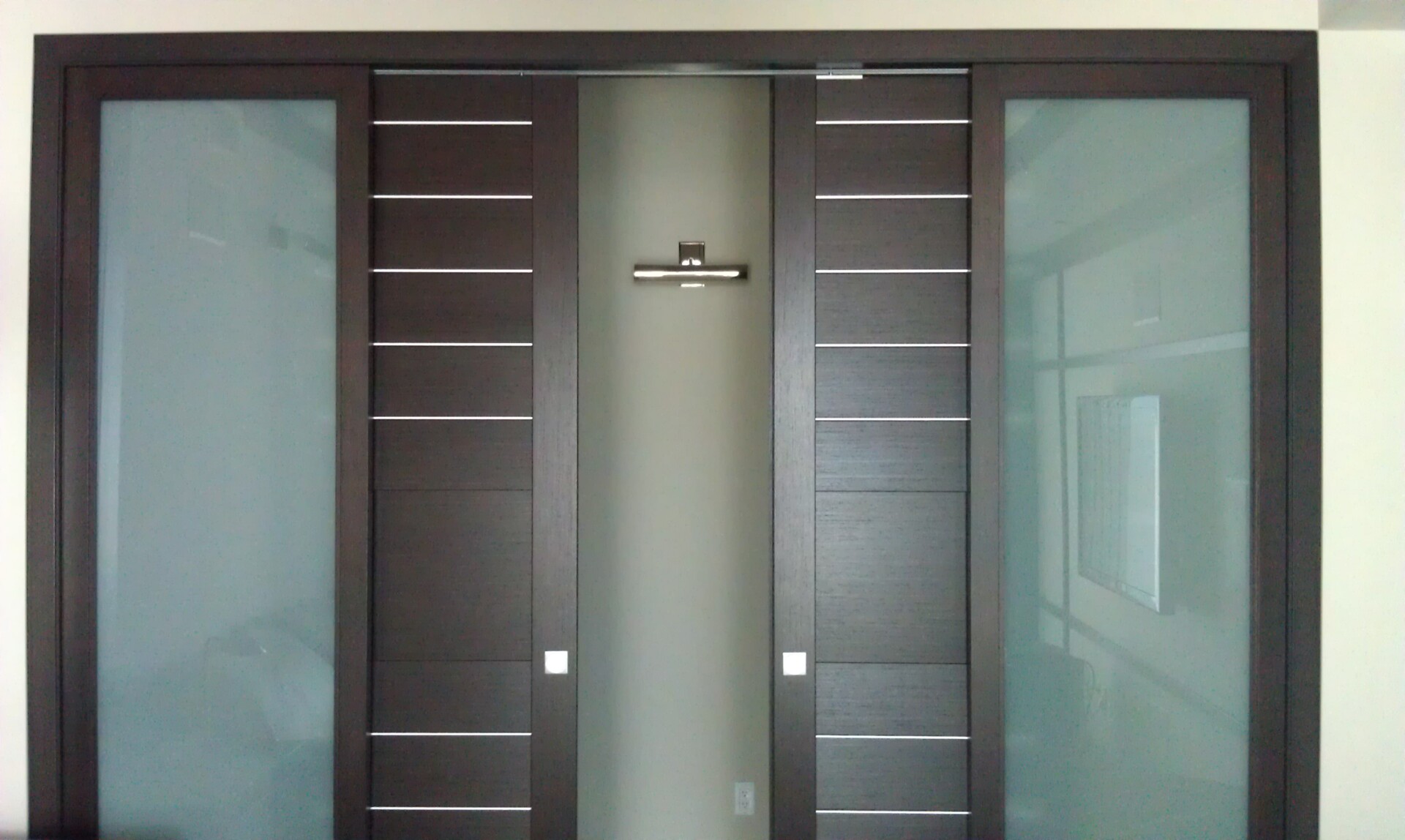
- pocket doors where space savings are essential
- double bypass sliding for closets
- wall-mount sliding doors for flexible design expression
- frameless doors for minimalist luxury interiors
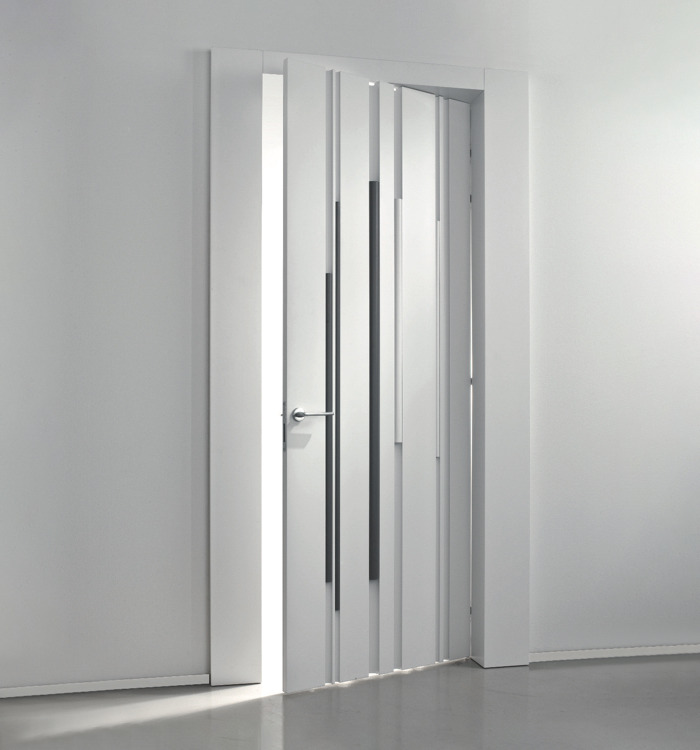
- pivot doors for specialty applications or statement spaces
ITALdoors notes that its door models can be configured across multiple door types, including single standard swing, double swing, double bypass sliding, double magnet closet applications, pocket doors, and wall-mount sliding systems, with specialty and custom options such as pivot, sliding, and frameless doors also available.
That flexibility matters because a beautiful slab alone does not solve a bad layout decision. The right opening type can improve movement, storage efficiency, privacy, and overall comfort in a way that affects daily life far more than many decorative upgrades.
Best door styles for Miami homes, condos, and modern renovations
Modern interior doors for contemporary Miami homes
Modern interior doors are one of the most natural fits for Miami’s residential market because the city’s design language often favors clean architecture, open visual flow, bright surfaces, large-format materials, and restrained detailing. In these settings, doors work best when they support the architecture quietly and precisely rather than competing with it. That is why clean lines, minimalist hardware, matte surfaces, and European styling continue to resonate strongly in contemporary South Florida interiors.
The strongest modern door compositions usually include:
- crisp geometry
- low-visual-noise detailing
- refined, minimal hardware
- finishes that work well in strong natural light
- consistent design language across multiple openings
This is where ITALdoors’ modern collections, concealed hinges, magnetic latches, and complete package approach make sense in a Miami context. Buyers are not just choosing a panel style. They are choosing a cleaner overall door experience that aligns with the contemporary homes, renovations, and upscale condo interiors that define much of the local market.
Transitional doors for versatile interiors
Not every Miami project is fully modern, and that is exactly why transitional doors remain important. Transitional design works well in homes that mix warm materials with cleaner contemporary forms, or in renovations where buyers want a fresh update without making the entire space feel stark or ultra-minimal.
A transitional door is often the right fit when the goal is to combine:
- visual warmth
- broad design compatibility
- a more timeless feel
- enough modern restraint to keep the interior current
This approach works especially well in family homes, updated villas, and residences that combine natural wood tones, soft neutrals, stone, and more traditional furnishing elements. It offers flexibility without sacrificing refinement.
Flat panel doors for streamlined design
Flat panel doors remain one of the most efficient and adaptable choices in the Miami market. Their visual simplicity allows them to work across many project types, from modern condos and multifamily developments to office interiors and renovated homes that need clean continuity.
Their value comes from several practical strengths:
- simple visual language
- broad compatibility with different finish palettes
- efficient repetition across many openings
- suitability for both residential and multifamily applications
For developers and renovators, flat panel solutions are especially useful because they help create order and consistency without feeling generic when paired with the right finish and hardware. For homeowners, they offer a contemporary look that tends to age well rather than locking the space into an overly specific design moment.
Frameless doors for high-end minimalism
Frameless doors are best suited to luxury interiors where the goal is visual continuity, restraint, and a more architectural finish to the wall plane. In the right setting, they can make the opening feel integrated rather than inserted, which is why they are often associated with high-end contemporary design.
They are particularly effective in spaces that emphasize:
- minimal visual interruption
- custom detailing
- wall continuity
- elevated, gallery-like interiors
They also work especially well when integrated with wall panels or wallpaper concepts, where the goal is to reduce visual clutter and let the room feel more curated and intentional. ITALdoors specifically positions frameless doors within its specialty/custom offering, including applications that can integrate with wall panels or wallpapers, which makes them a strong bridge between pure function and statement design.
Sliding and pocket doors for compact or open-plan spaces
Sliding and pocket doors are highly practical in Miami because many condos and renovated homes benefit from better space efficiency. Where traditional swing clearance would interfere with furniture placement, circulation, or tighter room layouts, these systems offer a more flexible solution.
They are especially useful for:
- condos with tighter floor plans
- closets
- home offices
- utility zones
- open-plan homes needing flexible separation
Pocket doors can be excellent when the goal is to hide the door completely when open, while wall-mount sliding systems can turn the opening into a deliberate design element. Both approaches can improve usability in smaller or more layered spaces, which is one reason they remain popular in South Florida residential planning.
Pivot doors for statement entrances and specialty applications
Pivot doors should generally be introduced as a premium option rather than a default recommendation. They are best used when the opening itself is meant to feel architectural, oversized, or highly expressive, whether in a dramatic entry sequence or a custom interior application.
They are most appropriate when the buyer wants:
- a strong visual statement
- a more sculptural opening experience
- a specialty or oversized solution
- a custom-forward design direction
Why ITALdoors is a strong fit for door projects in Miami?
A Miami-based family business built around a local market gap
ITALdoors’ story makes sense precisely because it starts with a local Miami problem. The company describes discovering a gap in the market: authentic Italian doors were often too expensive, too slow to arrive, or simply not readily available to serve local construction and renovation timelines. That origin is important because it frames the brand not as a generic importer, but as a Miami-based response to a real local need.
This matters in practice. A company built around solving a local project gap tends to understand the pressures Miami buyers actually face, including scheduling, design expectations, installation planning, and the desire for a higher-end look without the usual imported-product uncertainty.
Italian craftsmanship without the usual wait
One of the strongest differentiators in the ITALdoors proposition is that it links Italian craftsmanship with practical speed. Buyers who want modern European styling often assume they must accept long wait times, unpredictable logistics, and difficult pricing. ITALdoors explicitly positions itself against that expectation by focusing on in-stock premium Italian doors, faster turnaround, and more accessible project planning.
That combination is powerful in Miami because the market is highly design-aware but also highly schedule-sensitive. A supplier that can deliver both aesthetic credibility and workable timing immediately becomes more relevant than one offering beauty alone.
Wide selection for different project types
ITALdoors also stands out because the selection is broad enough to serve multiple project categories rather than only one narrow design niche. The company states that it offers over 100 door design options and highlights collections and solutions across modern, transitional, eco, flat panel, and specialty/custom applications.
That breadth matters because Miami is not a one-style market. A supplier serving only ultra-minimalist interiors or only traditional homes would miss much of the real demand. A broader selection allows:
- homeowners to coordinate multiple room types
- condo buyers to find modern but practical solutions
- multifamily teams to repeat coherent specifications
- designers to solve both clean contemporary and warmer transitional projects
Smart, complete systems instead of door slab-only selling
Another major strength is ITALdoors’ emphasis on complete systems rather than slab-only selling. The company describes an inclusive package consisting of the door frame, casings, concealed hinges, magnetic lock, and door handle, and positions this as a convenience and planning advantage for both homeowners and professionals.
This reduces friction in several ways:
- fewer compatibility issues between components
- clearer budgeting
- simpler specification
- less guesswork during installation
- a more polished final result
In a market where buyers are often balancing design ambition with practical constraints, that all-in-one structure is a major advantage.
Interior, exterior, and specialty expertise
ITALdoors is also well-positioned because it does not force buyers into a single product category. Its offering spans interior doors, exterior doors, frameless doors, pivot doors, sliding doors, wall panel integration, custom finishes, and oversized solutions, which means buyers can stay within one coordinated source even when the project complexity increases.
That range is especially useful in Miami, where projects often evolve. A buyer may begin by replacing a few interior doors, then expand to closets, a frameless feature door, or a larger statement application. Working with a supplier that already covers those categories makes the project easier to scale without losing consistency.
Support for both homeowners and industry professionals
Finally, ITALdoors presents itself as a company that supports both private clients and industry professionals. For homeowners, that means personalized guidance from selection through installation. For architects, designers, builders, and developers, it means support through specification and installation planning.
That dual support model is important in a city like Miami, where the same supplier may need to serve:
- a condo owner replacing a handful of openings
- a designer managing a custom renovation
- a builder coordinating multiple units
- a developer seeking a reliable package strategy
A company that can speak to both worlds tends to be far more useful than one that only excels in retail presentation or only in trade logistics.

Frequently asked questions about Interior Doors in Miami
What are the best interior doors for Miami humidity?
The best interior doors for Miami humidity are doors with stable construction, quality finishes, and durable hardware that can hold alignment over time. In most cases, engineered, well-finished door systems with concealed hinges and strong frame compatibility perform better than lower-grade decorative options.
Do interior doors in Miami need hurricane ratings?
No, standard interior room-to-room doors do not usually need hurricane ratings. Hurricane-rated requirements are generally relevant for exterior openings that are exposed to wind, weather, and impact conditions.
What is the difference between interior doors and hurricane doors in Miami?
Interior doors are designed for privacy, sound control, and interior design within the home. Hurricane doors are exterior door systems made for exposed openings and must meet more demanding performance and approval requirements related to wind, weather, and impact resistance.
Do I need HOA approval to replace a door in Miami?
Sometimes, yes. If the door is visible from a hallway, exterior, or shared common area, or if the building has architectural review rules, approval may be required before replacement.
What should condo owners in Miami check before replacing a door?
Condo owners should check the declaration, rules and regulations, architectural guidelines, and building management requirements first. They should also confirm whether the door needs a matching finish, specific hardware, approval documents, or licensed and insured installers.
Are Italian doors a good choice for Miami homes?
Yes, Italian doors can be an excellent choice for Miami homes when they offer strong construction, quality finishes, and complete hardware systems. They are especially appealing for buyers who want modern design, refined detailing, and a more architectural look.