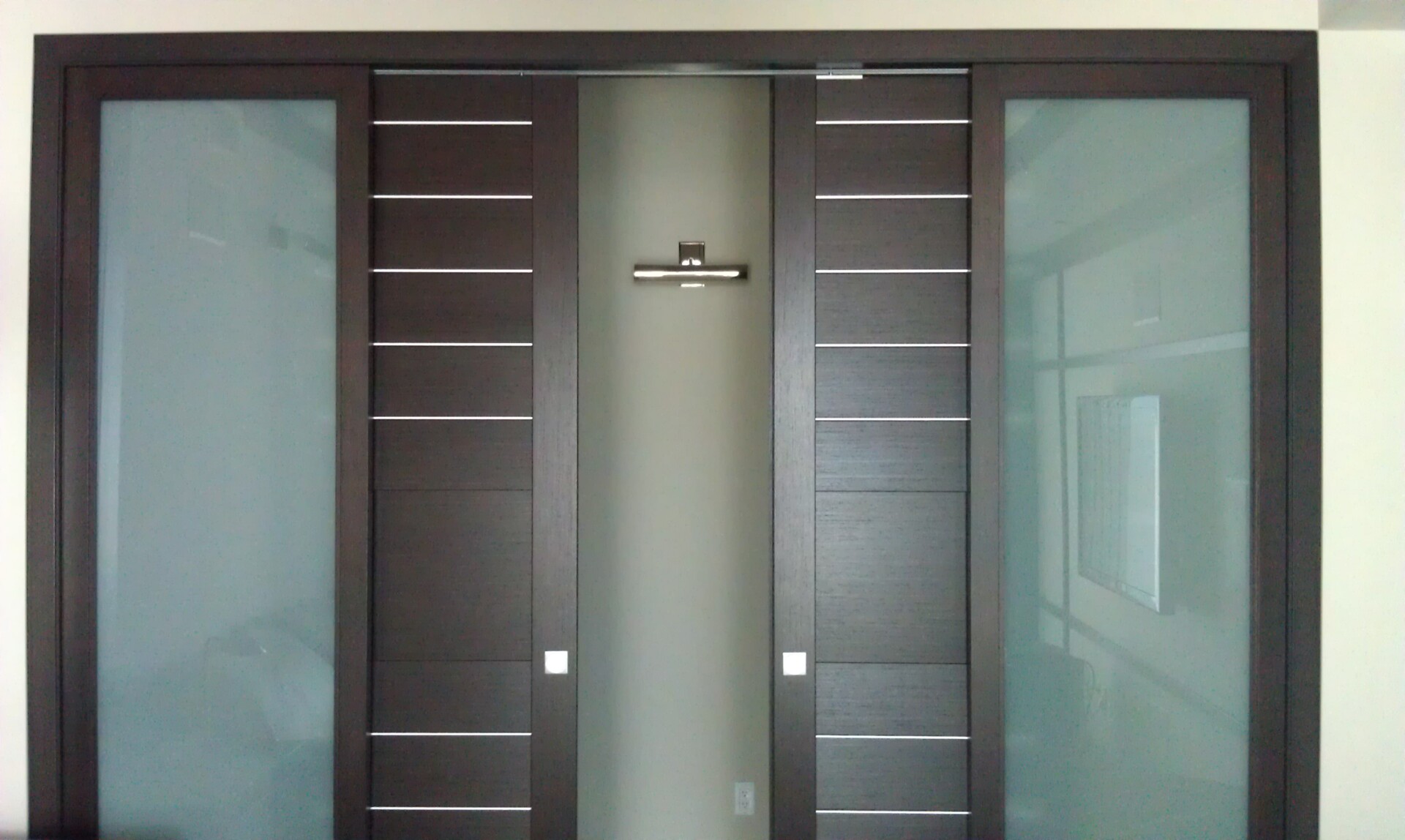
When designing or renovating a home, choosing the right door type is a decision that significantly impacts both aesthetics and functionality. Among the many options available, two distinct styles stand out: pivot doors and hinged doors. Both serve the same fundamental purpose—providing entry and exit—but their differences go far beyond mere appearance. The way they operate, their engineering, and even their suitability for different spaces make this a decision worth careful consideration.
For many homeowners, understanding these differences can be a challenge. Most people are familiar with traditional hinged doors, which are standard in homes worldwide. However, pivot doors have emerged as a luxury alternative, gaining popularity in high-end interior design and modern architecture.
Understanding the Basics: What Are Pivot and Hinged Doors?
When selecting a door for your home, understanding the fundamental differences between various types is crucial. Among the most common and widely debated choices are pivot doors and hinged doors. While both serve as functional entry points, they operate using entirely different mechanisms and offer distinct advantages depending on the space, design aesthetic, and practical needs of a home.
Below, we break down what makes each door unique and how their structural differences influence their functionality and appearance.
What Is a Pivot Door?
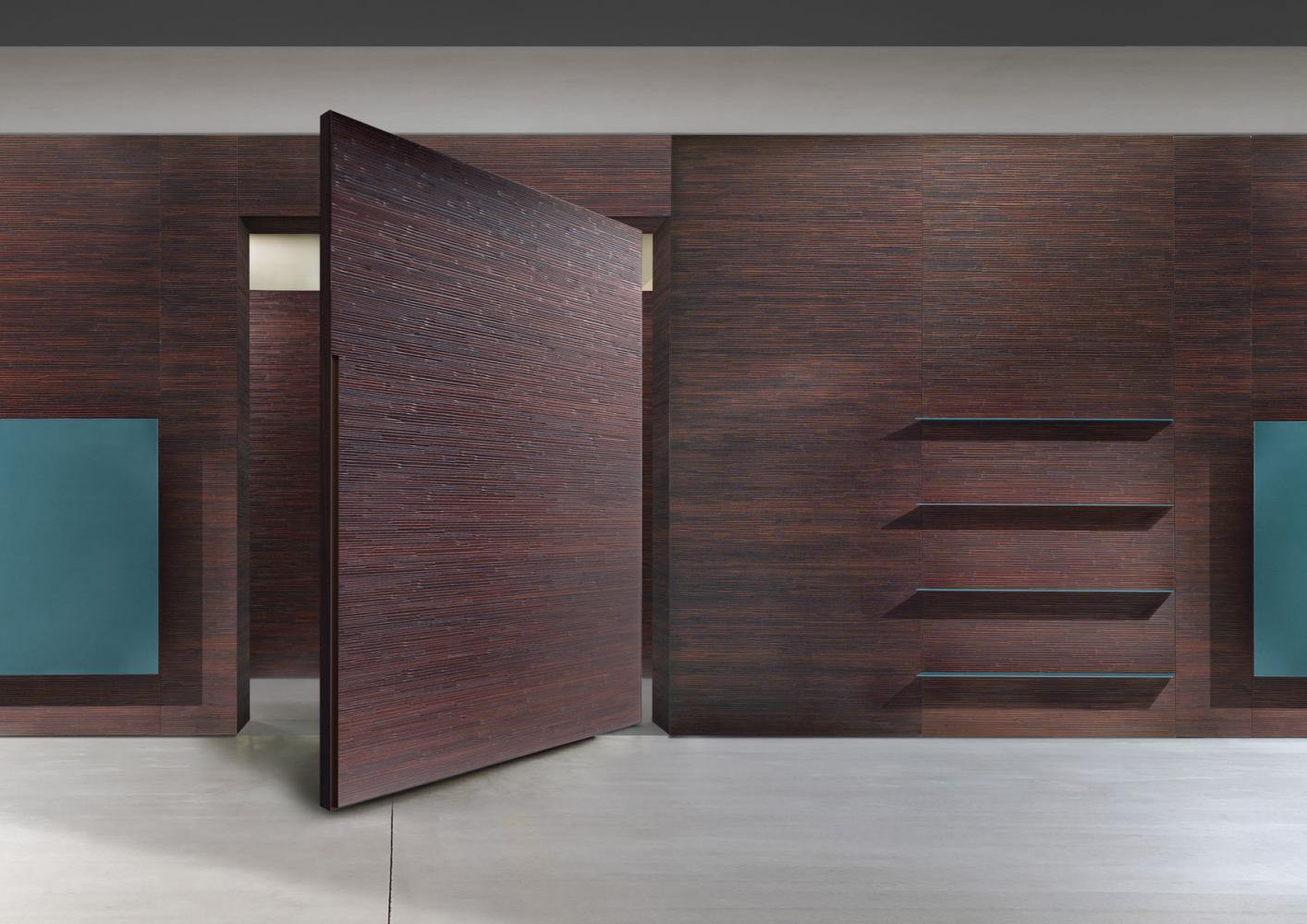
A pivot door is a modern, high-end alternative to traditional doors, designed to rotate around a pivot point rather than being mounted on side hinges. Instead of attaching to the door frame with visible hinges on one side, a pivot door is supported by a pivot hinge system located at the top and bottom of the door. This pivot is typically positioned at the center or slightly off-center, allowing the door to swing open in a unique, balanced motion.
How Does a Pivot Door Work?
Unlike traditional doors, which open by swinging outward or inward from one fixed edge, a pivot door rotates smoothly along its pivot axis, distributing its weight directly to the floor rather than relying on a side frame for support. This design allows for:
- Larger and wider door panels, making them a striking feature in modern homes.
- A seamless and floating effect, adding a sense of grandeur to entryways.
- Two openings when in motion, creating both an active and inactive space that enhances visual appeal.
Pivot doors are commonly used in luxury home entrances, modern office spaces, and contemporary interior design projects due to their sleek and elegant motion.
Key Features of Pivot Doors:
- Unique Rotation: Instead of opening from one edge, the door rotates around an axis point.
- Larger Size Options: Capable of wider and taller dimensions than standard doors.
- Aesthetic Appeal: A minimalistic, high-end look that enhances modern architecture.
- Weight Distribution: Transfers weight directly to the floor, reducing stress on door frames.
What Is a Hinged Door?
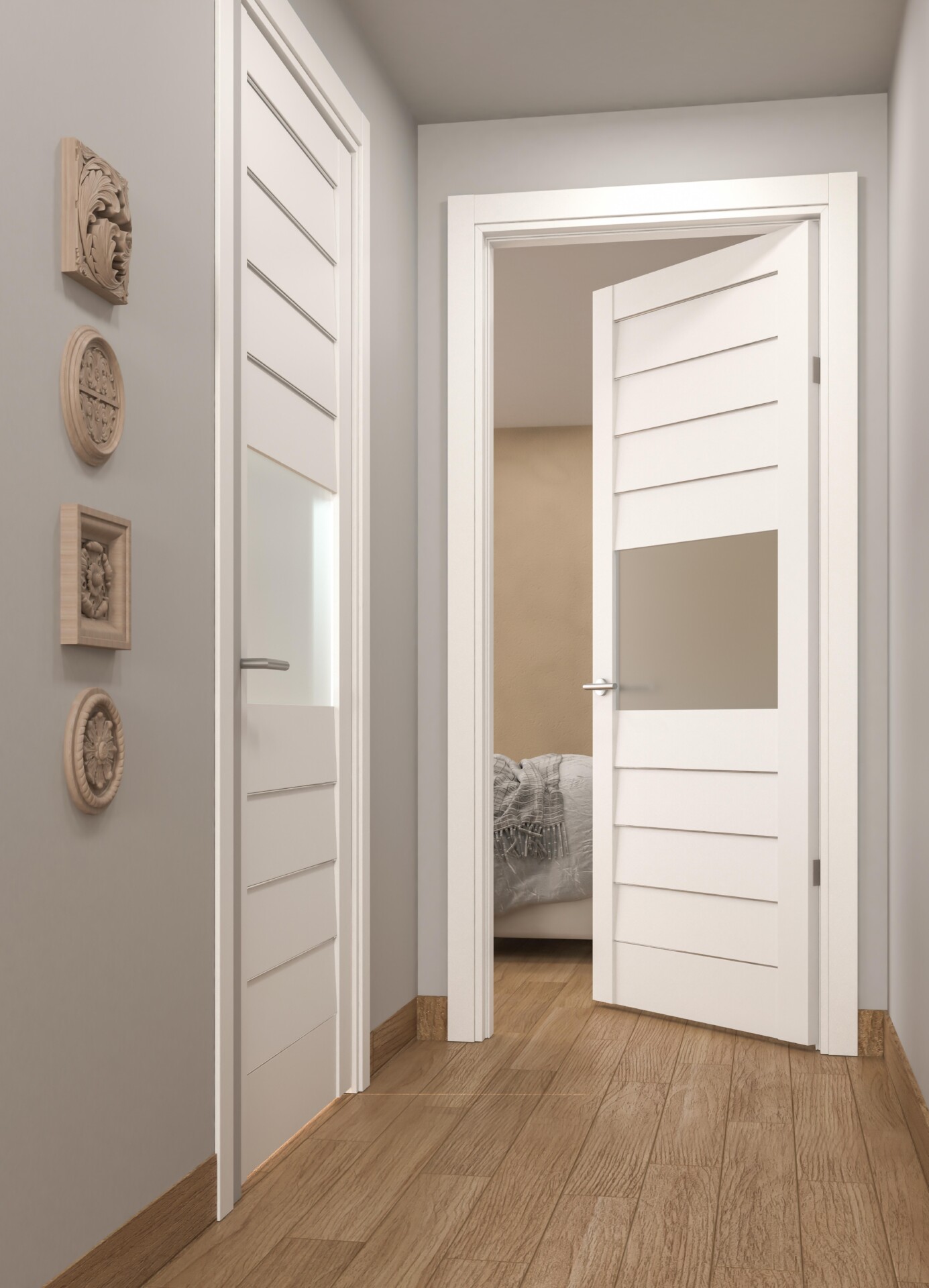
A hinged door is the traditional and most widely used door type, found in homes, offices, and buildings worldwide. These doors are mounted on a side hinge system, with two or more hinges affixed to the door frame. When opened, the door swings outward or inward along its fixed hinge line, making it a simple, familiar, and practical solution.
How Does a Hinged Door Work?
Hinged doors operate using a straightforward pivoting mechanism attached to one side. The hinges are installed on the door jamb (the vertical frame), allowing the door to swing inward or outward when pushed or pulled. Because of their practical design, hinged doors are suitable for any type of space, including:
- Main entrances in both modern and traditional homes.
- Interior doors for bedrooms, bathrooms, and living spaces.
- Exterior doors that require weatherproof sealing for enhanced insulation.
Hinged doors are ideal for homeowners who prioritize functionality, affordability, and easy installation over aesthetic innovation.
| Feature | Pivot Doors | Hinged Doors |
|---|---|---|
| Opening Mechanism | Rotates around a central or off-center pivot | Swings open from side-mounted hinges |
| Aesthetic Appeal | Luxurious, contemporary, and statement-making | Traditional, practical, and blends into various home styles |
| Size Capabilities | Allows for wider and taller doors, creating a grand entrance | Limited to standard door sizes for structural support |
| Weight Distribution | Transfers weight directly to the floor, supporting heavy materials | Relies on hinges and door frame, which may weaken over time |
| Weather Resistance | Not fully sealed – may allow air or water leaks | Completely weather-sealed, offering better insulation |
| Best For | Luxury homes, modern offices, grand entrances | Traditional homes, high-traffic areas, and weather-exposed spaces |
| Cost | Higher upfront cost due to specialized engineering | More affordable and widely available |
What Makes Pivot Doors Unique and Luxurious?
Pivot doors have become a hallmark of modern luxury architecture, instantly transforming the entrance of a home or commercial space into an eye-catching, high-end feature. Their impressive scale, smooth movement, and contemporary aesthetic set them apart from traditional doors, making them the preferred choice for architects and designers aiming to create an extraordinary first impression.
Unlike standard hinged doors, which are limited in size and function, pivot doors allow for grand proportions, innovative materials, and a unique floating effect that adds a dramatic touch to any space. Let’s explore the key elements that make pivot doors a luxurious statement piece.
1. Grand Scale & Aesthetic Appeal
One of the most defining features of a pivot door is its sheer size. Unlike traditional doors, which are often constrained by structural limitations of the frame and hinges, pivot doors transfer weight directly to the floor, allowing for much larger and heavier doors without compromising stability.
Why Size Matters in Luxury Homes
- Expansive entrances: Pivot doors can be significantly wider and taller than standard doors, making them ideal for grand entryways.
- Seamless integration: The ability to create full-height doors allows for a cleaner, more continuous visual flow in modern interiors.
- More impactful first impression: Large pivot doors command attention, setting the tone for sophisticated, high-end design.
2. Smooth Movement & Architectural Impact
The pivoting mechanism of a pivot door is not just about function—it’s about form. Unlike a standard door that swings open from one fixed edge, a pivot door rotates around an off-center or central axis, creating a smooth and fluid motion. This motion gives the illusion of a floating door, making it an architectural centerpiece.
The Unique Floating Effect
- When a pivot door opens, the pivot hinge remains nearly invisible, creating a floating effect that enhances the modern, minimalistic aesthetic.
- The door opens from both sides, meaning it creates two symmetrical openings instead of just one—one being the active passage space, the other a narrower aesthetic gap.
- This dual-space movement makes pivot doors ideal for large, open-concept spaces where seamless transitions matter.
Why Architects Love Pivot Doors
- They add dynamic movement to modern designs.
- They provide a grander entrance experience than a standard door.
- They integrate well with frameless glass and contemporary materials for a sleek, high-end look.
Pivot doors are often used in luxury hotels, modern mansions, and upscale commercial spaces where design fluidity and visual impact are top priorities.
3. Customization: Bold Material Choices for a Statement Look
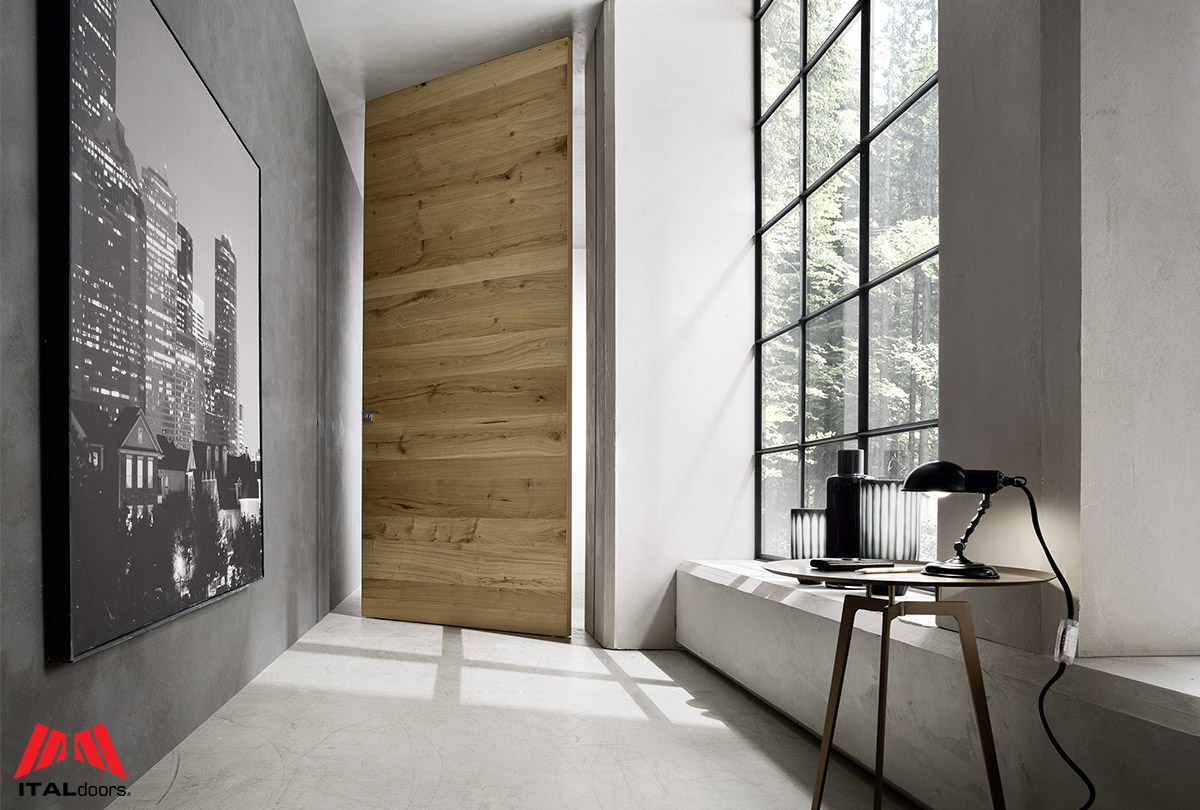
Pivot doors are not only structurally impressive—they also allow for unparalleled customization when it comes to materials and finishes. Because they transfer weight directly to the floor instead of relying on side hinges, they can support heavier and more unconventional materials, opening up a world of possibilities for bespoke design.
Premium Material Options for Pivot Doors
- Glass: Frameless or frosted glass panels for a sleek, modern aesthetic.
- Solid Wood: Rich, natural grains such as oak, walnut, or mahogany add warmth and luxury.
- Metal & Steel: Industrial, contemporary appeal with brushed aluminum, steel, or copper finishes.
- Stone & Concrete: Unique textures using marble, granite, or polished concrete, perfect for ultra-modern homes.
- Composite Panels: Innovative materials like carbon fiber or engineered wood for high durability and customization.
Custom Design Features
- Hidden Hardware: No visible hinges or door frames for a seamless, minimalist appearance.
- Oversized Handles & Push Plates: Available in luxurious metals like brass, bronze, or stainless steel.
- Smart Integration: Pivot doors can be equipped with smart locks, fingerprint access, and concealed automatic mechanisms for high-tech security.
Unlike traditional doors that often come in pre-made, standard designs, pivot doors allow for complete customization, making them a go-to choice for homeowners who want something truly unique and personal.
4. Perfect for Modern Homes & High-End Interiors
Pivot doors fit effortlessly into contemporary, high-end home designs, thanks to their minimalist and architectural appeal. Their ability to create a seamless transition between spaces makes them particularly popular in open-concept floor plans and luxury interiors.
The use of pivot doors in prestigious residences, modern villas, and cutting-edge office spaces solidifies their status as a premium, luxury design feature.
Their grand size, floating effect, premium materials, and modern aesthetic make them a preferred choice in high-end architecture. If you want a door that not only serves a practical purpose but also elevates the look of your home, a pivot door is the ultimate luxury investment.
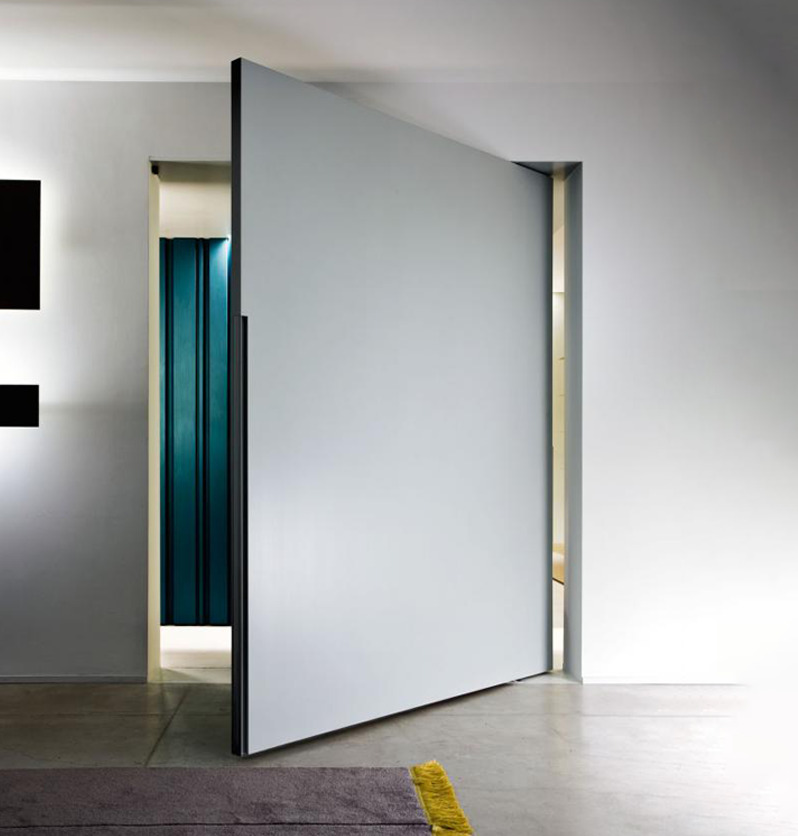
Where Do Pivot and Hinged Doors Work Best?
The choice between a pivot door and a hinged door is not just about aesthetic appeal or engineering—it also depends on where the door will be installed. While pivot doors shine in grand entrances and contemporary interiors, hinged doors remain the practical choice for most homes and commercial spaces. Understanding the ideal applications for each type of door will help homeowners and architects make the best decision based on space availability, climate considerations, and overall design goals.
Best Spaces for Pivot Doors
Luxury Home Entrances: A Grand and Modern Statement
Pivot doors are commonly used in high-end residential architecture, particularly in luxury home entrances. The ability to create a wider and taller entrance without relying on traditional hinges allows for a seamless, uninterrupted façade, making them an excellent choice for homes that prioritize modern, sophisticated design.
- The grandeur of a pivot door sets the tone for the rest of the home, signaling elegance and exclusivity.
- Larger openings make it possible to use solid wood, steel, or glass panels, enhancing the visual appeal of the exterior and interior.
- The pivot mechanism allows for fluid movement, making the act of entering the home feel more refined and luxurious.
Pivot doors are a popular choice for high-end custom homes, where architectural impact is a priority. Homeowners who want a unique and visually striking entrance often prefer pivot doors over traditional options.
Large Interior Spaces: Enhancing Openness and Flow
In expansive lofts, offices, and modern interiors, pivot doors can be used to create a seamless transition between rooms. Their floating effect and multi-dimensional movement make them perfect for large, open spaces where design fluidity is a priority.
- In open-plan offices, pivot doors can be used to create subtle partitions while maintaining a sense of spaciousness.
- In luxury loft apartments, they serve as an architectural focal point, adding depth and movement to the space.
- In modern retail stores or galleries, they provide an elegant way to divide spaces while maintaining an upscale look.
Because pivot doors do not require a traditional door frame, they can be incorporated into frameless glass walls or large contemporary interiors, creating a seamless blend of functionality and modern aesthetics.
Contemporary Designs: Ideal for Architectural and High-End Projects
Pivot doors are not just functional—they are a design statement. They are often found in:
- High-end hotels, where the entrance plays a crucial role in the overall ambiance.
- Architecturally significant buildings, where every element is carefully crafted for a modern, innovative feel.
- Showrooms and art galleries, where the emphasis is on clean lines, bold design, and uninterrupted visual flow.
For homeowners or designers working on a custom-built modern residence, an innovative workspace, or a high-end retail location, a pivot door is the preferred choice due to its luxury appeal and ability to accommodate premium materials.
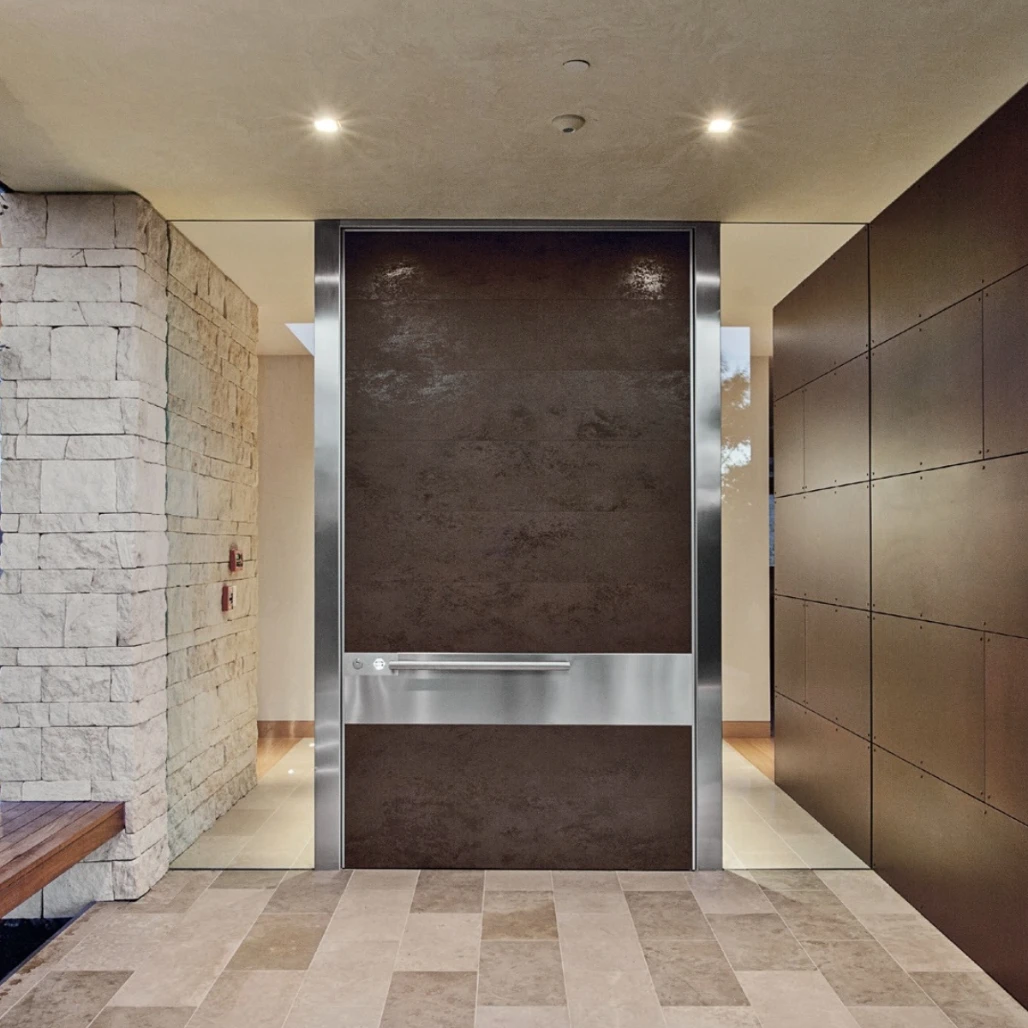
Best Spaces for Hinged Doors
Traditional Homes: A Classic and Reliable Choice
Hinged doors remain the default option for most homes due to their familiarity, ease of installation, and functionality. Unlike pivot doors, which require more space and structural modifications, hinged doors work effortlessly in any home style, from traditional suburban houses to classic apartment layouts.
- Bedrooms, bathrooms, and kitchens all benefit from the practicality of a hinged door.
- Hinged doors complement a variety of architectural styles, from rustic and farmhouse to modern and minimalist.
- Homeowners looking for durability and simplicity prefer hinged doors due to their ease of use and long-term reliability.
For homeowners who are renovating rather than building from scratch, hinged doors provide a cost-effective solution without requiring major structural changes.
Exposed Locations: Weather Protection and Insulation
Hinged doors are the better option for homes in extreme weather conditions. Their ability to be fully sealed around the edges makes them ideal for entryways exposed to rain, wind, or fluctuating temperatures.
- Pivot doors have small gaps (typically 2mm) at the corners, which can let in air or moisture if not properly protected.
- Hinged doors provide superior insulation and weatherproofing, making them more energy-efficient in both hot and cold climates.
- If a home is located in an area with heavy storms or extreme temperature shifts, a hinged door will provide better resistance to the elements.
Homeowners concerned about energy efficiency and long-term durability in harsh environments should opt for a high-quality hinged door with double weather sealing.
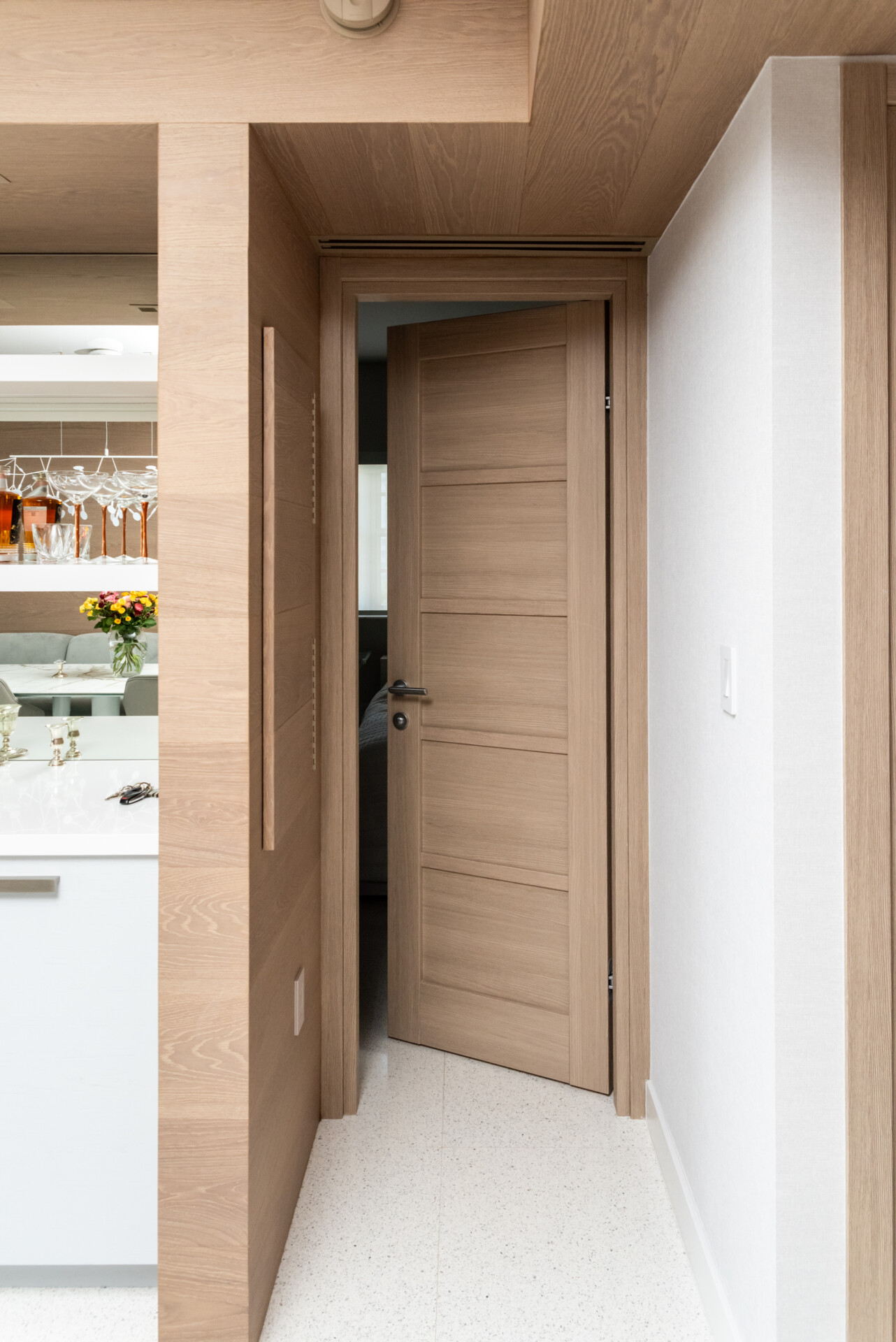
Small Spaces: Maximizing Usable Area
Unlike pivot doors, which require clearance space on both sides, hinged doors are better suited for compact homes, apartments, and tight interior layouts. Because a hinged door opens fully to one side, it allows for a larger, unobstructed passageway, which is crucial in smaller living spaces.
- In apartments and townhouses, where space is limited, hinged doors are more practical than pivot doors.
- In small bathrooms and utility rooms, hinged doors provide efficient entry without sacrificing functional space.
- In narrow hallways and compact interiors, hinged doors allow for easy movement without restricting available floor space.
For homeowners or renters who prioritize functionality over aesthetic grandeur, hinged doors are the ideal solution for smaller spaces.
| Feature | Best for Pivot Doors | Best for Hinged Doors |
|---|---|---|
| Aesthetic Impact | Modern luxury homes, contemporary architecture, and high-end spaces | Classic home styles, traditional and modern interiors |
| Size & Scale | Large entryways, full-height doors, and wide-open spaces | Standard door sizes for compact or functional spaces |
| Best Location | Grand entrances, lofts, offices, and open-plan interiors | Bedrooms, bathrooms, kitchens, and small apartments |
| Weather Resistance | Best for covered entryways, indoor applications, or mild climates | Fully weather-sealed, ideal for harsh weather and energy efficiency |
| Space Requirements | Requires more clearance for smooth operation | Works well in tight spaces and standard layouts |
| Customization | Highly customizable with premium materials like glass, metal, and wood | Wide variety of designs but with fewer size variations |
| Best Use Cases | Luxury homes, modern office spaces, showrooms, and high-end commercial buildings | Practical residential applications, small living spaces, and exposed entryways |
Which Door is Right for Your Home?
Choosing between a pivot door and a hinged door is not just a matter of preference—it’s about finding the right fit for your home’s architecture, functionality, and overall design goals. Both door types have distinct advantages, but the best choice ultimately depends on your priorities, available space, and environmental conditions.
To make the best decision, consider the following key factors:
Do You Prioritize Luxury and Aesthetics Over Cost and Practicality?
Pivot doors are an investment in luxury and modern design. They provide a striking visual impact and work best in high-end residential or commercial properties where architectural aesthetics are a top priority. However, their higher cost and specific installation requirements mean they may not be the most practical choice for all homeowners.
Hinged doors, on the other hand, offer a wider variety of styles at a lower cost. They may not be as visually dramatic as pivot doors, but they are highly functional, reliable, and adaptable to different home styles. If you are looking for a cost-effective solution that balances style and practicality, a hinged door might be the better option.
Is Your Entryway Large Enough for a Pivot Door?
Space availability is a critical factor when choosing between a pivot and a hinged door. Pivot doors require a larger clearance area to function properly, as part of the door swings in one direction while another section moves in the opposite direction. This can limit the usable passage width, making pivot doors less suitable for compact entryways or interior doors in smaller homes.
Hinged doors, by contrast, require less clearance space and can be installed in any type of home, from small apartments to large residences. If you have limited space or narrow doorways, a hinged door is likely the better choice for maximizing functionality.
Do You Need a Weather-Sealed Door for an Exposed Location?
If your front door is exposed to extreme weather conditions, a hinged door is the better choice. Hinged doors offer full perimeter weather sealing, which helps prevent drafts, water leaks, and energy loss. Their superior insulation makes them a smart option for homes in regions with heavy rain, snow, or fluctuating temperatures.
Pivot doors, while luxurious, are not fully weather-sealed. Due to their 2mm gaps at the corners, they can allow minimal air and moisture infiltration unless additional weatherproofing measures are taken. If your entryway is covered or located in a mild climate, a pivot door may still be a viable option. However, for maximum energy efficiency and protection from the elements, a hinged door remains the more practical choice.
At ITALdoors, we specialize in premium-quality pivot and hinged doors designed to complement modern, contemporary, and luxury homes. Whether you’re looking for a sleek pivot entrance door to make a bold statement or a high-performance hinged door for superior functionality and insulation, we offer customizable options crafted with precision engineering and superior materials.
Our design experts can help you find the perfect door solution to match your aesthetic vision and practical needs. Explore our collection of high-end pivot and hinged doors and take your home’s design to the next level.
Contact ITALdoors Today to Elevate Your Space with Luxury Doors!