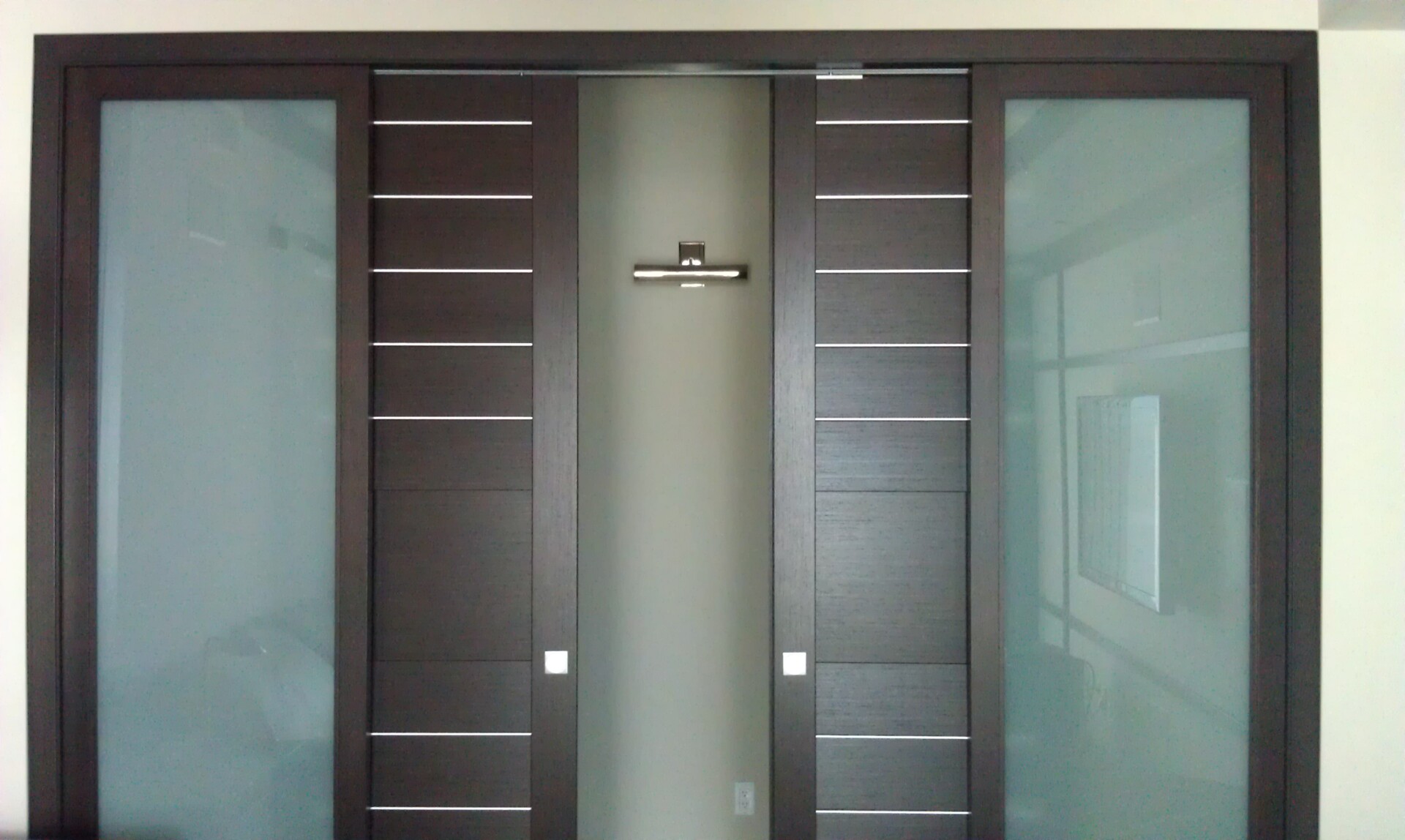
Modern interior doors are no longer a background element you choose at the end of a project. For buyers comparing modern interior doors, the real decision comes down to how well the door’s style, size, and installation work together, and that is exactly where ITALdoors stands out with authentic Italian design, in-stock options, transparent pricing, and installation timelines as fast as 2 to 4 weeks for many models.
What makes a door “modern” in today’s interiors? – Modern Interior Door Stlyle
When people search for modern interior doors, they are usually not looking for just any new door. They are looking for a door that feels intentional, current, architectural, and refined enough to improve the entire space rather than simply close off a room.
A modern door is defined less by decoration and more by discipline. Its proportions, surface treatment, finish, hardware, and integration with the walls all work together to create a cleaner, more elevated look. That is why the best modern doors interior solutions do not feel like isolated products. They feel like part of the architecture.
Clean lines, minimal detailing, and architectural consistency
The most recognizable trait of a modern interior door is visual restraint. Instead of relying on ornate carvings, heavy moldings, or traditional raised panels, modern doors usually emphasize flat surfaces, balanced proportions, clean edges, and a simplified profile. The result is a look that feels calm, deliberate, and sophisticated.
In practical terms, modern design often includes:
- Flush or flat panel surfaces
- Minimal grooves or subtle linear accents
- Reduced ornamentation
- Crisp frame lines
- Concealed hinges and cleaner hardware integration
- Finishes chosen to support the room rather than overpower it
This matters because a door occupies more visual space than many people realize. A large wall opening with a poorly chosen slab can interrupt the visual rhythm of a room, while a well-selected modern interior door can make the walls look cleaner, ceilings feel taller, and the whole home feel more cohesive.
Traditional doors often announce themselves through depth, panel layering, decorative bevels, and classic styling cues. That is not inherently bad, but it creates a very different effect. In a modern or transitional home, those details can feel visually busy. Modern interior doors, by contrast, tend to recede and elevate at the same time. They simplify the room, but they also sharpen it.
This is one of the biggest reasons designers and homeowners increasingly treat doors as architectural finish elements rather than utility items. The door is no longer only there for privacy. It helps define the interior language of the home.
The difference between modern interior doors and contemporary interior doors
In search behavior, the terms modern interior doors and contemporary interior doors are often used interchangeably. From an SEO perspective, that overlap is important because buyers may use one phrase while meaning the other. From a design perspective, though, there is a subtle distinction worth understanding.
Modern interior doors typically refer to a more defined aesthetic language. They are usually associated with:
- Simplicity
- Geometric clarity
- Minimal ornamentation
- Flat or flush profiles
- Strong architectural consistency
Contemporary interior doors, on the other hand, can refer more broadly to what feels current at the moment. That may include modern styling, but it can also include softer transitional details, mixed materials, glass accents, warmer finishes, or trend-driven interpretations of clean design.
A simple way to think about it is this:
- Modern usually refers to a clear stylistic direction with clean lines and disciplined minimalism
- Contemporary often refers to what is current, which may borrow from modern design while allowing more flexibility
For buyers, the practical takeaway is that both search terms often lead to similar product categories. If you are looking at contemporary interior doors and you prefer an uncluttered, upscale look, you will likely still end up considering modern doors interior collections. That is why a supplier with a broad but coherent offering matters. ITALdoors, for example, offers collections that span modern, transitional, eco, and flat panel directions, allowing buyers to stay within a refined design language without being locked into a single rigid look.
Why modern doors change the look of an entire home
Doors affect more than most people expect. They alter how the eye moves from one room to another, how light is distributed, how private a room feels, how sound travels, and how finished the home appears overall. Even if the flooring, cabinetry, and lighting are well chosen, outdated or mismatched doors can weaken the final result.
When modern interior doors are selected well, they improve the home in several ways:
- They create stronger sightlines through hallways and open transitions
- They help light-colored walls and large-format surfaces feel cleaner
- They support a more premium, intentional interior atmosphere
- They improve privacy without making rooms feel heavy
- They contribute to a better acoustic and functional experience
- They make secondary spaces like closets, offices, and corridors feel equally considered
This effect is especially noticeable in projects where the doors are consistent throughout the home. Bedrooms, bathrooms, studies, closets, and transitional spaces begin to feel like part of one complete interior system rather than separate design decisions made at different times.
That is why upgrading interior doors can have a disproportionate impact compared to many other finishes. In the right design, the door is not just something you notice when it is open or closed. It becomes part of the visual order of the home.
| Door style | Best for | Main strengths | Things to consider |
|---|---|---|---|
| Flush and flat panel doors | Minimalist homes, contemporary condos, new construction projects, professional offices, and renovations that need a cleaner updated look | Clean simplicity, broad compatibility with modern and transitional interiors, easy coordination with flooring and wall finishes, and strong whole-home consistency | Often the safest long-term choice for buyers who want a timeless modern look rather than something trend-driven |
| Modern panel doors with subtle detailing | Family homes, upscale apartments, transitional remodels, and interiors that need a little more character without losing a modern feel | Soft geometric structure, refined grooves or linear accents, and a balanced look between strict minimalism and more decorative styles | Best when the goal is warmth and visual interest without making the door look too traditional or too severe |
| Glass interior doors | Home offices, studies, libraries, dens, flex rooms, and transitional spaces where light should travel deeper into the home | Adds openness, improves light flow, and creates a more connected relationship between rooms; clear glass works for transparency, while frosted glass improves privacy | Privacy is the main tradeoff, so the right glass type depends on whether openness or visual separation matters more |
| Frameless doors | High-end modern homes, designer-led renovations, luxury condos, and spaces with integrated wall treatments or wallpaper systems | Ultra-clean lines, reduced visual interruption, architectural minimalism, and a premium custom feel that blends into the wall plane | Requires more deliberate planning and works best in projects with a strong architectural direction |
| Sliding modern interior doors | Bedrooms with tight clearances, home offices, flex spaces, pantries, and openings where a swing door would be impractical | Improves floor plan efficiency, supports a clean modern look when detailed well, and offers a refined alternative to standard swing operation | Less ideal where full privacy, stronger acoustic separation, or uninterrupted wall space is required |
| Pocket doors | Bathrooms, closets, smaller offices, laundry rooms, narrow transitions, and compact urban homes or condos | Saves floor space, improves circulation, reduces furniture conflicts, and creates a neat efficient appearance when installed correctly | Needs proper wall planning, framing coordination, and hardware alignment early in the project |
| Pivot doors | Oversized openings, luxury interiors, architecturally dramatic transitions, and statement spaces within premium homes | Strong visual presence, sculptural movement, custom high-design character, and a more dramatic interpretation of the interior opening | Usually best for specialty applications where scale and architecture justify the added complexity |

Materials, finishes, and construction: what buyers should look for
Many buyers focus on color and style first, but the long-term success of a door depends just as much on what is beneath the surface. Construction quality, finish technology, and system integration determine whether the door will continue to look and perform well after years of daily use.
Why door construction matters more than most buyers expect
A door is a moving part. It is opened, closed, touched, bumped, cleaned, adjusted, and relied upon every day. That makes construction quality fundamental, not optional.
A better-constructed door system is more likely to provide:
- Long-term dimensional stability
- Better resistance to sagging
- Reduced risk of warping
- Better alignment over time
- Cleaner operation with less friction
- More satisfying weight and feel in use
Low-cost shortcuts often appear in places buyers do not immediately notice:
- Inferior core construction
- Weak edge stability
- Lower-grade hardware compatibility
- Less durable surface finishing
- Inconsistent frame quality
These shortcuts may keep the upfront price lower, but they often create downstream problems in fit, appearance, and longevity. That is one of the reasons premium modern interior doors tend to feel different even before you know exactly why. The slab, frame, finish, and hardware are working together as a system.
ITALdoors emphasizes this systems-based approach through complete door packages and a focus on quality materials, durable construction, and expert support from selection through installation.
Veneer, laminate, lacquer, and painted finishes
Modern doors can look similar at a glance while using very different finish systems. Understanding these differences helps buyers make more informed choices.
Veneer finishes
Veneer offers a real wood look with natural variation and warmth. It is often ideal for buyers who want authentic texture and a more organic appearance while still maintaining a modern silhouette.
Best for:
- Warm modern interiors
- Higher-end residential projects
- Buyers who want refined natural character
Laminate finishes
Laminate is often chosen for durability, consistency, and practical performance. It can be an excellent option in homes or commercial settings where wear resistance and easier maintenance are priorities.
Best for:
- Busy households
- Multifamily projects
- Commercial interiors
- Projects requiring a clean, uniform finish
Lacquer finishes
Lacquer is often associated with a more polished, premium look. Depending on the sheen level, it can feel sleek, luxurious, and very architectural.
Best for:
- High-end modern interiors
- Statement doors
- Buyers seeking a more tailored or upscale finish effect
Painted finishes
Painted finishes can create a crisp, clean appearance, especially in whites, off-whites, and selected custom shades. Their success depends heavily on finish quality and surface preparation.
Best for:
- Bright minimalist interiors
- Homes seeking seamless wall and door coordination
- Projects where color uniformity is a priority
The right finish choice depends on more than aesthetics alone. Buyers should also consider:
- Room function
- Frequency of contact
- Desired maintenance level
- Overall design language
- Light exposure
- Whether they want visible material character or a more controlled appearance
Standard finish options and how to match them to your interior
One of the practical advantages of working with a specialized supplier is access to a curated finish range that already aligns with current interior design preferences. ITALdoors offers standard finishes including Wenge, Walnut, Light Oak, Grey, Light Grey, Mahogany, Matte White, Linen Ice, Line Grey, and Hazel.
Each finish direction supports a different interior mood.
Matte White
Matte White works extremely well in clean, bright, minimalist interiors. It helps walls and doors feel visually unified, supports a more open atmosphere, and suits both modern and transitional spaces.
Best for:
- White or light-toned homes
- Minimalist design schemes
- Interiors where subtlety is the goal
Walnut and Light Oak
Walnut and Light Oak bring warmth to modern interiors without sacrificing refinement. They are especially effective in homes that want modern lines but also want comfort and natural material expression.
Best for:
- Warm contemporary interiors
- Spaces with wood flooring
- Homes balancing modern architecture with softer furnishings
Grey, Light Grey, and Line Grey
Grey-toned finishes are often ideal for cooler contemporary interiors. They work well with stone, concrete-look surfaces, black accents, and more restrained palettes.
Best for:
- Urban interiors
- Contemporary condos
- Projects with cooler neutral palettes
- Spaces seeking a more current, understated tone
Wenge and Mahogany
Darker finishes create stronger contrast and visual drama. They can make the door feel more like a design feature and are often best used where the rest of the palette supports that level of contrast.
Best for:
- High-contrast interiors
- Dramatic contemporary spaces
- Rooms where the door should have stronger presence
Linen Ice and Hazel
These finishes can bridge the gap between very neutral and very expressive design. They offer alternative tonal directions for buyers who want something more distinctive than standard white or grey, but less intense than dark wood.
Best for:
- Transitional spaces
- Interiors with layered neutral palettes
- Buyers who want individuality without visual heaviness
When selecting a finish, it helps to evaluate it against:
- Wall color
- Flooring tone
- Cabinetry
- Metal finishes
- Natural light conditions
- Desired mood of the room
The best finish is rarely the one that stands out most on a sample. It is the one that works most intelligently with the full interior environment.
Custom finishes for more tailored projects
Standard finishes are often enough for many projects, especially when the goal is speed, simplicity, and proven compatibility with modern interiors. But there are cases where custom finishes are worth the longer timeline and additional planning.
Custom veneer, laminate, or lacquer options may make sense when:
- The project has a highly specific design palette
- The door needs to coordinate with millwork or paneling
- The client wants a signature finish
- The home includes oversized or specialty doors
- A standard option gets close, but not close enough
This is particularly relevant in luxury homes, designer-led projects, or spaces where the doors must integrate very tightly with the rest of the architecture.
The tradeoff is lead time. Because customization involves special finishes and more tailored production, buyers should expect a longer process than with in-stock models. ITALdoors offers special-order doors with custom veneer, lacquer, or laminate finishes, but these projects generally require more time and planning than quick-ship options. That makes them ideal when customization is genuinely necessary, but less practical when standard in-stock selections already meet the project’s needs.
Common standard interior door sizes
Most modern interior door projects begin with standard size ranges. These are common widths and heights used in many residential and light commercial applications, and they exist for a good reason: they make planning easier, reduce production complexity, and often shorten lead times.
In general, buyers will encounter standard interior door sizes that fall within familiar width and height categories, especially in bedrooms, bathrooms, closets, offices, and hall transitions. The exact dimensions that make sense for a project will vary depending on the home, but the important idea is that standard sizing is usually the most straightforward path when the opening allows it.
Standard sizes tend to offer several practical benefits:
- Lower overall project complexity
- Faster availability and smoother scheduling
- Easier coordination with frames and hardware
- Fewer surprises during installation
- Better pricing compared to highly customized solutions
That does not mean standard automatically means basic. A high-end modern interior door can absolutely come in a standard size and still feel custom because of its finish, hardware, construction quality, and integration into the home. In fact, many of the most successful projects combine premium design with standardized dimensional planning wherever possible.
This is one reason in-stock collections are so attractive to buyers. When the opening is compatible with popular size ranges, the process becomes more efficient. ITALdoors, for example, offers a broad selection of in-stock models and popular sizes, which can be a major advantage for homeowners and professionals working within a defined timeline.
When you need custom or special-order sizes
Not every project fits neatly into standard sizing. Some homes and layouts demand more flexibility, and in those situations custom or special-order dimensions are not a luxury. They are the correct solution.
Custom or special-order sizes are often necessary in the following cases:
- Older homes with irregular openings
- Remodels where existing wall conditions create nonstandard dimensions
- Luxury homes with taller ceilings and larger interior proportions
- Oversized openings designed for more dramatic visual impact
- Projects where symmetry across multiple rooms matters more than default sizing
Older homes are one of the most common examples. Openings may have shifted over time, framing may not be perfectly uniform, and previous renovations may have created inconsistencies from one room to another. In these situations, assuming a standard size can lead to forced adjustments, awkward casing transitions, or a finished result that looks compromised.
Remodels create a different kind of challenge. Even in newer homes, a renovation may introduce new flooring, wall finishes, trim changes, or reworked openings. Once these factors are added together, an opening that appears standard may no longer behave like one.
Luxury interiors often require custom thinking for a different reason. When the architecture includes higher ceilings, wider corridors, or stronger sightlines, standard proportions may feel visually underscaled. A taller or wider interior door can help the home feel more balanced and intentional.
Custom sizing is also important when the project calls for design symmetry. If a home has multiple visible doors in one hallway or open-plan area, inconsistent proportions can weaken the whole composition. In those cases, buyers may choose special-order dimensions not because the opening demands it structurally, but because the design demands it visually.
This is where expert guidance becomes especially valuable. A good supplier will not push custom sizing unnecessarily, but they will also not force a standard solution onto a project where it will obviously look or function poorly.
Rough opening vs finished opening vs actual door size
One of the most common and costly mistakes in interior door purchasing is confusing the size of the opening with the size of the door itself. These are not the same thing, and understanding the difference can prevent serious ordering errors.
Here is the buyer-friendly way to think about it:
Rough opening
The rough opening is the structural opening in the wall before the full finished door system is properly installed. It is typically framed a bit larger than the actual door unit needs to allow room for adjustment, leveling, shimming, and installation.
In simple terms, the rough opening is the construction space the installer works with.
Finished opening
The finished opening is what you visually perceive once wall surfaces, trims, and surrounding finishes are in place. This is often the dimension homeowners notice first, but it is not always the correct measurement for ordering the door package.
The finished opening reflects the space after parts of the wall assembly and finishing layers are complete.
Actual door size
The actual door size refers to the door panel itself, not the entire opening and not necessarily the complete installed system. The slab is only one part of the full package.
This distinction matters because a complete system includes more than the panel. It also includes the frame, clearances, hardware, swing allowances, and finishing tolerances.
A simple summary looks like this:
- The rough opening is the structural space in the wall
- The finished opening is the visible completed opening after surrounding finishes
- The actual door size is the dimension of the panel itself
Buyers who mix up these terms often order the wrong thing. They may assume the visible opening equals the required panel size, or they may measure the slab they currently have without understanding that the new frame system requires different tolerances. This is exactly why working from field-verified measurements rather than assumptions is so important.
Why measuring correctly before ordering is essential
A door project can look straightforward until measurement errors begin affecting scheduling, finish transitions, and installation quality. Accurate measurement is one of the most important steps in the process because even a beautifully designed door can become a problem if the dimensions are not verified correctly.
Before ordering, the following should be checked carefully:
- Width of the opening
- Height of the opening
- Wall thickness
- Swing clearance
- Floor finish height
- Baseboard and casing relationships
Width
Width is the first measurement most buyers think about, but it should not be treated casually. The opening should be measured carefully and, ideally, in more than one place if there is any concern about irregularity.
Why width matters:
- It affects the usability of the room
- It determines whether a standard configuration will fit well
- It influences the choice between swing, sliding, pocket, or specialty solutions
Height
Height is just as important, especially in homes where ceilings or trim proportions create stronger visual expectations. A door that is technically acceptable can still look too short for the space if height was not considered in relation to the room.
Why height matters:
- It affects visual proportion
- It can determine whether a custom door is needed
- It impacts frame specification and final finish appearance
Wall thickness
Wall thickness is often underestimated by homeowners, yet it has a direct effect on frame compatibility and casing alignment. If the wall thickness is not measured correctly, the installed door system may not sit properly within the opening.
Why wall thickness matters:
- It affects frame depth
- It influences casing fit
- It can expose finishing inconsistencies if ignored
Swing clearance
A door may fit the opening perfectly and still function poorly if the swing direction and clearance were not evaluated. The buyer needs to know not just whether the door can exist in that location, but whether it can open comfortably and logically.
Important questions include:
- Will the door hit furniture?
- Will it conflict with a vanity, cabinet, or adjacent door?
- Will the swing interrupt circulation?
- Should the handing be reversed for better use?
Floor finish height changes
This is a detail many people miss. If flooring is being changed during a renovation, the final finished floor height may differ from what is there when the initial measurements are taken. That can affect under-door clearance, visual proportion, and even door operation.
This is especially relevant when:
- Replacing tile or wood flooring
- Raising finished floor height
- Transitioning between different materials
- Coordinating doors before final floor installation
Baseboard and casing considerations
Baseboards, trim profiles, and surrounding wall conditions can all affect how the installed door will look. Even if the door technically fits, the final result may feel crowded or visually unresolved if these details are ignored.
It helps to think of the door as part of a whole wall composition. The panel, frame, casing, baseboard, and adjacent surfaces all need to work together.
Why a site visit can prevent expensive mistakes
A site visit often saves far more time and money than it costs. This is especially true for projects involving multiple doors, remodels, specialty configurations, irregular openings, or any situation where conditions on paper may differ from reality in the home.
A site visit is valuable because it allows professionals to verify:
- Actual field dimensions
- Wall conditions
- Floor transitions
- Swing logic
- Room-specific configuration needs
- Visual alignment across multiple openings
- Feasibility of specialty systems such as pocket, pivot, or frameless doors
It is particularly useful when:
- The home has older or inconsistent framing
- Several doors are visible from the same space
- The buyer is replacing many doors at once
- There are custom or oversized openings
- Wall-mounted or pocket systems are being considered
- There is little margin for error in timing or finish coordination
For buyers who want the process handled more confidently, this is where ITALdoors offers real value. Instead of leaving homeowners, builders, or designers to guess their way through specification, the team can provide site visit support and practical guidance that helps ensure the selected door is right for the opening, the room, and the installation plan.
Why homeowners, designers, and builders choose ITALdoors?
There are many places to buy doors, but buyers looking for modern Italian design usually need more than a product catalog. They need confidence in the timeline, the quality, and the support behind the order. ITALdoors has built its position by addressing those exact concerns.
Italian craftsmanship without the typical delays
A major challenge in the market has long been access. Authentic Italian doors have often been perceived as beautiful but impractical because of long waits, uncertain logistics, or limited local availability.
ITALdoors was built specifically to address that gap. The company’s model makes Italian craftsmanship more accessible by combining premium design with in-stock availability for many products and more realistic scheduling for active projects.
Affordable luxury with transparent pricing
Luxury becomes much more attractive when buyers know what they are paying for and what is included. ITALdoors emphasizes affordable luxury rather than inaccessible exclusivity, which makes the offering more relevant to homeowners, designers, and builders alike.
That value is strengthened by the company’s emphasis on:
- Competitive pricing
- No hidden fees
- No tariff surprises
- All-inclusive package options
- Faster planning and specification
18+ years of manufacturing and service experience
Experience matters in the door industry because the work sits at the intersection of design, construction, installation, and customer service. ITALdoors brings more than 18 years of experience in manufacturing and service, which gives buyers confidence that the product selection is backed by real operational knowledge.
This is particularly important for:
- Complex remodels
- Multi-door projects
- Professional specifications
- Custom and specialty orders
- Installations where field accuracy matters
Over 100 door design options
A broad offering matters because buyers rarely want a one-size-fits-all solution. Different rooms, clients, and project types demand flexibility.
ITALdoors offers over 100 door design options, giving customers more freedom to choose a look that aligns with the architecture while still preserving a cohesive modern identity.
This range also helps buyers handle the common reality that one project may require:
- Standard swing doors in bedrooms
- Sliding or pocket solutions in compact areas
- Specialty configurations in focal-point spaces
- Different finishes depending on room character
Support for single-family, multifamily, and commercial spaces
Not every door company is equipped to work across different project scales. ITALdoors supports:
- Single-family homes
- Multifamily developments
- Commercial spaces
That flexibility makes the company relevant to both end users and trade professionals. A homeowner may need personalized guidance for a renovation, while a builder or designer may need specification support across a broader scope of openings and room types.

Frequently asked questions about modern interior doors
What is the difference between modern interior doors and contemporary interior doors?
The two terms are often used interchangeably, especially in search, but they are not always identical in a strict design sense. Modern interior doors usually refer to a cleaner and more defined design language built around flat surfaces, simple geometry, minimal detailing, and architectural restraint.
Contemporary interior doors can include many of the same qualities, but the term is slightly broader. It often refers to what feels current at the moment, which may include modern forms along with softer transitional elements, glass features, warmer finishes, or subtle decorative accents. In practice, many buyers comparing contemporary interior doors still end up choosing modern interior doors because the clean-lined look has the strongest long-term appeal.
Are modern interior doors worth the investment?
Yes, in most well-planned renovations and new builds, modern interior doors are worth the investment because they improve both appearance and performance. They help create stronger visual consistency across the home, support a more refined architectural look, and often come with better hardware, cleaner fit, and smoother daily operation than lower-end alternatives.
They can also add practical value. Better-built doors provide more privacy, improved sound control, stronger long-term stability, and a more finished feeling throughout the interior. Because doors appear in nearly every room, replacing outdated or mismatched doors often has a greater impact than homeowners expect.
What is included in a complete interior door package?
A complete interior door package includes more than the slab itself. This is important because many installation problems happen when buyers purchase a door panel only and then try to match the rest of the components separately.
At ITALdoors, the all-inclusive package includes the door panel, door frame, casings, concealed hinges, passage lock, and Italian handle. A complete package usually leads to a cleaner final appearance, fewer compatibility issues, and an easier installation process because the visible and functional elements are designed to work together.
What are the most popular modern interior door styles?
The most popular modern interior door styles include flush and flat panel doors, modern panel doors with subtle detailing, glass interior doors, frameless doors, sliding doors, pocket doors, and pivot doors. Each style serves a slightly different purpose depending on the room, the layout, and the design direction of the home.
Flush and flat panel doors remain one of the most versatile choices because they work well in many interiors and tend to age gracefully. Glass doors are popular for offices and light-sharing spaces, frameless doors appeal to highly architectural projects, and pocket or sliding systems are often chosen when space efficiency matters.
Can modern interior doors be used in closets?
Yes, modern interior doors can absolutely be used in closets, and in many homes they should be. Closet doors occupy a large amount of visual space, so choosing a style that matches the rest of the home helps create a more cohesive interior.
Depending on the opening and the room layout, closet applications may use double bypass sliding doors, double magnet closet doors, or standard swing doors. The best option depends on access needs, available clearance, and how visible the closet is within the room.
How do I choose the right size interior door?
Choosing the right size starts with accurate measurement and a clear understanding of the opening conditions. The correct decision depends not only on width and height, but also on wall thickness, swing clearance, finished floor height, and trim relationships.
It is also important to understand the difference between the rough opening, the finished opening, and the actual door size. These are not the same thing. If there is any uncertainty, especially in a remodel or multi-door project, expert measuring and a site visit can help avoid expensive ordering mistakes.
Are custom modern interior doors available?
Yes, custom modern interior doors are available and are often the right choice for projects with oversized openings, taller ceilings, unusual proportions, frameless systems, pivot doors, or highly specific finish requirements. Custom options are especially common in luxury homes and designer-led renovations where proportion and material coordination matter as much as function.
ITALdoors offers special-order doors with custom veneer, lacquer, or laminate finishes, along with specialty configurations such as pivot, sliding, and frameless doors. Custom doors are ideal when a standard size or finish does not fully support the design intent.