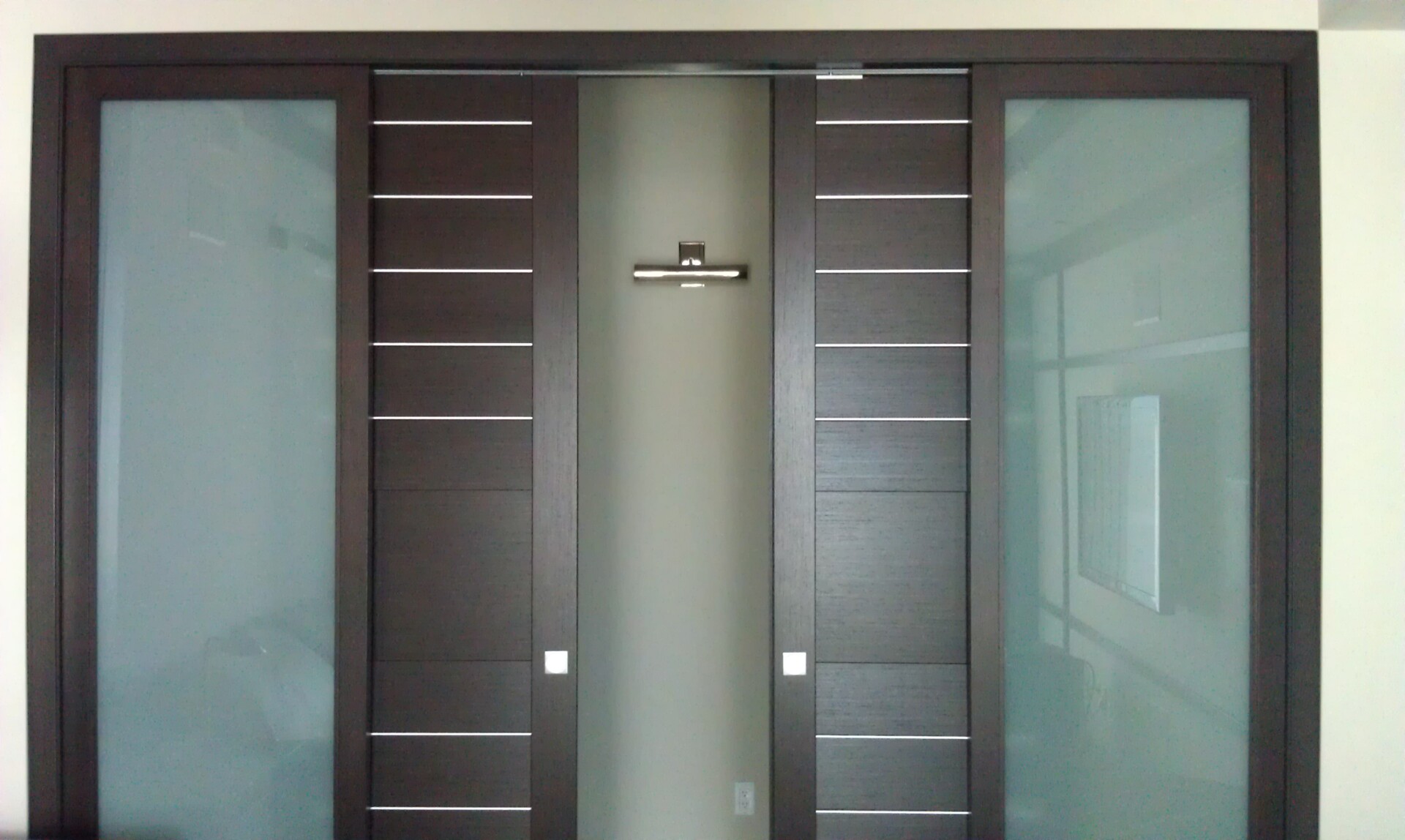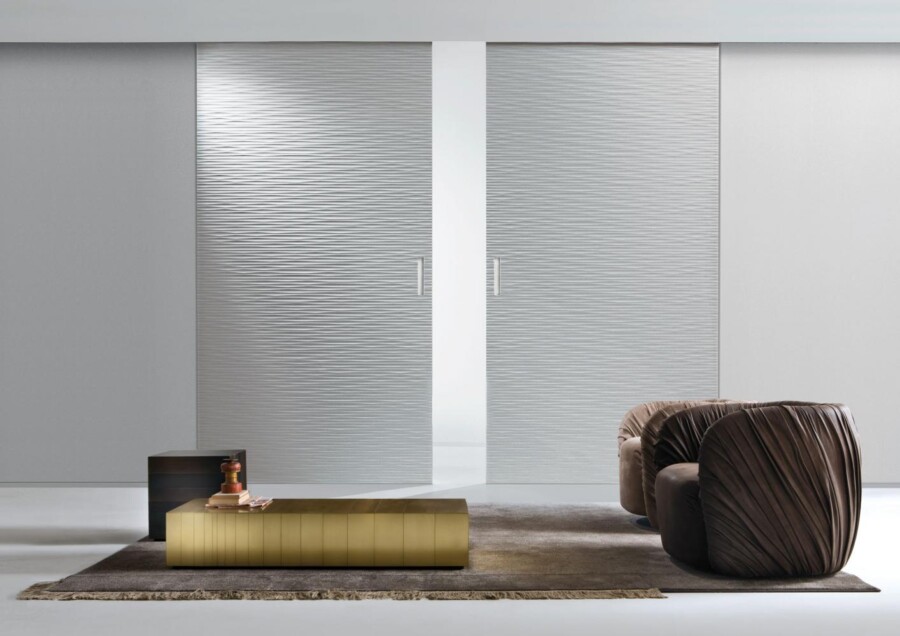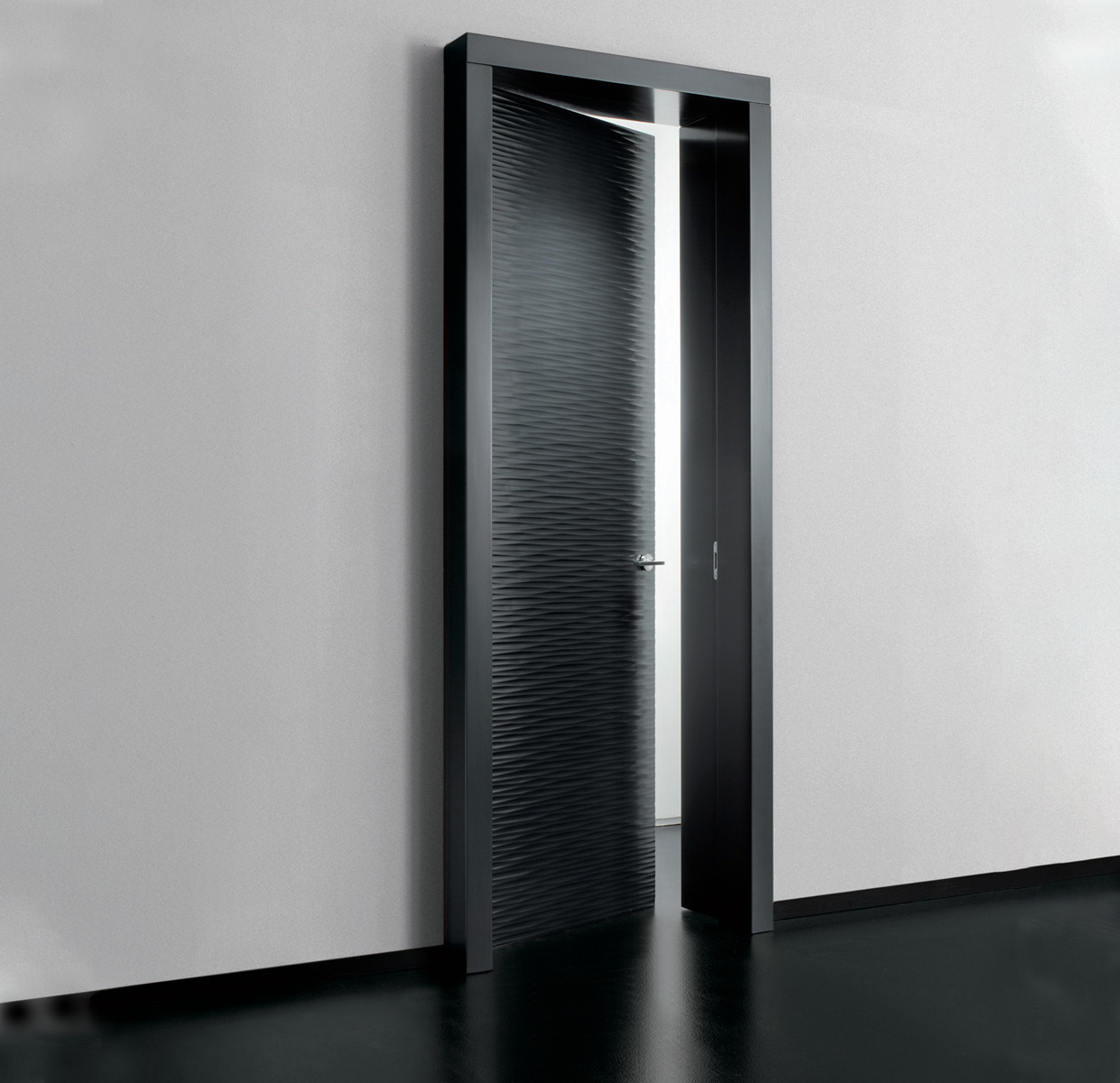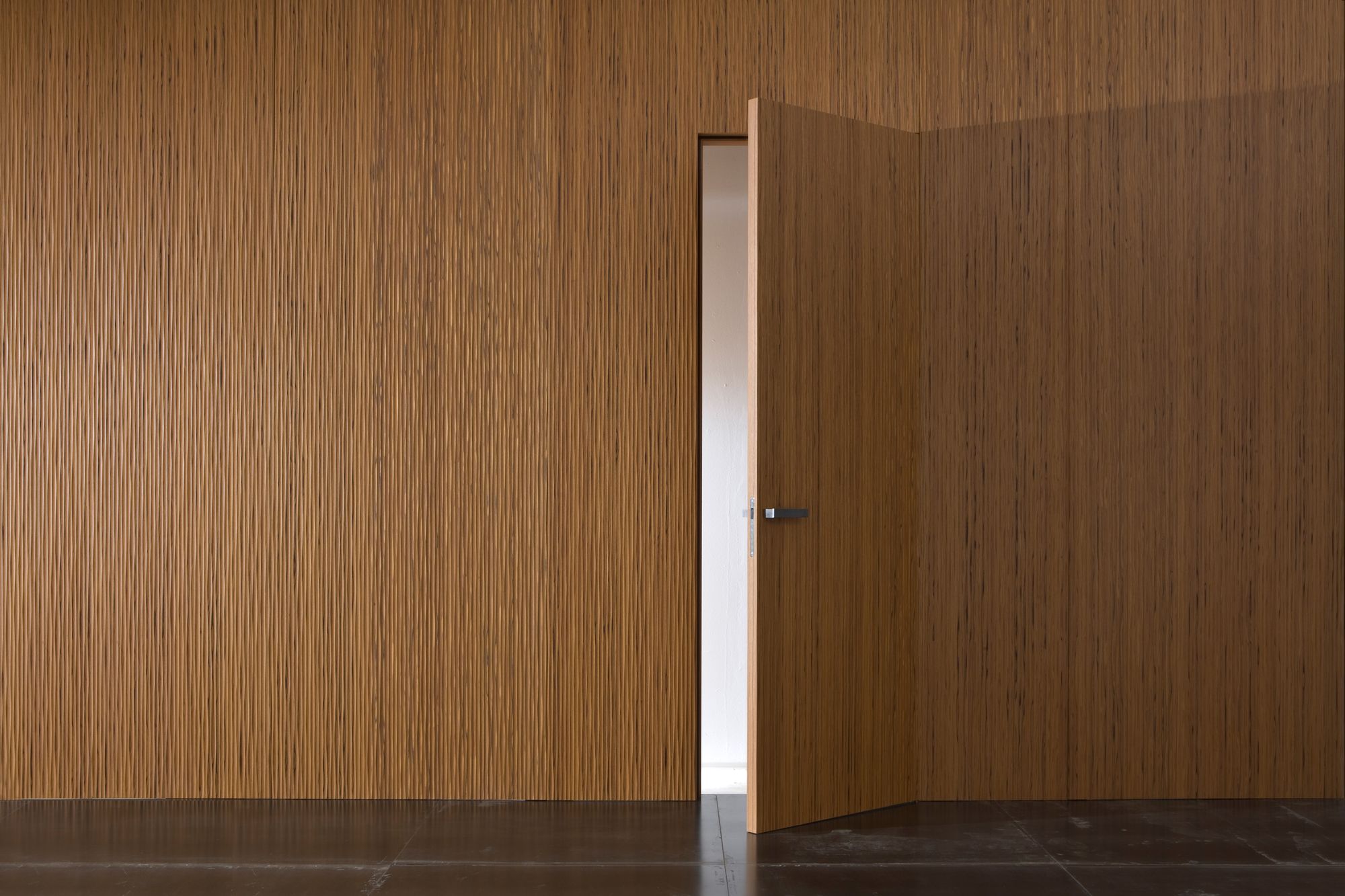
Luxury interiors are moving away from flat, overly minimal surfaces and toward warmer, more tactile rooms where depth, shadow, material quality, and craftsmanship define the experience as much as color or furniture. In 2026, fluted interior doors and reeded interior doors bring sculptural texture to modern interiors, turning a necessary architectural element into a refined design feature for homeowners, designers, and builders looking for modern interior doors in Miami with authentic Italian character, elevated finishes, and more predictable project timelines.
What are fluted and reeded doors?
Fluted and reeded doors are interior doors designed with repeated linear texture across the surface. Instead of a completely flat slab, the door has a vertical rhythm that catches light, creates shadow, and gives the room a more architectural feeling. This is why the look has become so important in high-end interiors: it adds dimension without making the space feel busy.
A fluted interior door typically features long, repeated grooves or channels, most often arranged vertically. These grooves may be carved, milled, pressed, or formed into the surface depending on the material and construction method. The effect is clean, structured, and slightly sculptural. As daylight or artificial light moves across the door, the grooves create alternating highlights and shadows, making the door feel more dimensional than a plain flat panel.
A reeded interior door is closely related, but the surface often reads as softer, rounder, or more ribbed. The term is especially common when discussing glass. A reeded glass door usually has narrow raised or pressed vertical lines that softly distort light and shape. This gives the door a luminous quality while still keeping the overall design refined and modern.
The phrase ribbed glass door is often used in the same design conversation. It usually refers to glass with repeated vertical texture, where the surface produces a gentle visual blur and decorative movement. In everyday interior design language, “fluted,” “reeded,” and “ribbed” are sometimes used almost interchangeably. The technical differences matter, but the shared idea is simple: repeated vertical texture that brings rhythm, depth, and refinement to a door.
These textures can appear on several types of door and millwork applications:
- Solid wood or wood veneer doors
- Glass inserts or full glass panels
- Closet and wardrobe fronts
- Sliding door systems
- Wall paneling systems
- Custom feature surfaces
The most important thing to understand is that this article is not only about privacy. Reeded glass can soften visibility, but the primary design value is texture. The appeal comes from how the surface interacts with light, how it changes the feel of a room, and how it turns a functional door into part of the architecture.
Fluting vs. reeding: what is the difference?
Fluting usually feels sharper, deeper, and more carved. It often suggests custom millwork, architectural paneling, or a door that was selected as a design feature rather than chosen as a basic room divider.
Reeding usually feels softer, rounder, and more ribbed. It is especially effective in glass because the texture can diffuse light while still allowing brightness to pass from one space to another.
Both options make an interior door feel more intentional. A flat door can look clean and modern, but a fluted or reeded door looks specified, integrated, and more expensive. That is why textured interior doors are becoming such a strong choice for luxury homes, boutique commercial interiors, designer offices, and high-end renovation projects.
Why fluted texture defines 2026 luxury design
The strongest luxury interiors of 2026 are not built around loud decoration. They are built around restraint, texture, proportion, and material quality. This is where fluted and reeded doors fit so naturally. They add visual richness without relying on bright colors, heavy ornament, or overly dramatic shapes.
For years, modern interiors were dominated by smooth white walls, flat cabinet fronts, minimal hardware, and large uninterrupted surfaces. That look can still be beautiful, but when every surface is flat, a room can start to feel cold or unfinished. Fluted texture solves that problem in a subtle way. It introduces movement while keeping the overall design calm.
A fluted wood door or reeded glass door works because it gives the eye something to follow. The vertical grooves guide attention upward, which can make a room feel taller and more composed. The repeated lines create order. The changing shadows create softness. The result is a door that feels modern, but not sterile.
This is also why textured interior doors work so well in high-end projects. Doors are among the most used and most visible elements in a home. They are opened, closed, passed through, touched, and seen from multiple angles throughout the day. When doors are treated as an afterthought, the whole interior can feel less resolved. When they are treated as part of the design language, the space immediately feels more complete.
ITALdoors is especially relevant in this conversation because many homeowners and professionals want authentic Italian craftsmanship but are concerned about long waits, unclear costs, and complicated coordination. ITALdoors answers that concern with premium Italian doors, local Miami support, modern finish options, complete door packages, and guidance through selection and installation. For designers, builders, and homeowners, that combination matters because a beautiful door still has to arrive, fit, function, and work with the rest of the project.
The rise of tactile quiet luxury
The phrase “quiet luxury” is often used to describe fashion, but it applies just as well to interiors. In door design, quiet luxury is not about showing off. It is about the quality of details people notice slowly: veneer grain, shadow lines, concealed hinges, magnetic locks, matte surfaces, bronze accents, and carved or ribbed textures.
Fluted and reeded doors fit this mood perfectly. They do not need to dominate the room. A light oak fluted door can soften a clean hallway. A walnut fluted door can bring warmth to a primary suite. A reeded glass door can separate a home office without making the space feel closed off. Each option adds texture, but the room still feels controlled and elegant.
Why texture makes a door look bespoke
A flat door can be beautiful when the proportions, finish, and hardware are right. But a textured door often looks more custom because it feels connected to the architecture. The grooves, ribs, or reeded lines make the surface look planned rather than generic.
This is especially important in modern homes where the design relies on fewer elements. When there are no heavy moldings, ornate frames, or decorative wall treatments, the materials themselves have to carry more visual weight. A fluted interior door can do that without disrupting the clean look. It becomes a quiet focal point, not a distraction.

Fluted wood vs. reeded glass: how to choose
The choice between a fluted wood door and a reeded glass door depends on the room’s function, the level of visual separation needed, the amount of light you want to preserve, and the finishes around the opening. Both options can feel refined, but they create different moods.
A fluted wood door feels warmer, more solid, and more architectural. It is often the stronger choice when the door should feel like part of a millwork concept or when the room needs a more private, grounded atmosphere. A reeded glass door feels lighter and more luminous. It works well when the goal is to separate rooms while still allowing light to move through the interior.
For rooms where warmth and material presence are the priority, a fluted wood door is usually the better direction. It can work beautifully in walnut, light oak, wenge, or other refined finishes because the vertical grooves emphasize the surface and make the material feel more dimensional. In a primary bedroom, private office, lounge, or hallway, this can make the door feel closer to custom furniture than a standard interior component.
For rooms where light matters, reeded glass becomes more useful. A reeded glass door can help a dressing area, home office, bathroom transition, or interior corridor feel brighter while still creating separation. The texture softens the view, but the design should not be treated only as a privacy solution. The true value is how the glass catches light and adds movement to the room.
A ribbed glass door offers a similar design advantage. It can bring vertical rhythm to sliding systems, room dividers, or contemporary openings where a fully solid door may feel too heavy. When paired with the right frame, handle, and surrounding finishes, ribbed glass can feel both modern and timeless.
Homeowners focused primarily on opacity and visual privacy should also compare other glass types, including a frosted glass interior door. Frosted glass belongs to a slightly different design category because its main purpose is usually privacy and diffusion, while reeded and ribbed glass are more about texture, rhythm, and sculptural light play.
The best choice is rarely based on trend alone. It should come from the room itself. Ask what the door needs to do. Should it make a statement? Should it disappear into a feature wall? Should it let light through? Should it warm up a clean white interior? Should it connect with wardrobe fronts or wall paneling? Once the purpose is clear, the right fluted or reeded solution becomes much easier to specify.
| Option | Best for | Design effect | Considerations |
|---|---|---|---|
| Fluted wood door | Primary suites, offices, hallways, wardrobe fronts, statement entries | Warm, architectural, solid, custom | Finish selection matters; pair with refined hardware |
| Reeded glass door | Bathrooms, dressing areas, offices, transitional spaces, rooms needing borrowed light | Airy, luminous, textured, soft | Do not treat it only as privacy glass; confirm desired opacity and visibility |
| Ribbed glass door | Modern interiors, room dividers, sliding doors, spaces where light flow matters | Vertical rhythm, light diffusion, decorative movement | Works best when coordinated with frame and hardware finish |
| Flat textured interior door with fluted detail | Modern homes that need subtle depth | Clean but elevated | Ideal for clients who want texture without a dramatic statement |
Best rooms for fluted and reeded doors
Fluted and reeded doors work best when the texture has a clear design purpose. They should not be added only because they are trending. The strongest applications are rooms where the door is highly visible, where the wall surface needs more depth, or where a standard flat panel would make the interior feel too plain.
Primary suites
A primary suite is one of the best places to use a fluted wood door. The entrance to a bedroom should feel calm, private, and refined, but it should also have enough presence to mark the transition from the public part of the home into a more personal space. A fluted surface does that beautifully because it adds depth without making the door feel loud.
Warm veneer finishes work especially well in this setting. Walnut, light oak, or another refined wood tone can soften neutral walls, complement stone floors, and create a more finished atmosphere. When paired with concealed hinges and a clean modern handle, the door feels integrated rather than decorative.
For dressing areas, closets, and ensuite transitions, reeded glass can also be useful. It allows light to keep moving through the suite while giving the space a softer boundary. The effect is not the same as a fully open layout, but it also does not feel as closed or heavy as a solid door.
Statement entries inside the home
Not every statement door needs to be an exterior entry door. In many luxury interiors, the most memorable moments happen inside the home: the entrance to a private office, media room, wine room, formal dining area, lounge, or library. These spaces often deserve more than a basic flat door because they have a stronger emotional or functional role.
A fluted or reeded interior door can create a moment of arrival. It tells the eye that the room beyond the opening matters. This is especially effective when the door is visible from a main hallway, open living area, or central circulation path.
For homeowners comparing Italian doors in Miami, this is where authentic design detailing becomes important. A textured door should not look like a surface treatment added at the end of the project. It should feel like part of the overall architecture.
Feature walls and concealed door concepts
Fluted doors are also highly effective when they are designed to blend into matching wall paneling. Instead of treating the door as a separate object, the vertical grooves continue across the wall and door surface, creating one continuous architectural plane.
This approach works especially well in high-end interiors where visual continuity matters. A door to a powder room, storage area, private office, or service space can be hidden within a larger feature wall. The texture helps disguise the opening while still making the wall feel intentional and crafted.
The benefit is both practical and aesthetic. The room becomes cleaner because fewer visual breaks are visible. At the same time, the wall gains depth, shadow, and movement.
Wardrobe and closet fronts
Closet systems and wardrobe fronts are ideal for fluted and reeded texture because they often occupy large sections of wall. When those surfaces are completely flat, they can look heavy, blank, or purely functional. A textured surface turns storage into a design feature.
Fluted wardrobe fronts can work especially well in bedrooms, dressing rooms, walk-in closets, and luxury rental residences where every visible surface matters. The repeated vertical rhythm creates order and helps large closet runs feel more refined.
This is also where the texture can be used more generously. A single fluted room door may be subtle, but a full wardrobe wall can create a stronger statement while still staying elegant.
Home offices and flexible rooms
Home offices, guest rooms, and flexible rooms often need a balance between openness and separation. A fully solid door can make a space feel closed off, while a fully transparent glass door may not provide enough visual comfort. Reeded glass and ribbed glass doors sit between those extremes.
They allow light to pass through, but the texture softens the view. This makes them useful for work areas, small offices, study spaces, and rooms connected to larger living areas. The result is separation without the boxed-in feeling that can happen when every room is closed by a solid slab.
Pairing fluted doors with finishes and hardware
Fluted and reeded texture becomes more effective when it is paired with the right finish and hardware. The door already has visual movement, so the surrounding elements should support it rather than compete with it. The goal is balance: let the texture lead, then use material, color, and hardware to complete the look.
A well-designed fluted door should feel intentional from every angle. The finish should suit the room’s palette. The handle should feel proportional. The hinges, frame, casing, and lock should work with the door system instead of looking like separate pieces selected later.
Walnut veneer for warmth and depth
Walnut is one of the strongest finishes for a fluted wood door because it brings natural warmth and visual depth. The vertical grooves emphasize the richness of the grain, making the surface feel more dimensional than a standard flat wood door.
In primary suites, private offices, luxury hallways, and lounge spaces, walnut can make the interior feel more grounded. It pairs well with soft white walls, limestone, marble, large-format porcelain, warm lighting, and bronze or black metal accents.
The key is restraint. Walnut already has character, and fluting adds another layer of movement. When both are used together, the surrounding design should remain clean enough for the door to stand out naturally.
Bronze for a softer luxury effect
Bronze hardware, bronze-toned accents, and warm metal details pair beautifully with both fluted wood and reeded glass. Bronze feels refined without being as sharp or graphic as black. It also works well in interiors that use warm stone, beige upholstery, natural wood, creamy wall colors, or soft architectural lighting.
On a reeded glass door, bronze can make the whole system feel more elegant and less purely contemporary. On a fluted wood door, it reinforces the handcrafted, high-end quality of the surface.
Matte black for modern contrast
Matte black hardware gives fluted doors a sharper, more contemporary look. It works well in Miami condos, modern villas, minimalist interiors, and spaces with black-framed windows, linear lighting, or darker metal accents.
The advantage of matte black is clarity. It creates a clean contrast against light oak, matte white, linen, grey, or reeded glass. Against walnut or wenge, it can create a deeper and more dramatic effect.
However, black hardware should be used with intention. If the room already has many dark accents, it can look cohesive. If the rest of the palette is very soft, bronze or another warm metal may feel more balanced.
Light oak, matte white, linen, and grey finishes
Lighter finishes make fluted texture feel more subtle and airy. Light oak can bring softness without making the room feel dark. Matte white can keep the door minimal while still adding depth through shadow. Linen ice and linen grey can create a more textile-like effect, which works well in calm modern interiors.
Grey, light grey, wenge, walnut, matte white, linen ice, linen grey, light oak, and limited mahogany availability give designers and homeowners different ways to control the mood of the door. A lighter finish usually makes the fluting quieter. A darker finish usually makes the grooves more dramatic.
ITALdoors interior door packages can include the door slab, frame, casing, concealed hinges, magnetic lock, and handle. This matters because a textured door looks best when the full system is coordinated. Instead of sourcing each piece separately and hoping the finish, hardware, and technical details work together, the door can be specified as a complete package.
Fluted doors in modern Miami interiors
Miami interiors often need a careful balance of brightness, warmth, and high-end finish quality. Many homes and condos have large windows, strong natural light, open floor plans, stone surfaces, pale walls, and coastal-modern palettes. These elements can look beautiful, but if every surface is smooth, the space can sometimes feel too flat or too hard.
Fluted and reeded interior doors help solve that problem. They bring softness and movement into rooms that might otherwise rely only on glass, stone, paint, and straight lines. As daylight changes throughout the day, the grooves catch light differently, creating subtle shadow shifts across the door surface.
In a Miami condo, a reeded glass door can help keep light flowing through a compact layout. This is useful for offices, dressing areas, bathrooms, and secondary rooms where the goal is separation without visual heaviness. The ribbed texture gives the door character while helping the space feel brighter and more open.
In a single-family home, a fluted wood door can create warmth against white walls, marble floors, porcelain slabs, or modern millwork. It can also help connect different areas of the home when the same texture or finish is repeated in closets, wall paneling, or selected feature doors.
In a commercial or hospitality-inspired interior, textured doors can make private rooms, offices, lounges, and meeting areas feel more curated. The door becomes part of the brand experience, not just a functional divider.
The practical side also matters. Interior doors influence privacy, acoustics, natural light, circulation, and the overall feel of a room. ITALdoors combines Italian design with practical solutions for modern American homes and commercial spaces, offering door systems that support both appearance and everyday function.
For clients who want clean contemporary design with refined finishes, the ITALdoors Modern Collection is a strong starting point for understanding how modern Italian door systems can shape the feeling of a space.
How to order fluted Italian doors
Fluted and reeded doors should be discussed early in the design process. Texture affects more than the door face. It can influence the opening size, wall alignment, casing choice, hardware position, sliding system, pocket system, wardrobe layout, and even the way lighting falls across the surface.
This is especially important when the door is part of a larger design concept, such as a feature wall, concealed opening, wardrobe front, or floor-to-ceiling statement. If the textured door is selected too late, the project may need adjustments that could have been avoided with earlier planning.
Start with the room, not just the door
Before choosing a fluted or reeded design, define what the door needs to accomplish. The right specification depends on function as much as style.
Consider whether the door should:
- Create a statement entry
- Add subtle texture to a clean room
- Allow light to pass through
- Connect with wardrobe fronts or wall paneling
- Support privacy or acoustic separation
- Blend into a concealed architectural surface
- Match a wider modern door package throughout the home
Once the purpose is clear, it becomes easier to decide between fluted wood, reeded glass, ribbed glass, sliding systems, swing doors, closet fronts, or custom configurations.
Visit the Miami showroom before finalizing finishes
Texture should be seen in real light whenever possible. A fluted surface can look soft in one finish and dramatic in another. Reeded glass can feel delicate, bold, transparent, or visually active depending on the glass pattern, frame, and surrounding light.
The ITALdoors Miami showroom gives homeowners, designers, architects, and builders the ability to compare materials in person. Clients can review finishes, understand hardware options, discuss measurements, and coordinate the technical details that affect installation.
ITALdoors also helps reduce one of the biggest frustrations in door projects: uncertainty. Many custom door projects take months, and unclear pricing or vague lead times can delay the entire schedule. ITALdoors offers premium Italian doors, local Miami support, in-stock options, transparent communication, and guidance through selection and installation. Depending on the model, size, finish, and project requirements, interior door solutions may be available with faster turnaround than a fully custom overseas order.
For highly specific fluted, reeded, veneer, lacquer, laminate, size, or configuration requests, special order doors may also be available. This gives designers and homeowners flexibility when the project calls for something beyond standard in-stock options.
Bring sculptural texture into your project with ITALdoors
If you are planning a modern Miami home, condo, office, or development project, fluted and reeded doors can bring the 2026 texture trend into the space in a refined and practical way. Visit the ITALdoors Miami showroom or schedule a site visit to compare in-stock and custom Italian door options, coordinate finishes and hardware, and choose a door system that adds depth without unnecessary delays or design uncertainty.

Frequently asked questions about Fluted & Reeded Doors
What is the difference between fluted and reeded interior doors?
Fluted doors usually have carved or grooved vertical channels that look sharper and more architectural. Reeded doors usually have a softer, rounded, ribbed effect, often seen in glass or linear textured surfaces. Both create depth, shadow, and visual rhythm.
Are fluted interior doors only a trend?
Fluted interior doors are a major 2026 design trend, but the look is not purely temporary. Fluting is rooted in classic architectural detailing, so it can feel timeless when used with quality materials, balanced proportions, and restrained finishes.
Where do fluted wood doors work best?
Fluted wood doors work especially well in primary suites, home offices, hallways, wardrobe fronts, feature walls, and statement room entries. They are ideal when the goal is warmth, depth, and a custom millwork effect.
Is a reeded glass door the same as a privacy door?
Not exactly. Reeded glass can soften visibility and diffuse light, but it should not be selected only for privacy. Its main value is texture, light play, and visual movement, so privacy expectations should always be confirmed before ordering.
Do fluted doors work in minimalist interiors?
Yes. Fluted doors are especially useful in minimalist interiors because they add depth without clutter. The room can stay clean and modern while the door prevents the space from feeling flat or unfinished.
What hardware looks best with fluted or reeded doors?
Bronze, matte black, and refined modern handles all work well. The best choice depends on the door finish, lighting, flooring, nearby metal accents, and whether the design should feel warm, subtle, or sharply contemporary.
Can ITALdoors help with custom fluted or reeded door options?
Yes. ITALdoors offers in-stock Italian interior doors as well as special order solutions depending on the project. The team can help with finishes, configurations, measurements, hardware, and installation planning.