In a Miami condo, interior doors affect how open the apartment feels, how quiet bedrooms and home offices are, how clean the design flow looks, and whether the project makes sense for building rules, HOA expectations, and fire-safety concerns.
Readers renovating in South Florida should also review ITALdoors’ guide to choosing interior doors in Miami, especially because humidity, hurricanes, indoor-outdoor climate shifts, and HOA requirements can influence which door solutions make the most sense.
The modern look Miami condo owners want today
Modern Miami condo interiors usually favor clean lines, calm surfaces, open sightlines, warm neutral tones, and materials that feel refined without being heavy. Interior doors should support that atmosphere. They should not interrupt the design with outdated panels, bulky trim, mismatched hardware, or finishes that feel disconnected from the rest of the apartment.
For a broader look at how door design is evolving, ITALdoors’ article on the latest door trends and solutions is a helpful resource. The current direction is clear: doors are no longer treated as basic construction items. They are part of the overall interior concept, influencing privacy, acoustics, lighting, flow, and architectural style.
Clean lines and flat panels
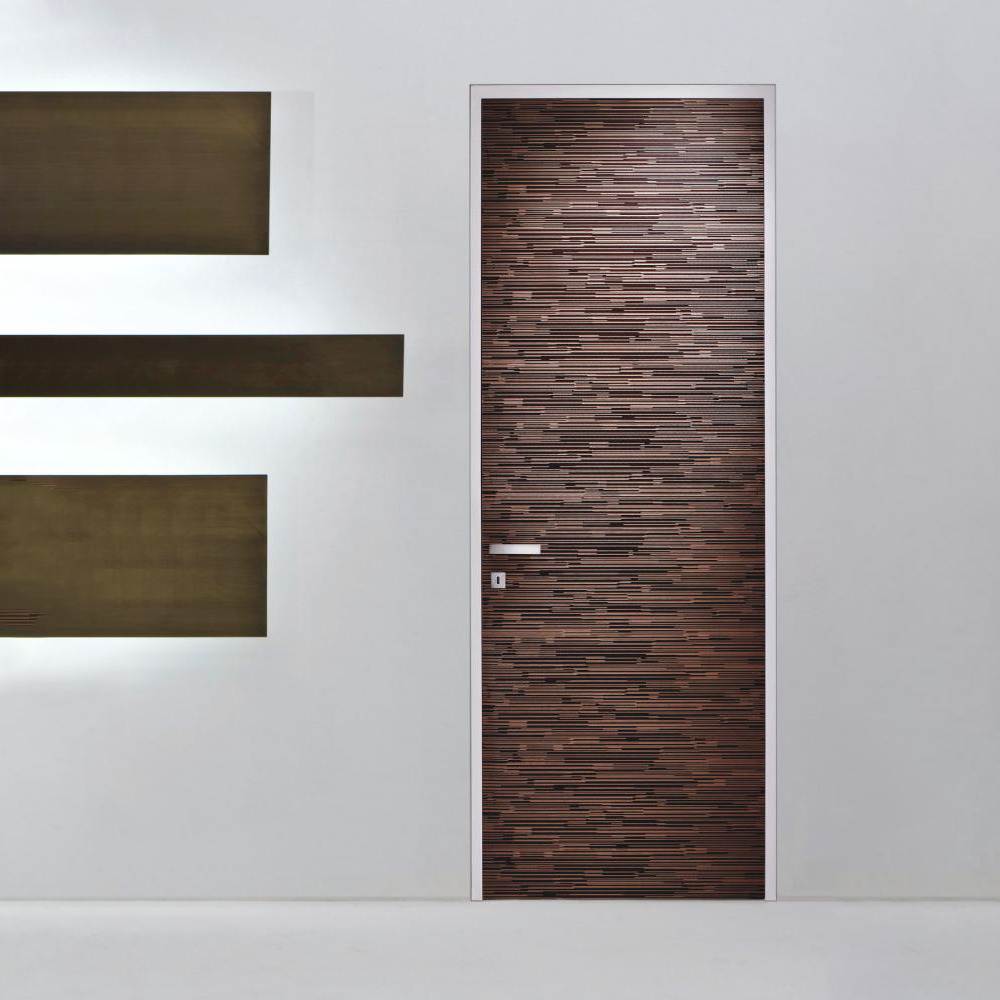
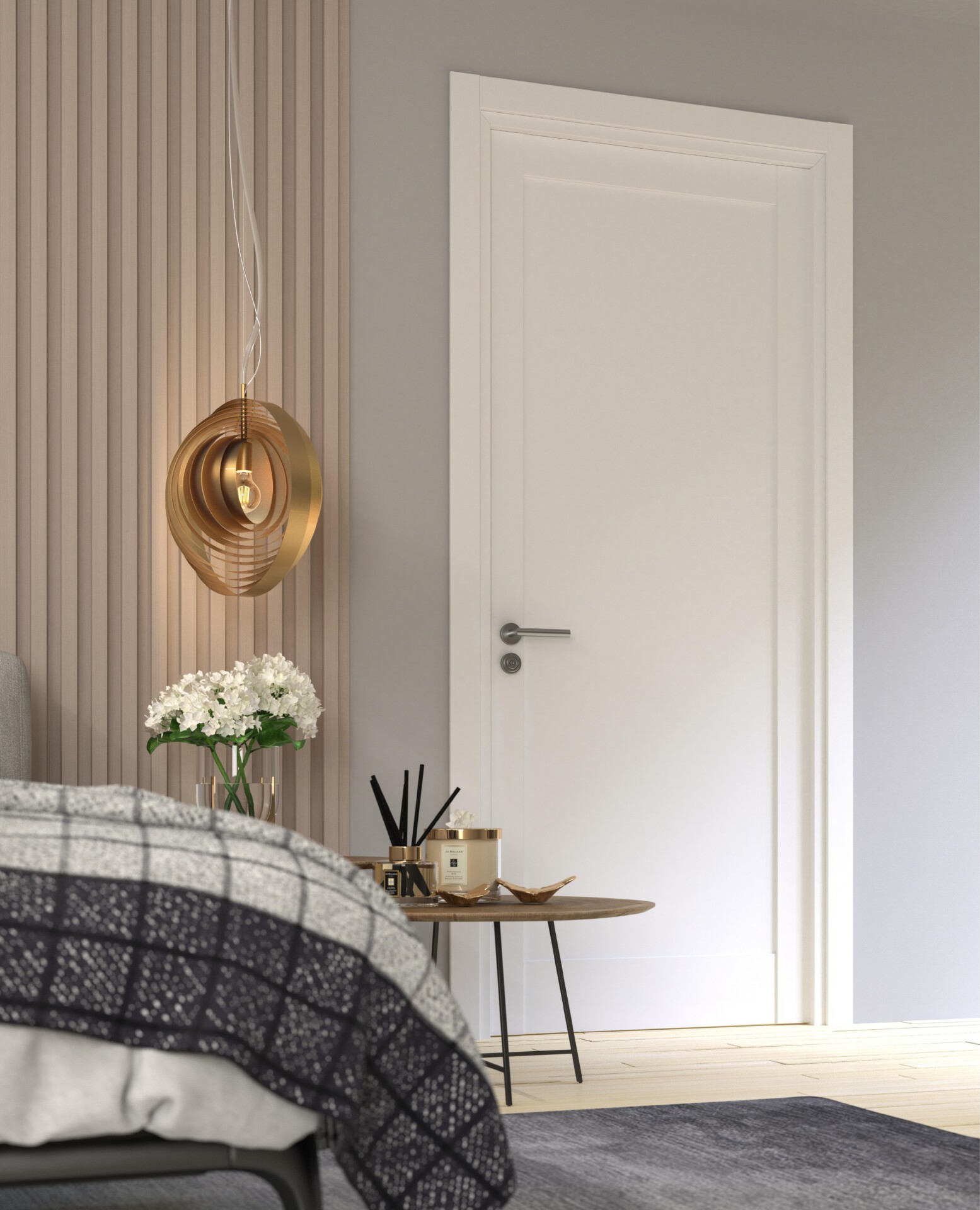
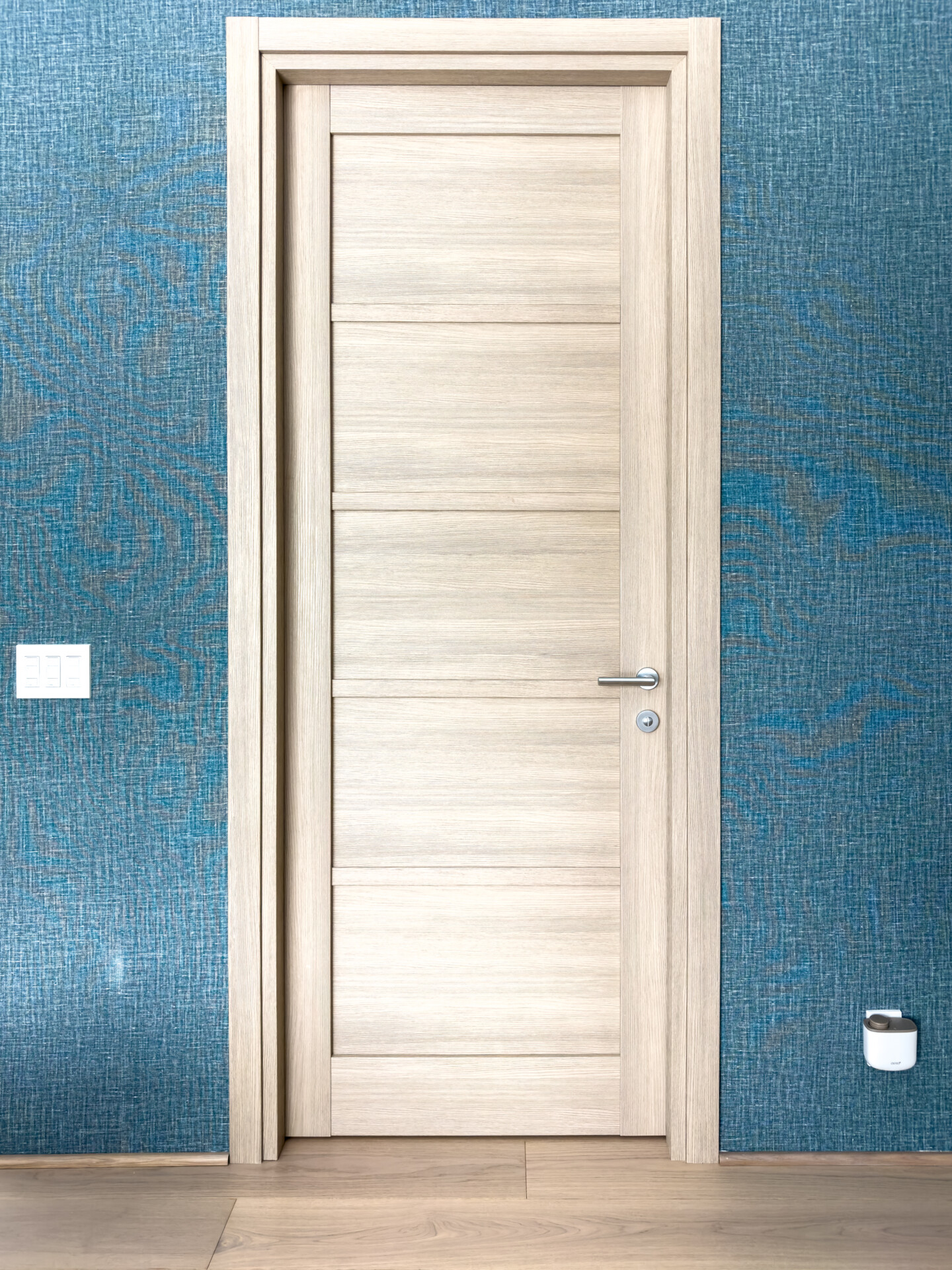
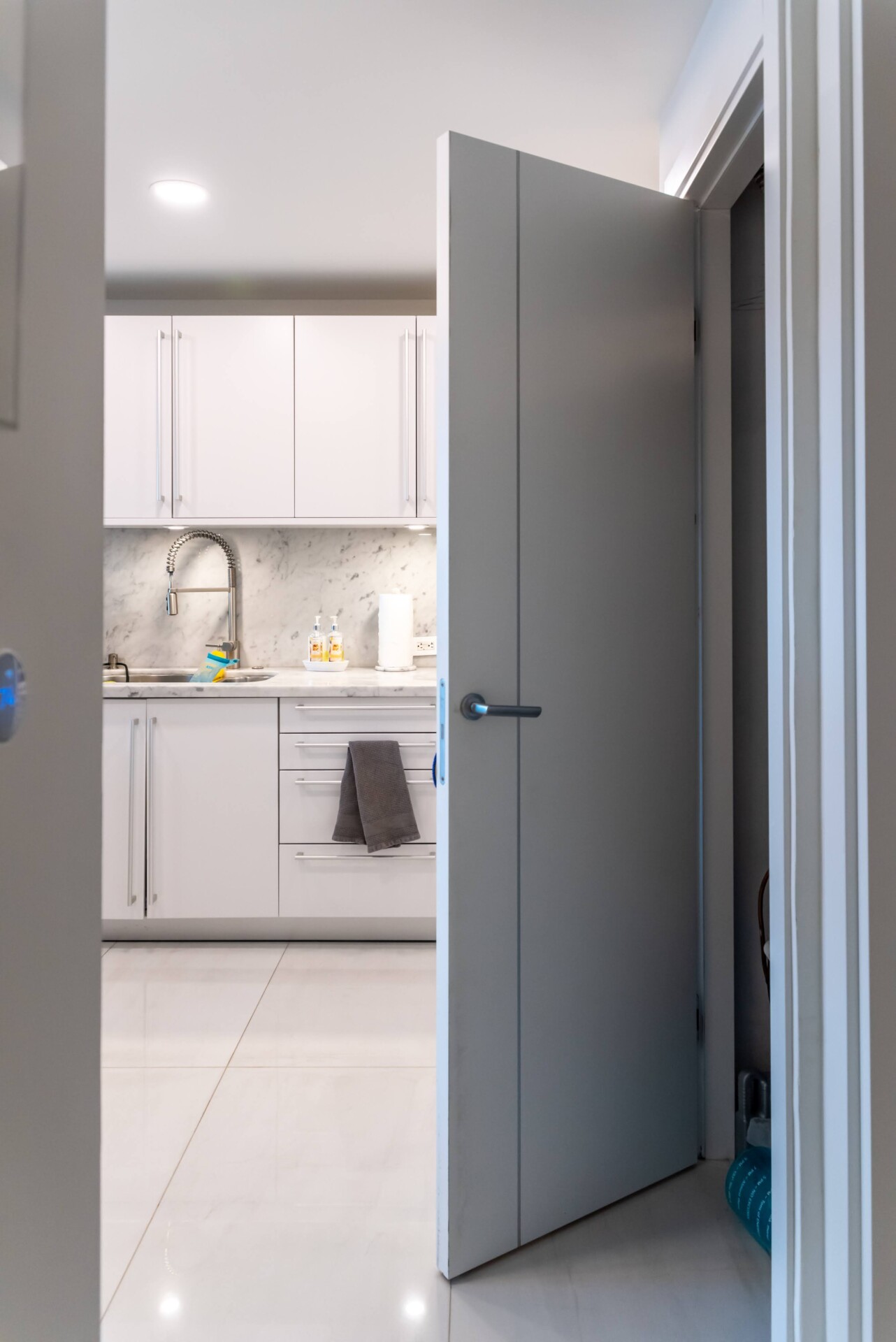
Flat-panel doors are one of the strongest choices for Miami condos because they work well with the way many condo interiors are designed today. They are simple, refined, and visually quiet. Instead of competing with furniture, flooring, wall treatments, lighting, or views, they create a clean background that helps the whole space feel more organized.
Flat-panel doors are especially suitable for:
- Modern interiors with minimal trim and clean wall surfaces
- Transitional interiors that mix classic warmth with contemporary details
- Coastal-modern condos with light wood, stone, linen textures, and soft neutrals
- Minimalist apartments where visual clutter needs to be reduced
- Luxury condos where every detail needs to feel intentional
In a narrow hallway, a door with heavy panels or busy detailing can make the space feel smaller. A flat-panel door, by contrast, allows the hallway to feel calmer. It creates visual continuity from room to room and makes the apartment feel more architectural.
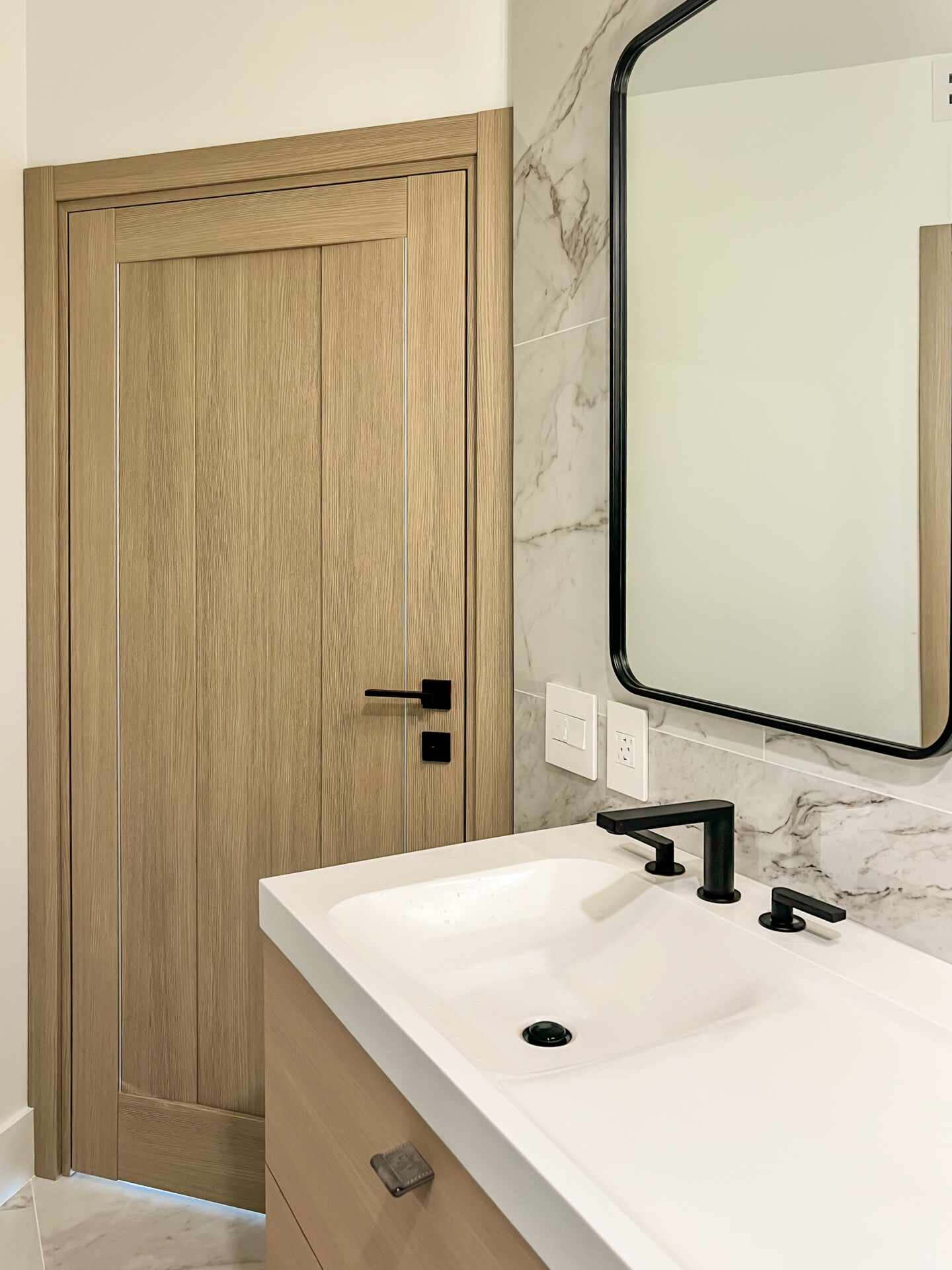
Flat-panel doors also pair well with many common Miami condo finishes, including large-format tile, stone floors, light oak flooring, white walls, contemporary cabinetry, and modern bathroom finishes. They do not demand attention in the wrong way. Instead, they quietly improve the entire interior.
ITALdoors includes flat panel options as part of its interior door offering, making them a practical choice for owners who want a clean modern look without turning every door into a custom project.
Modern and transitional styles
Not every Miami condo needs the same type of modern door. Some apartments look best with a very minimal door, while others need a warmer transitional style that works with existing architecture, furniture, or finishes.
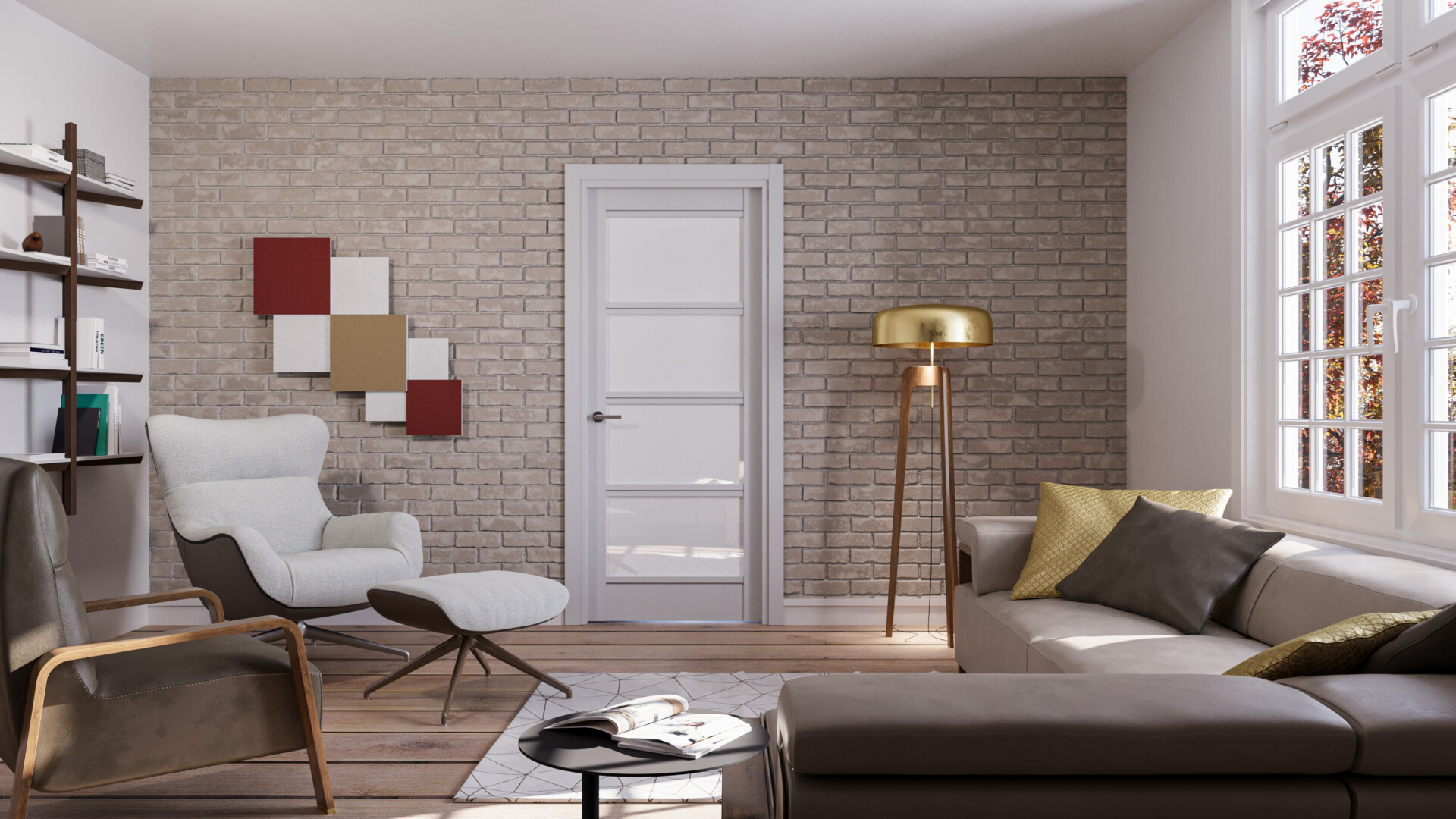
A modern interior door is usually cleaner, sleeker, and more minimal. It works especially well in condos with open layouts, contemporary kitchens, frameless glass, recessed lighting, stone surfaces, and simple wall colors. The goal is precision, simplicity, and a smooth visual flow.
A transitional interior door softens that look. It can work in a condo that has a mix of older architectural features and newer finishes. It can also help when the homeowner wants a modern update without making the space feel cold or overly stark.
For Miami condos, transitional design is often a smart middle ground. Many apartments combine older building layouts with renovated kitchens, updated flooring, new lighting, and contemporary furniture. A transitional door can connect these elements without feeling forced.
The main question is not whether modern or transitional is better. The better question is which style supports the full interior. A high-rise condo with white walls, glass balcony doors, marble-inspired tile, and minimal cabinetry may benefit from matte white or light grey flat-panel doors. A warmer waterfront condo with wood accents, textured walls, and softer furniture may look better with Light Oak, Walnut, Linen Ice, or Linen Grey.
Frameless, concealed, and minimal visual details
In modern condo design, small details matter because there is less room to hide mistakes. A hallway may show five or six doors at once. A bedroom door may sit directly across from the kitchen. A closet door may be visible from the main living area. If the hinges, locks, casing, and handles feel dated or inconsistent, the whole space can look unfinished.
This is why concealed and minimal details are so valuable.
Important details include:
- Concealed hinges for a cleaner look
- Magnetic locks for smooth, modern operation
- Simple handles that match the overall design
- Clean casing lines that do not overpower the wall
- Coordinated finishes across rooms and closets
- Reduced visual clutter in hallways and compact spaces
Concealed hinges help reduce the mechanical look of a door. Magnetic locks create a more refined closing experience. Simple handles prevent the door from feeling too decorative or outdated. Together, these details make the door feel like part of a complete architectural system.
In a condo, this level of coordination can make a major difference. Since the apartment footprint is usually more compact, every visible detail carries more weight. A modern door system helps the home feel planned, not assembled piece by piece.
Finishes that work especially well in Miami condos
Finish selection is one of the most important decisions in a condo door project. The finish should match the design direction, but it should also work with the amount of natural light, flooring tone, cabinetry, wall color, and overall mood of the apartment.
ITALdoors standard in-stock finishes include:
- Walnut
- Light Oak
- Grey
- Light Grey
- Mahogany, limited quantities
- Matte White
- Linen Ice
- Linen Grey
- Wenge
Each finish creates a different effect.
Matte White is ideal for clean minimalist interiors. It works especially well when the goal is to make the doors blend into white or light neutral walls. In smaller condos, Matte White can help reduce visual breaks and make the space feel more open.
Light Oak is one of the strongest choices for coastal-modern Miami interiors. It adds warmth without making the space feel heavy. It pairs well with beige stone, soft white walls, natural textures, and contemporary furniture.
Walnut gives the condo a richer, more luxurious look. It works well in primary suites, offices, formal areas, and apartments with darker accents, bronze details, or warm lighting.
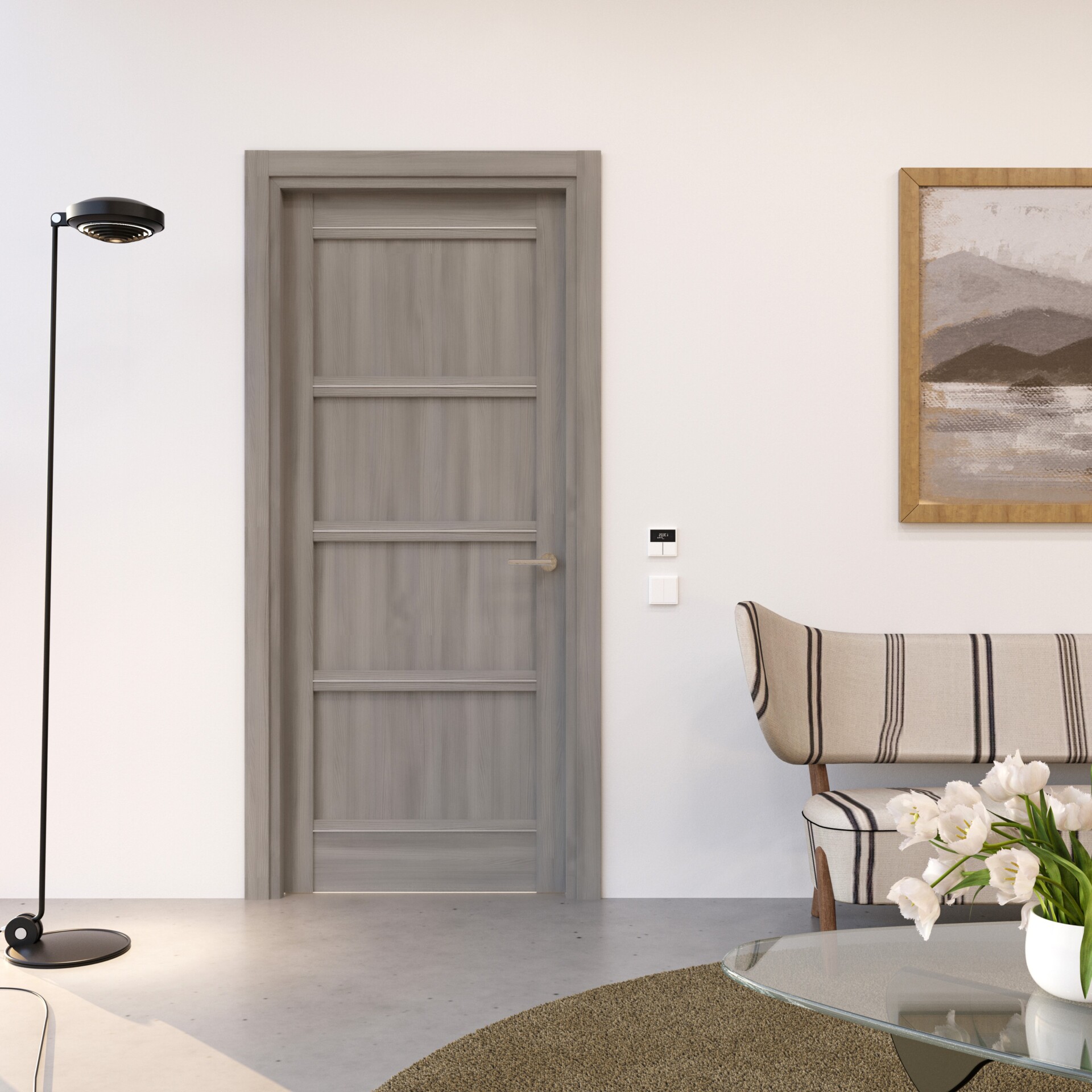
Grey and Light Grey are practical for contemporary renovations. They work well with modern tile, concrete-inspired finishes, stainless details, and neutral cabinetry. Light Grey can feel softer and more adaptable, while Grey can create a more defined architectural line.
Linen Ice and Linen Grey are useful when the project needs subtle texture. These finishes can add depth without becoming too strong or decorative. They are especially effective in condos that use fabric textures, soft neutrals, and layered materials.
Wenge creates dramatic contrast. It can work beautifully in luxury condos when used carefully, especially with light walls, stone floors, and sophisticated lighting. Because it is darker, it should be planned with the rest of the interior rather than chosen casually.
Mahogany, where available in limited quantities, can bring a warmer and more traditional richness. It is best used when the condo design supports deeper wood tones and a more classic luxury feel.
The safest approach is to treat the door finish as part of the complete interior palette. Flooring, cabinetry, closets, wall colors, baseboards, and hardware should all be considered together.
Fire safety: when interior doors need more than good looks
Fire safety should be handled carefully in any condo renovation. Not every interior condo door automatically needs to be fire-rated, and requirements can vary depending on the building, the opening location, local code, condo association rules, and the scope of the project. However, fire safety should never be ignored simply because the door is inside the apartment.
A helpful starting point is ITALdoors’ guide to door fire rating, which explains why ratings, assemblies, and proper installation matter. For condo owners, the most important lesson is simple: before replacing any door that may be part of a life-safety system, confirm what the building requires.
What a fire-rated door is designed to do
A fire-rated door is not just a thicker or heavier door. It is part of a tested assembly designed to slow the movement of fire and smoke for a defined period. That period may vary depending on the rating, the type of opening, and the building requirement.
A fire-rated opening may involve:
- The door slab
- The frame
- Hinges
- Latching hardware
- Seals
- Closers, where required
- Labels and documentation
- Proper installation according to the tested assembly
This is why a good-looking slab alone is not the same as a complete rated assembly. A door can look beautiful and still be unsuitable for a location that requires a specific rating. The rating is not only about the surface appearance or the material. It is about how the complete system performs under tested conditions.
For Miami condo owners, this matters because certain doors may connect to spaces where fire separation is important. These can include shared corridors, utility areas, mechanical spaces, stairwells, or other regulated areas depending on the building layout. A homeowner should not guess. The correct approach is to confirm the requirement before ordering or replacing the door.
Why condos need special attention
Multi-unit buildings rely on compartmentation. In simple terms, that means the building is designed to help separate areas from one another so that fire and smoke do not move freely through the structure. Doors can play an important role in that system.
A single-family home and a condominium tower do not have the same life-safety context. In a condo, there may be shared corridors, common areas, stairwells, elevators, service rooms, and neighboring units. Because of that, replacing a door may involve more than personal preference.
Condo owners should be especially careful with doors near:
- Shared corridors
- Unit entry areas
- Stairwells
- Mechanical rooms
- Utility rooms
- Electrical or service spaces
- Storage areas connected to common building systems
Interior renovation decisions can affect life-safety expectations. Even when the project feels like a design upgrade, the building may still have rules about certain openings, ratings, hardware, closers, or installation methods. This is why it is important to work with professionals who understand the difference between a decorative door replacement and a door that may be part of a rated assembly.
A condo owner should not remove, cut, modify, or replace a potentially rated door without confirming requirements with the appropriate professionals, building management, HOA, contractor, architect, or local authority.
Fire rating is about the full assembly
One of the most common misunderstandings about fire-rated doors is the idea that the door slab is the only important part. In reality, the full assembly matters.
A fire-rated assembly may involve:
- Door slab
- Frame
- Casing or trim conditions
- Hinges
- Closer, where required
- Latch
- Seals
- Labeling and documentation
- Installation method
If one part of the assembly is wrong, missing, modified, or poorly installed, the door may not perform as intended. For example, a rated slab paired with the wrong frame or hardware may not meet the required performance. A door with excessive gaps may allow smoke or heat to pass more easily. A missing closer can affect how the door functions in an emergency. An unapproved field modification can create a problem even if the original door had the correct rating.
This is why fire safety cannot be reduced to one question: “Is the door fire-rated?” The better questions are:
- Is the full opening required to be rated?
- What rating is required?
- Is the door part of a tested assembly?
- Are the frame and hardware compatible?
- Will the installation preserve the rating?
- Is documentation needed for building approval?
This level of planning protects the project and helps the condo owner avoid expensive mistakes.
| Condo concern | Why it matters | Door planning takeaway |
|---|---|---|
| Privacy | Bedrooms, bathrooms, offices, and guest rooms need clear separation from active living areas. | Choose doors with a stable fit, proper closure, and hardware that supports daily privacy. |
| Noise control | Shared walls, compact layouts, hallway sounds, and home office use make quiet rooms more important. | Review the full system, including slab, frame, hardware, gaps, and installation quality. |
| Space flow | Narrow halls, closets, bathrooms, and dens can become difficult to use with the wrong swing direction. | Consider swing, pocket, sliding, or closet systems based on the actual room layout. |
| Building requirements | HOA rules, delivery access, installation timing, and fire-rated openings can affect the project. | Confirm technical and approval requirements before ordering or replacing condo doors. |

How long can a door restrict fire spread?
ITALdoors covers this topic in more detail in its article on how long a door can restrict fire spread. For the purpose of condo planning, the key point is that ratings are usually discussed in time intervals, but the correct rating must always be verified for the specific building and opening.
Understanding 20, 45, 60, 90, and 120-minute ratings
Fire-rated doors are commonly discussed in time ratings such as 20, 45, 60, 90, or 120 minutes. These ratings indicate the tested duration for which a door assembly is designed to resist fire under specific test conditions.
In practical terms:
- Shorter ratings may be used in some corridor, room separation, or partition conditions
- 60-minute and 90-minute ratings are often discussed for stronger separation needs
- 120-minute ratings are associated with higher-performance fire-rated doors and more demanding applications
However, these examples should not be treated as universal rules. A Miami condo owner should not choose a rating based on a general article alone. The correct rating depends on the building type, door location, applicable code, existing conditions, and approval requirements.
This distinction is important because over-simplifying fire ratings can create problems. A door that is appropriate for one location may not be appropriate for another. A bedroom door inside a unit may have very different requirements from a door leading to a shared corridor, service area, or stairwell. The door’s purpose and location determine the level of attention required.
Why installation matters as much as the rating
A fire rating is only meaningful when the door is installed as part of a proper assembly. Even a correctly rated product can underperform if it is cut, modified, installed incorrectly, or paired with incompatible hardware.
Common issues that can weaken performance include:
- Excessive gaps around the door
- Improper latching
- Missing or incorrect closers
- Incorrect hinges
- Unapproved field modifications
- Poor frame installation
- Missing seals where required
- Hardware that does not match the rated assembly
This is especially important in condo renovations because owners may want to adjust heights, change hardware, modify frames, or create a cleaner modern look. Those changes may be possible in some situations, but they must be reviewed carefully when the opening has a fire-safety requirement.
The safest approach is to coordinate with qualified professionals, building management, and code-compliant installers before replacing or modifying any potentially rated door. That does not mean every interior door decision has to be complicated. It simply means fire-rated locations should be handled with care.
What is included in an ITALdoors interior door package?
One complete ready-to-install package
Depending on the selected model, an ITALdoors interior door package may include:
- Door slab
- Frame
- Casing
- Concealed hinges
- Magnetic lock
- Handle
This matters because an interior door is not only the visible panel. The way it fits, closes, aligns, and works every day depends on the full system. A beautiful slab can still look unfinished if the frame is wrong, the casing does not match, the hinges are too visible, or the handle feels disconnected from the design.
With a complete package, the components are planned together. That creates a cleaner visual result and a smoother installation process. It also helps reduce the risk of mismatched hardware or last-minute substitutions.
For Miami condo projects, this is especially valuable because renovation timelines are often strict. If one small component is missing, the project can stall. A complete door package helps make the process more predictable.
Why complete packages help condo renovations move faster
Condo renovations often move under pressure. There may be contractor schedules, elevator reservations, building access windows, move-in dates, inspection requirements, and HOA rules. A delay in one product category can affect several trades.
Interior doors are often connected to multiple stages of the renovation:
- Framing or opening preparation
- Flooring transitions
- Wall finishing
- Painting
- Trim and casing
- Hardware installation
- Final punch-list work
If the doors arrive late or incomplete, the contractor may not be able to finish casing, painting, hardware, or final adjustments on time. If the wrong hardware arrives, the installation may need to be rescheduled. If the door frame and slab are not coordinated, the finished result may look uneven.
ITALdoors’ in-stock options and complete package approach can reduce this uncertainty. A local Miami team can help with selection, measurements, delivery coordination, and installation planning. This is important for homeowners, but it is also valuable for designers, contractors, architects, and developers who need the project to move efficiently.
Modern interior doors and condo acoustics
Modern interior doors can help improve how private and quiet a condo feels. They are not the only factor in sound control, but they are an important part of the overall experience.
Why sound matters in condos
Condos are compact by nature. Rooms are often close together, and sound can travel quickly from one area to another. A kitchen may be near a bedroom. A living room may share a wall with a home office. A hallway may connect several rooms in a short distance. In some buildings, elevator areas, shared corridors, mechanical systems, and neighboring units can add to the sound environment.
Common condo noise concerns include:
- Television noise from living areas
- Kitchen sounds near bedrooms
- Conversations during video calls
- Hallway movement
- Elevator or corridor sounds
- Air conditioning systems
- Laundry areas
- Guest activity near sleeping rooms
Bedrooms next to living rooms or kitchens need stronger separation. Home offices need better control over everyday noise. Bathrooms need privacy. Dens and flex rooms may need to function as temporary private spaces.
A door cannot solve every acoustic issue, but a better door system can make the condo feel more comfortable. It can help reduce the sense that every room is connected to every other room. In a condo, that separation is valuable.
Door quality affects perceived quiet
A door does not need to be marketed only as an “acoustic door” to influence comfort. The way a door is built, fitted, framed, and installed can affect how quiet a room feels.
Several details influence perceived acoustic comfort:
- Door core and overall construction
- Fit within the frame
- Quality of the frame installation
- Gaps around the door
- Latching and closing performance
- Hardware quality
- Seals, where applicable
- Wall construction around the opening
A poorly installed door with uneven gaps can allow more sound transfer. A door that does not latch properly can feel less private. A lightweight or poorly fitted door may make a room feel exposed even if it technically separates the space.
This is why the full package matters. The slab, frame, hinges, lock, handle, and installation should work together. When the system is coordinated, the door feels more stable, closes more cleanly, and contributes more effectively to the comfort of the room.
For condo owners, the practical lesson is simple: do not judge a door only by the surface finish. Look at the whole system and how it will perform in the specific room.
Design consistency: should every condo door match?
One of the most common questions during a condo renovation is whether every interior door should match. The simple answer is that doors do not always need to be identical, but they should feel connected.
Matching doors creates calm visual flow
Matching interior doors can make a condo feel more intentional. This is especially true in hallways, where several doors are often visible at once. When the doors share the same finish, panel style, hardware language, and casing approach, the space feels calmer and more organized.
Matching doors are useful when the goal is:
- A cleaner hallway
- A more modern interior
- A larger visual feeling
- Better design continuity
- Less visual clutter
- A more polished renovation
In a Miami condo, this can be very effective. Many interiors already include strong design elements such as balcony views, stone floors, feature lighting, modern kitchens, and built-in cabinetry. The doors should support those elements, not compete with them.
A consistent door package can also make the condo feel more valuable. The apartment looks planned from the beginning rather than updated in disconnected stages.
Strategic variation can work when it has a purpose
Not every door must be identical. Variation can work well when it has a clear design reason. The problem is not variation itself. The problem is random variation.
For example, a condo may use the same finish throughout most rooms but choose a sliding feature door for a den. Another project may use matching flat-panel doors for bedrooms and bathrooms, but a glass or custom door for a home office. Closet doors may use a different configuration while still matching the main finish. A fire-rated or technical door may require specific construction while still being selected to coordinate visually with the rest of the interior.
Strategic variation can include:
- A sliding feature door for a den
- A glass or custom door for an office
- A different closet configuration with a matching finish
- A fire-rated or technical door where required
- A double swing door for a primary suite
- A custom solution for an oversized or unusual opening
The key is that each variation should have a purpose. It should solve a functional need, highlight an important space, or meet a technical requirement. It should not look like the result of limited planning.
Why ITALdoors is especially practical for Miami condo owners
Choosing interior doors for a Miami condo is not only about selecting a style. It is also about who helps manage the process. Door projects involve measurements, finishes, openings, hardware, frames, delivery, installation, building rules, and sometimes fire-safety questions. A beautiful product can still create problems if the support behind it is weak.
This is where ITALdoors is especially practical. The company combines Italian design with a local Miami presence, which gives condo owners both the look they want and the support they need.
Italian design with local Miami support
ITALdoors is a Miami-based, family-owned company with roots in construction. That background matters because doors are not only design objects. They are construction components that must be measured, specified, delivered, and installed correctly.
The company was created to solve a real problem in the local market. Authentic Italian and European-style doors were often too expensive, too slow to arrive, or difficult to source locally. For homeowners, designers, and contractors, that created frustration. The design goal was clear, but the process was not simple enough.
ITALdoors helps solve that gap by bringing Italian-made doors and architectural hardware to the U.S. market with local support. Condo owners can review options, ask questions, compare finishes, discuss openings, and work with a team that understands both design expectations and practical project conditions.
This local presence is especially important in Miami, where condo renovations can involve building approvals, delivery coordination, access rules, and tight schedules.
20 years serving door needs
ITALdoors’ brand promise, “Affordable Luxury Doors for Quality Life You Deserve,” fits the needs of many condo owners. The goal is not only to bring attractive Italian doors into a home. The goal is to make premium design more accessible, practical, and manageable.
With 20 years serving door needs, ITALdoors brings experience to decisions that can otherwise feel overwhelming. A door project may seem simple at first, but it often includes many connected choices:
- Door size
- Door type
- Finish
- Hardware
- Frame
- Casing
- Swing direction
- Installation conditions
- Lead time
- Building requirements
- Long-term daily use
Experience matters because small mistakes can become expensive. A wrong swing direction, mismatched hardware, delayed shipment, poor fit, or unclear installation plan can slow the project and reduce the quality of the final result.
A team that works with doors every day can help homeowners and professionals avoid those mistakes before they happen.
Showroom, inventory, installers, and project support
One of the strongest advantages of ITALdoors is that clients can interact with the product and the team locally. For many buyers, especially those considering Italian doors, this is a major difference.
Clients can visit the showroom, review materials and finishes in person, ask questions before ordering, and get guidance based on the specific project. This matters because door finishes can look different online than they do in a real interior. Texture, tone, sheen, and hardware details are easier to evaluate in person.
ITALdoors also supports condo projects with:
- Local inventory
- In-stock interior door options
- Showroom access
- Finish review
- Product guidance
- Professional installers
- Logistics support
- Installation coordination
- Support from selection through completion
Local inventory supports faster planning, especially for in-stock interior doors. Professional installers and an experienced team help reduce stress because the project is not left entirely to the owner to coordinate.
For Miami condo owners, this can make the difference between a renovation that feels uncertain and one that feels professionally managed.
Support for homeowners and industry professionals
ITALdoors works with both homeowners and industry professionals. That is important because condo door projects can involve different decision-makers: owners, interior designers, architects, contractors, developers, property managers, and building representatives.
Homeowners may need help understanding which door type works best for each room. They may want to compare finishes, understand hardware options, or decide between in-stock and special order solutions. They may also need guidance on how to create a cohesive look throughout the condo.
Industry professionals may need support with specifications, measurements, lead times, installation details, and package coordination. A one-stop interior door package can save time during the design and construction process because the slab, frame, casing, hinges, lock, and handle are considered together.
Why the right door choice affects the value of the whole condo
Doors may not always be the first feature people notice in a condo, but they strongly influence the way the space feels. They affect sound, privacy, movement, design continuity, and daily comfort. They also influence whether the renovation feels complete or unfinished.
For a broader perspective on why doors matter, ITALdoors’ article on the role of doors explains how doors shape safety, design, comfort, and the way people experience buildings.
Doors are used every day
Doors are not passive background items. They are opened, closed, touched, seen, and heard every day. In a condo, this daily contact makes quality easy to feel.
A door that closes smoothly, aligns properly, and feels stable can make the home feel more refined. A door that sticks, rattles, looks dated, or feels mismatched can make the entire condo feel less polished.
This is why door selection should not be postponed until the end of the renovation. Doors interact with almost every part of the interior: walls, floors, trim, lighting, furniture, closets, hardware, and room function.
Doors shape the feeling of quality
Quality is not only about expensive materials. It is also about how the space works. A condo can have a beautiful kitchen and modern furniture, but if the doors feel old or inconsistent, the renovation may not feel complete.
Doors shape the feeling of quality through:
- Weight
- Smooth operation
- Clean hardware
- Aligned frames
- Consistent finishes
- Reduced noise
- Better privacy
- More complete design flow
These details influence how people experience the home even if they do not consciously analyze them. A clean door package can make the condo feel more finished. It can also help newer renovations feel more integrated, especially when older doors would otherwise remain as visible reminders of the previous interior.
In a condo, details are concentrated
Condos often have less square footage than houses, so details are more concentrated. A hallway may show several doors at once. A small bedroom may have an entry door, closet door, and bathroom door all within a short visual distance. A den may be visible from the living room. There is less space for mismatched details to disappear.
Planning a Miami condo renovation? Visit the ITALdoors showroom or call 1-800-615-DOOR to explore in-stock Italian interior doors, review finish options, and get guidance on the right door type for each opening.

Frequently asked questions about interior doors for Miami condos
What are the best interior doors for Miami condos?
The best interior doors for Miami condos are the ones that match the room function, available space, building rules, privacy needs, design style, and any fire-safety requirements.
Are ITALdoors interior doors available in stock?
Yes, ITALdoors offers in-stock interior doors in modern, transitional, and flat panel styles, designed for faster turnaround and everyday condo spaces.
What is included in an ITALdoors interior door package?
Depending on the selected model, an ITALdoors interior door package may include the door slab, frame, casing, concealed hinges, magnetic lock, and handle.
Do Miami condo interior doors need to be fire-rated?
Not every interior condo door needs to be fire-rated, but some openings may have specific building, HOA, code, or fire-safety requirements that should be confirmed before replacement.
Can I use pocket doors in a Miami condo?
Yes, pocket doors can work very well in Miami condos when the wall cavity, utilities, structure, and installation conditions allow them.
Which finishes work best for modern Miami condo interiors?
Matte White, Light Oak, Linen Ice, Linen Grey, Grey, Walnut, and Wenge can all work well, depending on the condo’s flooring, cabinetry, wall color, lighting, and overall design direction.
Can ITALdoors provide custom sizes or special finishes?
Yes, ITALdoors offers both in-stock and special order solutions, including custom sizes, configurations, veneer, lacquer, and laminate finishes depending on project needs.
Why choose ITALdoors instead of ordering Italian doors online without local support?
ITALdoors combines Italian design with local Miami showroom access, in-stock options, logistics support, professional guidance, installers, and help from selection through installation.