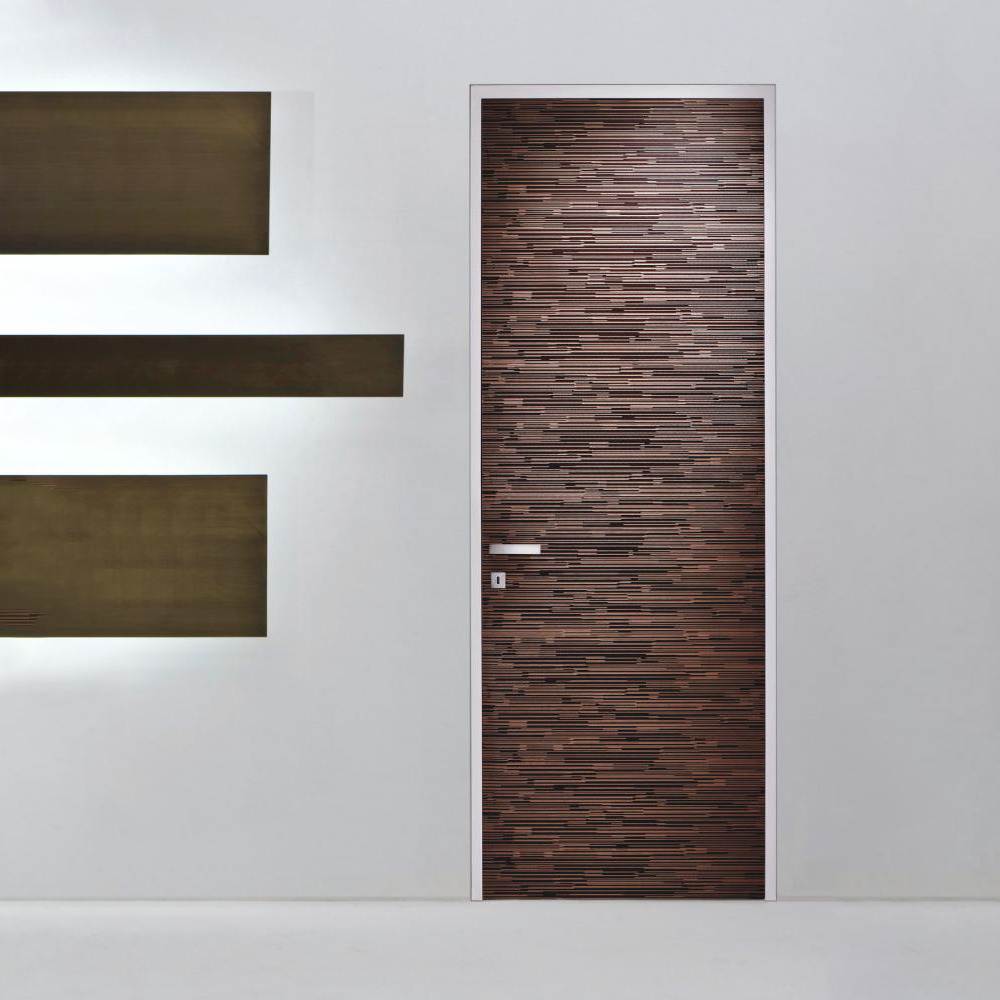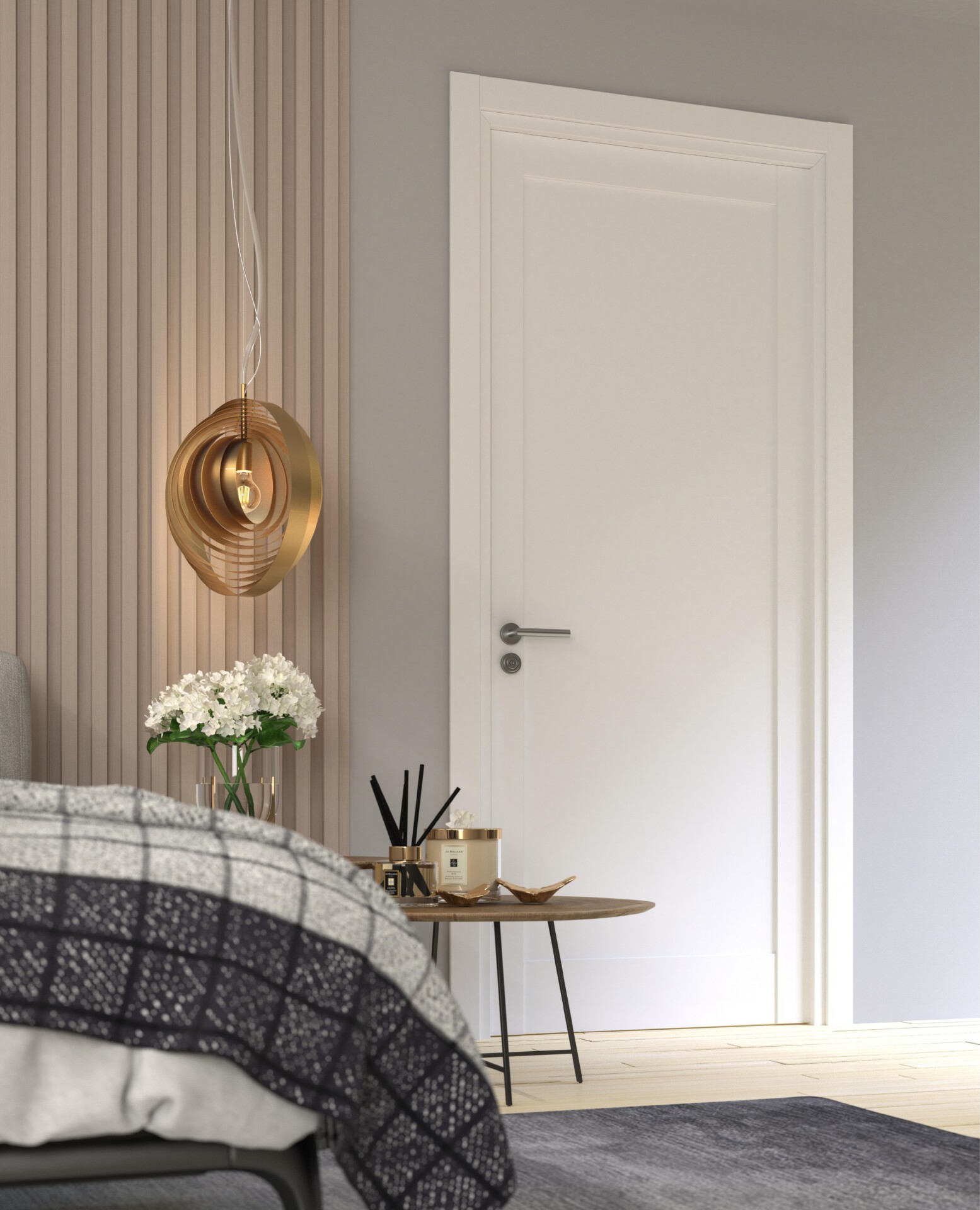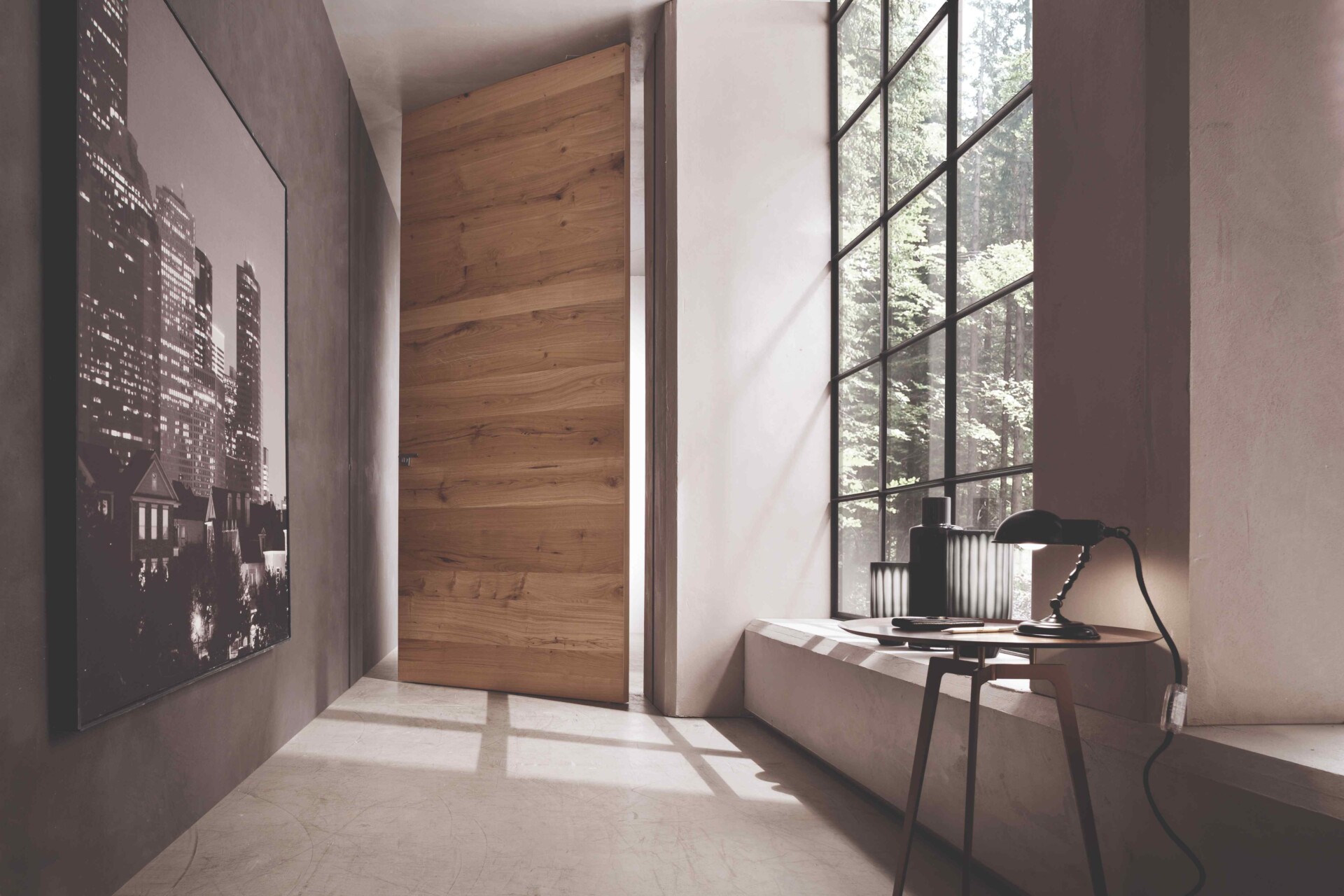
The best Italian door manufacturer is not one universal brand, but the company whose construction, finishes, hardware, technical support, and production capabilities match the needs of your project. This guide compares representative Italian manufacturers, explains what “Made in Italy” means, and helps U.S. buyers choose an authentic, complete, and properly supported door system.
What makes an Italian door manufacturer “the best”?
The best manufacturer depends on what the project requires. A brand known for custom wall paneling may be ideal for a penthouse with concealed doors, but unnecessarily complex for a straightforward residential renovation that needs dependable in-stock models.
The manufacturer’s name is therefore only the beginning of the comparison. Homeowners and project professionals should evaluate whether the company can supply the right configuration, dimensions, finishes, documentation, hardware, and installation support.
| Project requirement | Manufacturer profile to prioritize | What to verify |
|---|---|---|
| Bespoke wall and door integration | Custom architectural manufacturer | CAD files, panel transitions, and finish continuity |
| Fast residential project | Manufacturer or supplier with local stock | Actual inventory, package contents, and measurements |
| Frameless or flush design | Door-system manufacturer | Frame, hinges, wall build-up, and installation sequence |
| Multifamily or developer project | Repeatable production partner | Finish consistency, production planning, and replacement parts |
| Statement pivot or sliding door | Specialty system manufacturer | Door weight, hardware compatibility, and structural requirements |

What does “Made in Italy” mean for an interior door?
“Made in Italy” should indicate manufacturing origin, not simply an Italian appearance or an Italian-sounding brand name. A door can be inspired by Italian design without being manufactured in Italy, and it can be shipped from Italy without every component necessarily having the same country of origin.
Made in Italy versus Italian design
Several different claims can appear similar in marketing materials:
- Designed by an Italian architect or design studio
- Sold under an Italian brand name
- Styled to resemble contemporary Italian interiors
- Finished, packaged, or distributed from Italy
- Assembled in Italy using components sourced from multiple countries
- Manufactured in Italy
- Manufactured in Italy and supplied as a coordinated Italian door system
These descriptions are not interchangeable. “Italian design” usually refers to the aesthetic or creative origin of a product. It does not independently establish where the slab, frame, hardware, or other components were manufactured.
Country-of-origin questions may also become more complicated when production takes place across several countries. In those cases, customs authorities may consider where the product underwent its most meaningful manufacturing transformation. Buyers do not need to become customs experts, but they should ask for specific documentation instead of relying on decorative language.
Manufacturing origin can also affect material expectations, pricing, customization, delivery planning, and the way a product is compared with domestic alternatives. These differences are examined more closely in the ITALdoors guide to Italian doors versus American-made doors.
How to verify that a door was manufactured in Italy
A reputable manufacturer or supplier should be able to identify the product clearly. Before placing an order, request or inspect:
- The manufacturer’s legal company name and factory location
- Country-of-origin markings on the product or packaging
- Current manufacturer catalogs and technical sheets
- Product or model numbers that match across documents
- An order confirmation identifying the manufacturer
- Packing lists or import documentation when appropriate
- Labels attached to finish and material samples
- Information about the frame, hinges, lock, and handle
- Written clarification of what is manufactured in Italy and what is supplied locally
- A complete list showing whether the order includes a slab, component set, prehung unit, or coordinated system
One document may not answer every country-of-origin question, but several matching documents create a much clearer chain between the manufacturer, model, finish, and delivered product.
ITALdoors represents applicable collections as Italian-manufactured while providing U.S.-based product-selection and ordering support. The origin and inclusion of individual hardware components should still be confirmed for the selected model and configuration.
Documents architects and contractors should request
Design and construction teams need more than a brochure image. The required documents change as the project moves from design development to purchasing.
Before specification
Request:
- CAD or BIM resources when available
- Door elevations and section details
- Frame and wall-interface drawings
- Preliminary hardware information
- Finish references and physical samples
- Minimum and maximum available dimensions
- Requirements for concealed, pivot, sliding, or pocket systems
Before ordering
Confirm:
- Approved shop drawings
- Final opening schedule
- Door handing and swing direction
- Frame depth and wall thickness
- Package inclusion list
- Manufacturing origin
- Current production and shipping schedule
- Installation responsibility
- Site-preparation requirements
These checks are particularly important for concealed frames, full-height doors, integrated wall panels, and other systems that affect framing and finish work before the door arrives.
Why Brianza and Northern Italy matter to door and furniture manufacturing
Northern Italy is important because it contains a connected manufacturing ecosystem, not simply because it carries a recognized design reputation. Areas around Brianza, Lake Como, and Milan have long-established networks of woodworkers, furniture manufacturers, finish specialists, metalworkers, designers, technical suppliers, and custom-production workshops.
A regional manufacturing ecosystem
This concentration allows different forms of expertise to support the same architectural product. A custom door may require precision woodworking, carved or veneered surfaces, metal detailing, concealed hardware, specialist lacquer work, and technical coordination with wall panels or built-in furniture.
Laurameroni connects its identity to Brianza and the Lake Como area, emphasizing the relationship between local craftsmanship, material experimentation, and modern production. This background is especially relevant because its doors are conceived as part of broader architectural compositions rather than as isolated slabs.
Why location alone does not prove quality
A respected manufacturing region can provide access to skilled labor and specialized suppliers, but the factory address does not automatically make every product superior.
Buyers should still evaluate:
- Door construction
- Finish execution
- Dimensional limits
- Frame engineering
- Hardware compatibility
- Technical documentation
- Quality-control procedures
- Support for installation and future replacement parts
Regional heritage is most meaningful when it is supported by visible workmanship, reliable drawings, consistent samples, and a system that fits the actual project.
Laurameroni: a different model of Italian door manufacturing
Laurameroni is a strong choice when the design brief extends beyond choosing a door slab and instead requires the entire wall to function as a coordinated architectural surface.
Doors designed as part of the architecture
Its documented approach includes:
- Made-to-measure wall panels
- Integrated hinged doors
- Integrated sliding doors
- Integrated pivot doors
- Coordinated doors, panels, storage, and furniture
- Custom woods, lacquers, metals, and textured surfaces
- Technical resources for architects and interior designers
In a conventional project, the door may be selected after the walls, baseboards, and millwork have already been designed. With an integrated Laurameroni system, the door and surrounding surfaces are considered together. This allows joints, grain direction, panel proportions, handles, and openings to become part of the architectural composition.
What Laurameroni means by “Surface Design”
Laurameroni uses the term “Surface Design” to describe its focus on tactile materials and distinctive surface treatments. The practical value is not limited to decoration.
It can allow:
- Wood grain or texture to continue across a wall and door
- A hinged or sliding opening to recede into paneling
- Lacquer, metal, carved wood, or other finishes to define the room
- Doors and storage elements to read as one composition
- Vertical surfaces to become functional parts of the interior architecture
Projects can explore Laurameroni Plain wall panels with integrated doors when visual continuity and concealed access are central to the design.
Which projects are a strong fit?
Laurameroni may be appropriate for:
- Bespoke residential interiors
- Penthouses and custom condominiums
- Hospitality environments
- Executive offices
- Feature corridors
- Integrated media walls
- Rooms where doors should disappear into paneling
- Projects requiring custom dimensions, materials, or finish continuity
It is especially relevant when architects and designers want the door, wall, cabinetry, and furniture to belong to the same material language.
When Laurameroni may not be the right solution
A highly customized architectural system is not necessary for every opening. Laurameroni may be more than a project needs when the goal is:
- A basic door replacement
- A highly cost-controlled renovation
- A short schedule that cannot accommodate approvals or special production
- A room that does not require integrated wall treatment
- A project in which framing and wall details have already been completed without allowing for the system
The right choice depends on whether architectural integration creates meaningful value for the space. A separate ITALdoors collaboration shows how Italian door design can cross into fashion and artistic collaboration, although that project should not be confused with the Laurameroni collection.
How to recognize a high-quality Italian door system
A well-made Italian door should be judged through its construction, frame compatibility, finish execution, hardware, and technical support. Visual appeal matters, but it cannot compensate for missing dimensions, incompatible components, or poorly coordinated installation details.
Door construction and dimensional stability
Ask the manufacturer or supplier to identify:
- Slab composition
- Perimeter structure
- Core type
- Surface material
- Edge construction
- Door thickness and weight
- Available dimensions
- Environmental limitations
- Relevant testing or performance documents
Solid wood is not automatically superior to engineered construction. Depending on the design and intended use, engineered cores and layered materials may be selected to improve stability or reduce the risk of movement. Any such benefit should be supported by documentation for the actual model rather than assumed from a general material description.
Frame, casing, and wall compatibility
The frame determines how the door connects with the building. Confirm whether the system uses a traditional frame and casing, a concealed aluminum frame, a pocket structure, or another specialized assembly.
Important details include:
- Finished wall thickness
- Drywall or masonry construction
- Casing dimensions
- Jamb extensions
- Finished-floor elevation
- Door handing
- Push or pull orientation
- Reveal width
- Baseboard termination
- Full-height or ceiling-height conditions
A flush door can appear simple after installation, but achieving that appearance requires early coordination among framing, drywall, flooring, baseboard, hardware, and door trades.
Finish quality
Inspect the physical sample whenever possible. Online images cannot reliably show texture, sheen, grain direction, or how two adjacent components will match.
Look for:
- Consistency across the slab, frame, and casing
- Appropriate veneer matching
- Uniform lacquer coverage
- Clean edge transitions
- Controlled grain direction
- Alignment between wall panels and doors
- Clearly identified finish references
- Documented care and repair procedures
Any resistance or durability claim should relate to the selected finish and its technical documentation.
Hinges, locks, and handle preparation
Hardware affects both appearance and daily function. Confirm:
- Hinge type and adjustment range
- Door-weight compatibility
- Magnetic lock alignment
- Handle preparation and backset
- Passage, privacy, or keyed function
- Pivot or sliding hardware requirements
- Availability of replacement components
- Whether machining is completed at the factory
The ITALdoors guide to Italian door handles, locks, and concealed hinges provides a deeper explanation of these individual components.
Technical support and documentation
A high-quality product should arrive with enough information for the project team to coordinate it correctly. Depending on the system, this may include shop drawings, CAD details, a hardware schedule, finish references, installation instructions, opening tolerances, maintenance guidance, and a technical contact.
Plan your project with Laurameroni and ITALdoors
Whether you are designing an integrated wall-and-door composition, specifying a concealed opening, or comparing complete Italian interior door systems, ITALdoors can help you review the available options before key construction decisions are finalized.
Explore Laurameroni wall panels with integrated doors or review the wider range of ITALdoors interior door systems for residential, hospitality, office, multifamily, and other custom projects.
Bring your plans, door schedule, opening dimensions, or design concept to the ITALdoors team to compare finishes, configurations, hardware, and package requirements. Early coordination can help ensure that the selected door system works with the walls, flooring, baseboards, millwork, and installation sequence from the beginning.
Start planning your Italian door project with ITALdoors.

Frequently asked questions about Italian Door Brands & Manufacturers
Are all Italian door brands actually manufactured in Italy?
No. An Italian name, designer, or aesthetic does not independently establish manufacturing origin. Confirm the manufacturer, factory location, country-of-origin information, and matching product documents.
Is Laurameroni a door manufacturer or a furniture brand?
Laurameroni produces furniture and architectural systems. Its collection includes made-to-measure wall panels and integrated hinged, sliding, and pivot doors.
Can Italian doors fit standard American openings?
They can when the dimensions, wall thickness, frame system, handing, and hardware are compatible. Every opening should be measured and reviewed before ordering.
Is it better to buy directly from Italy or through a U.S. supplier?
Direct purchasing may provide access to the manufacturer, but a U.S. supplier can offer local samples, communication, measurements, logistics support, installation coordination, and help with replacement components.
Are Italian doors worth the additional cost?
They may be worth the investment when a project benefits from custom finishes, integrated architecture, concealed systems, coordinated hardware, or consistent whole-home design. A basic replacement may not require the same level of customization.