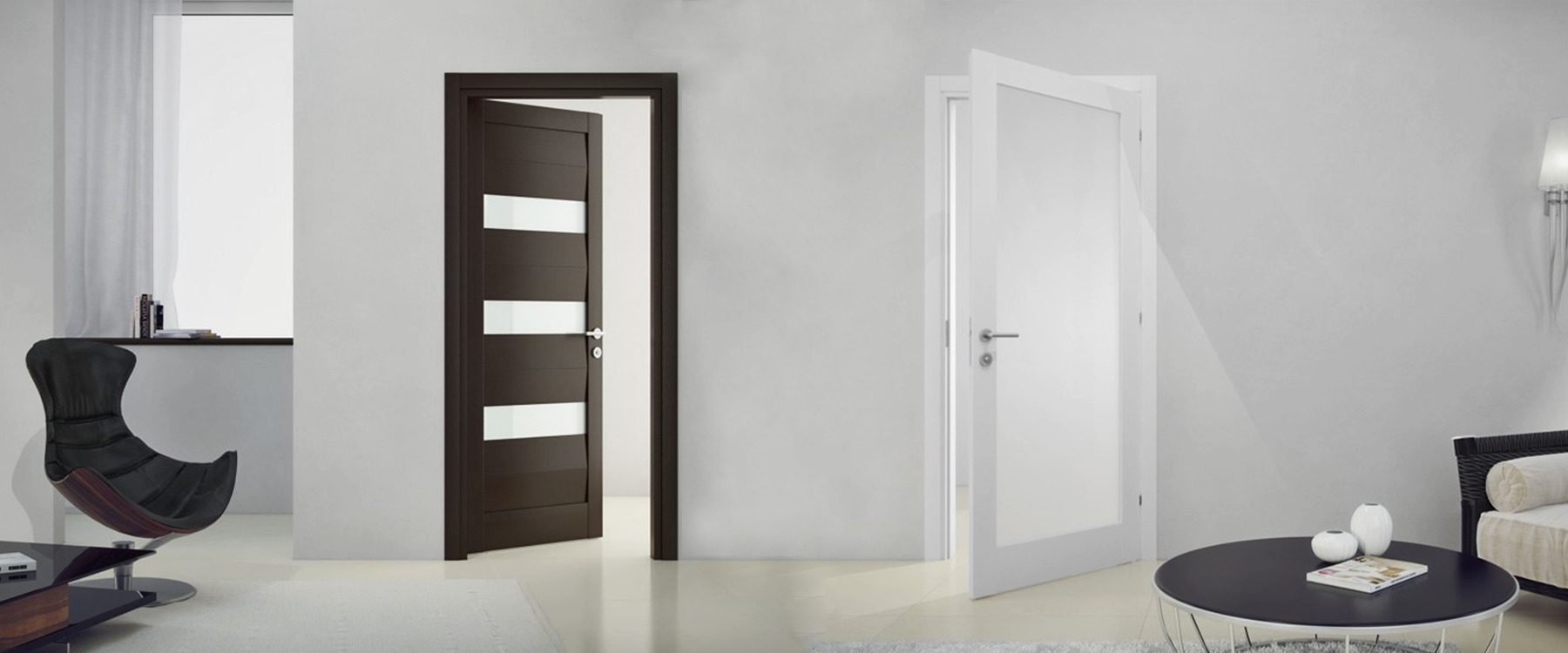
Renovation Mistake #1: Treating doors as an afterthought instead of a design anchor
One of the most frequent and costly mistakes in interior renovations is simple: doors are chosen too late.
Floors are selected, walls are painted, lighting is installed, furniture is planned. Only then does someone ask, “What are we doing for doors?” At that point, the doors must adapt to whatever openings and constraints already exist, and many of the best design opportunities are gone.
Planning doors after all other finishes
When doors are planned last, several problems tend to appear:
- Existing openings dictate everything
Old door sizes and positions are simply copied, even when they never really worked. Doorways stay too narrow; swing directions remain awkward; hallways feel cramped. - Flush systems and specialty solutions become difficult or impossible
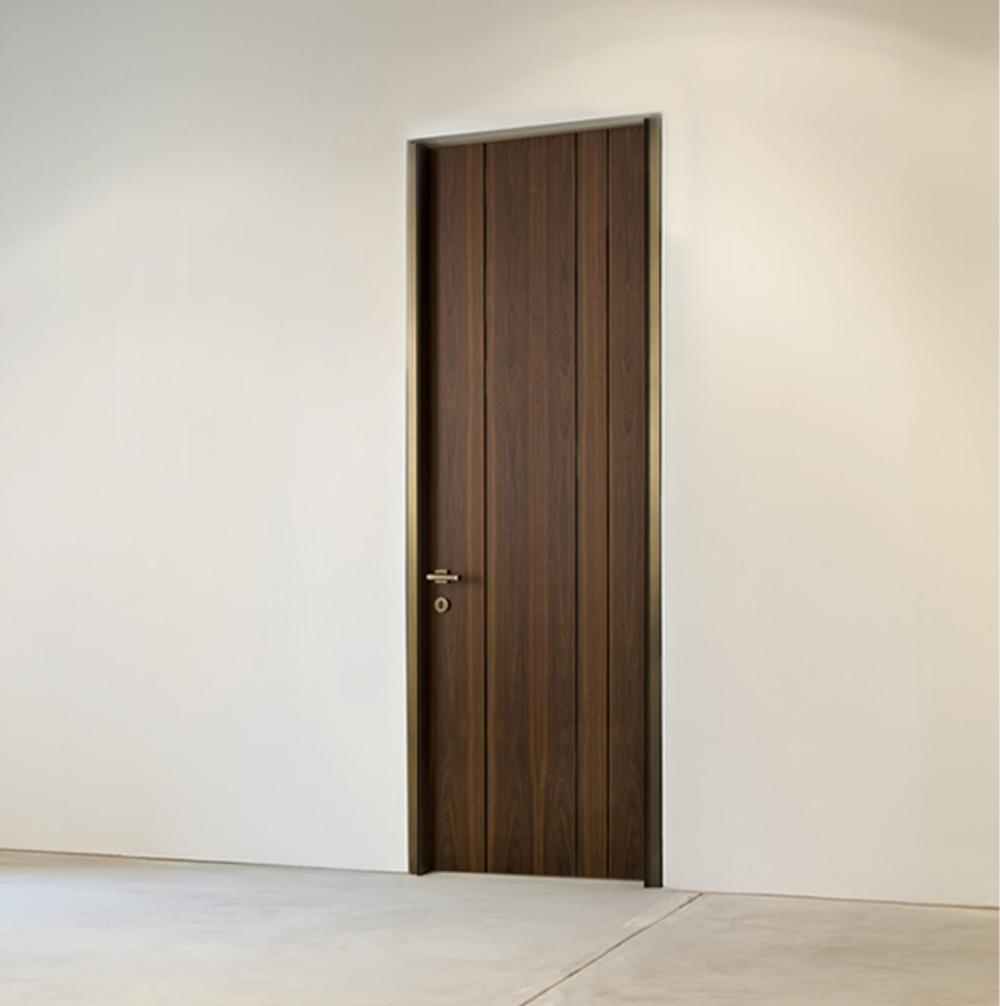
Frameless, flush-to-wall doors, integrated paneling and invisible frames need to be planned very early. The concealed frames, wall build-up and finishing sequences are different from standard doors. If walls are already up and finished, making these changes becomes expensive or unrealistic. - Flow between spaces is compromised
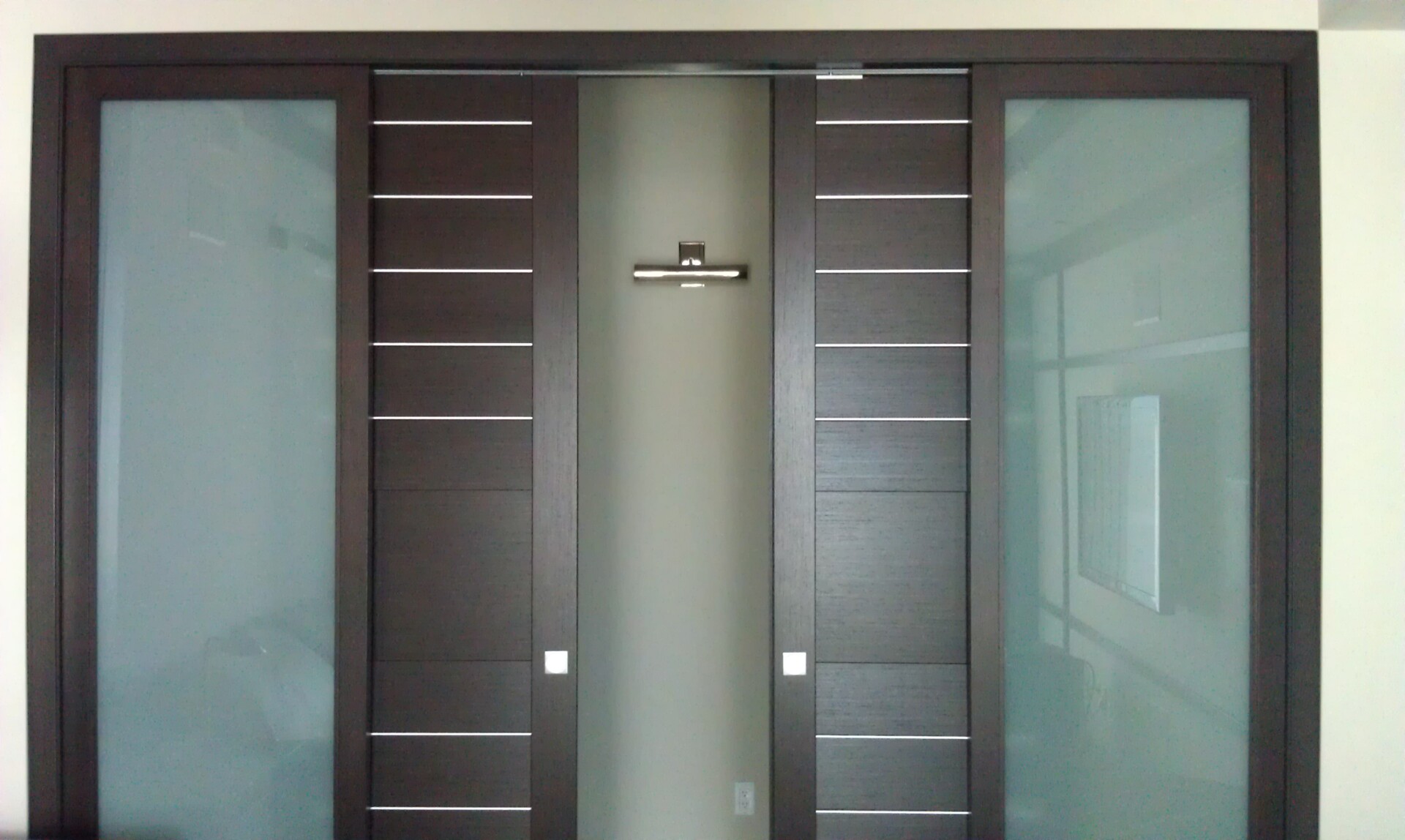
You lose the chance to create wider openings between kitchen and living areas, double doors into a primary suite, or sliding separations between home office and living room. The circulation remains chopped into small, standard openings rather than becoming generous and deliberate.
This “plug it in at the end” approach treats doors as a necessary closure rather than a design tool. In 2026, when people expect homes to feel open, tailored and cohesive, that is a missed opportunity.
Doors as furnishing elements, not just construction items
An interior door is more than a functional panel on hinges. It is an element of furnishing that frames every transition in your home.
Consider how much visual territory a door actually occupies:
- The door leaf itself: color, texture, proportion and any paneling or glass inserts
- The frame and casings: thickness, profile and how they meet the wall
- The hardware: handle, key plate, lock, hinges, and increasingly smart access components
Together, these elements can either elevate or drag down the perceived quality of a space.
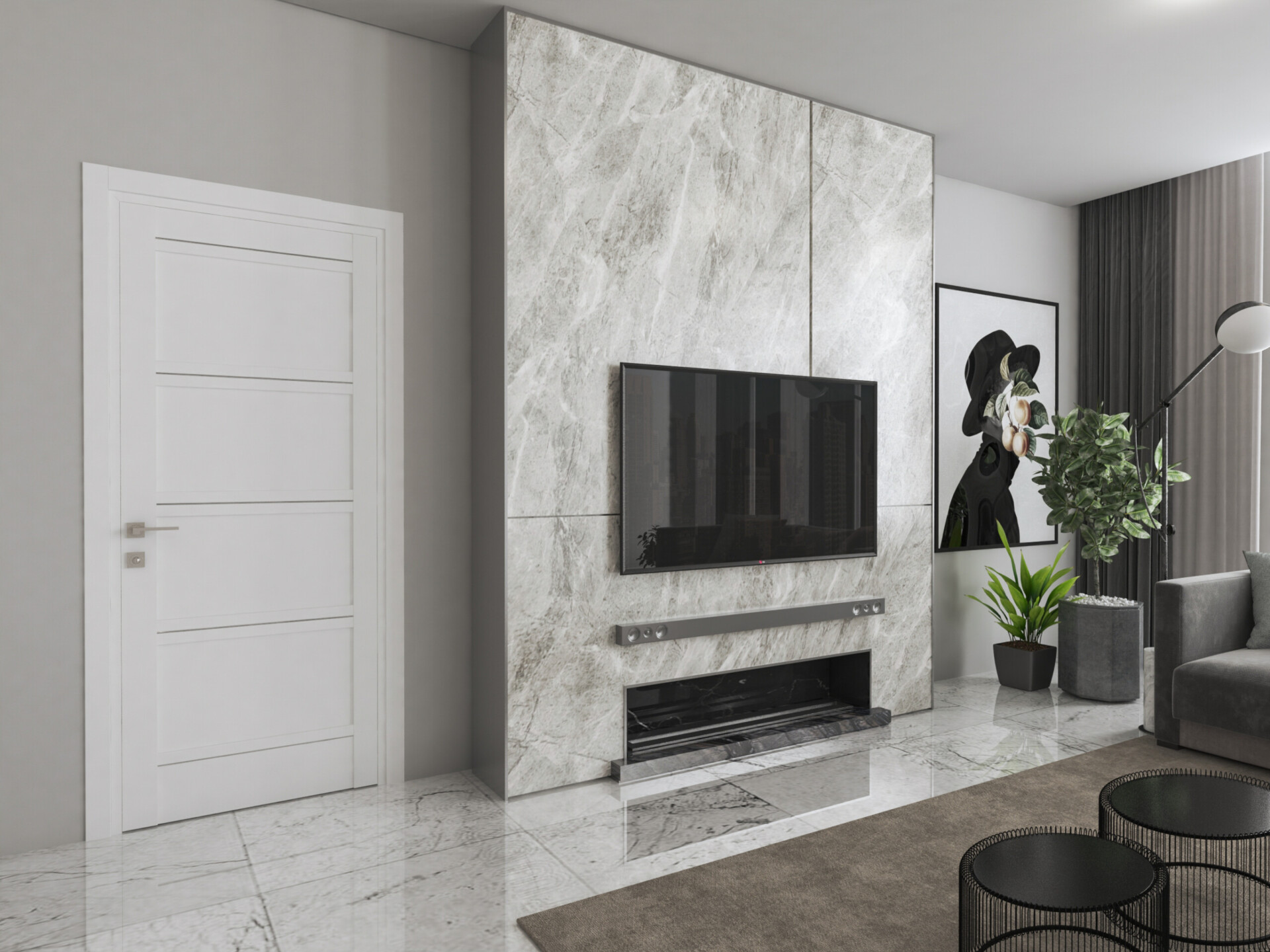
When you approach doors as a design anchor, you ask the same questions you would ask about a major piece of furniture: Does this support the mood of the room? Does it feel balanced with the flooring, wall color and lighting? Will it still look good in ten years?
How to plan doors at the right time in your 2026 project
The easiest way to avoid this first renovation mistake is to pull door decisions forward in the process.
A sensible sequence looks like this:
- Define the overall concept and mood
Decide whether the home will lean modern, transitional, classic, industrial, etc. Gather reference images, paying attention not only to kitchens and sofas but also to doors in those spaces. - Develop the layout and circulation
Work out how people and light will move through the home. At this stage, start sketching where you might want larger openings, sliding systems, pocket doors or pivot features. - Assign door types and sizes to each opening
Decide which doors will be single swing, double swing, sliding, pocket, barn or specialty. Adjust opening sizes and wall positions now, before final electrical and plumbing layouts. - Select finishes and hardware families
With door types decided, choose a family of finishes, handles and hinges that tie everything together. Coordinate these with flooring, cabinetry hardware and metal finishes on lighting. - Finalize construction details
Share the door specifications with your contractor, architect or designer so they can align wall thickness, framing and finishing around the chosen systems.
By following this order, you keep the door as a lever of design rather than an obstacle to be worked around.
Working with a specialist brand like Italdoors early in the process can dramatically simplify this planning. Their team can look at your floor plan, listen to your goals and suggest where frameless systems, integrated wall paneling or concealed hinges will make the biggest impact.
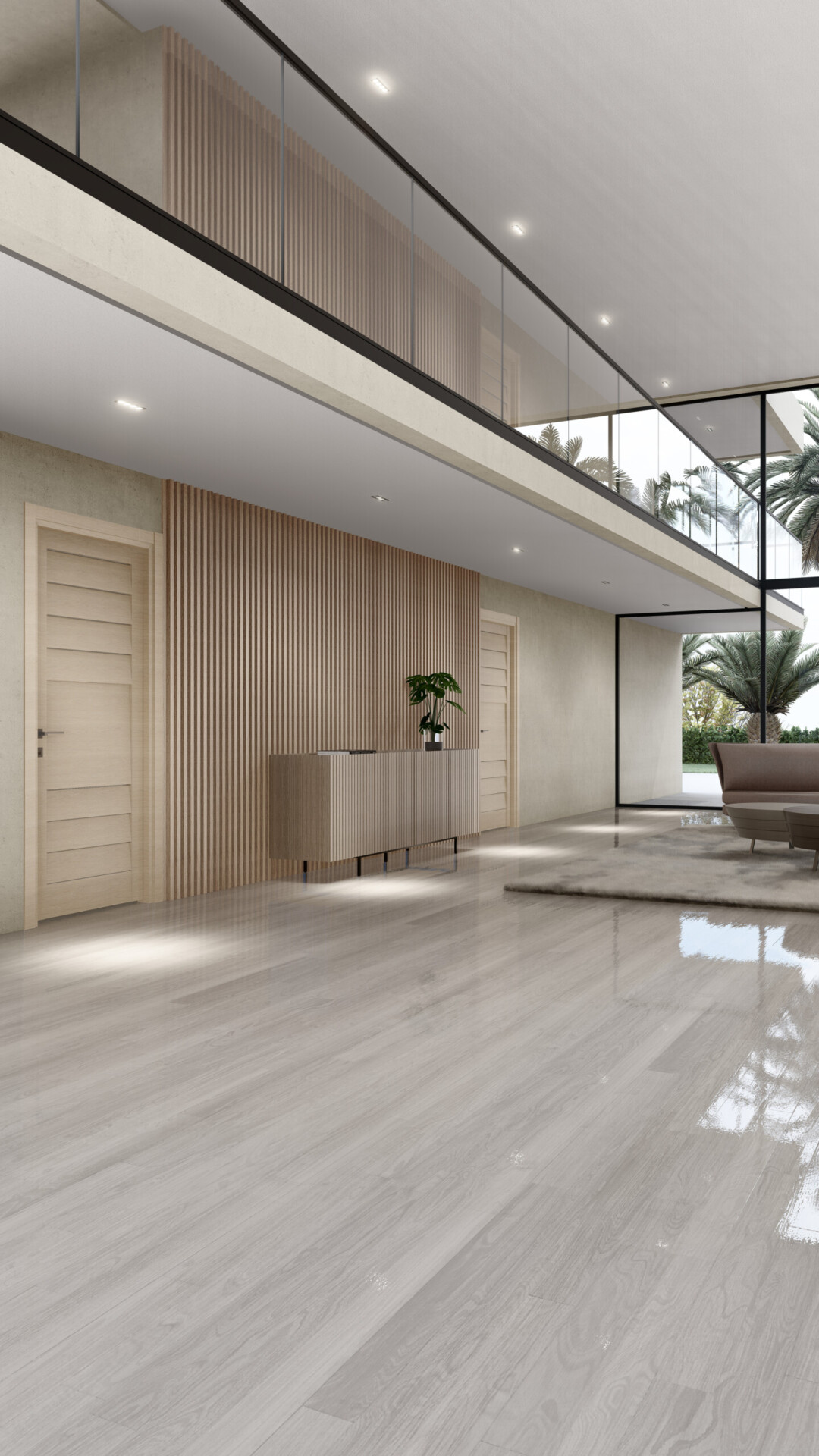
Renovation Mistake #2: Choosing the wrong door type and swing for the space
Even when homeowners pick a beautiful door model and finish, they can still feel frustrated daily if the type of door and its swing direction do not fit the room. This mistake is less visible in photos but painfully obvious in everyday life.
Poor placement and door swing conflicts
You have probably seen some version of the following:
- A bathroom door that swings inward and crashes into the vanity, forcing people to squeeze around it.
- A laundry room door that cannot open fully because it hits the washing machine, making the space feel more cramped than it is.
- A bedroom door that blocks a wardrobe or hits the bed, limiting how you can arrange furniture.
- Two doors in a hallway that open into each other, creating a noisy and awkward choreography for whoever is using them.
These issues typically arise because door placement and swing direction were not considered at the same time as furniture layout, appliance positions and circulation paths. The door fulfills its basic duty of closing the opening, but it works against the way people actually live in the space.
Overview of door types and where each works best
A clear understanding of door types helps you avoid these conflicts and turn constraints into design advantages.
- Single swing doors
The most common solution, ideal for bedrooms, bathrooms, home offices and most standard rooms. They are simple, reliable and can be left or right handed depending on which way the leaf opens. The key is to choose the swing direction that keeps the door out of the main circulation path and away from critical furniture or fixtures. - Double swing doors
Perfect for larger openings: between dining and living rooms, for primary suite entries, or when you want a sense of ceremony entering a key space. They allow wider passage, better visual connection and a more luxurious feeling. - Pocket doors
These slide into the wall cavity and are invaluable where space is tight, such as small bathrooms, laundry rooms and narrow corridors. They remove the door swing footprint entirely. Planning is crucial because the wall must accommodate the pocket and remain free from pipes or electrical conduits in that zone. - Barn and wall-mounted sliding doors
These slide along the face of the wall, becoming a strong design feature. They work well for home offices, pantries, media rooms and as flexible partitions between social zones. They require enough clear wall space next to the opening and careful planning around switches and wall storage. - By-pass doors
Common for closets where you want to access one side at a time without needing space for a swing. They are ideal for long wardrobe walls or reach-in closets in hallways. - Specialty and pivot doors
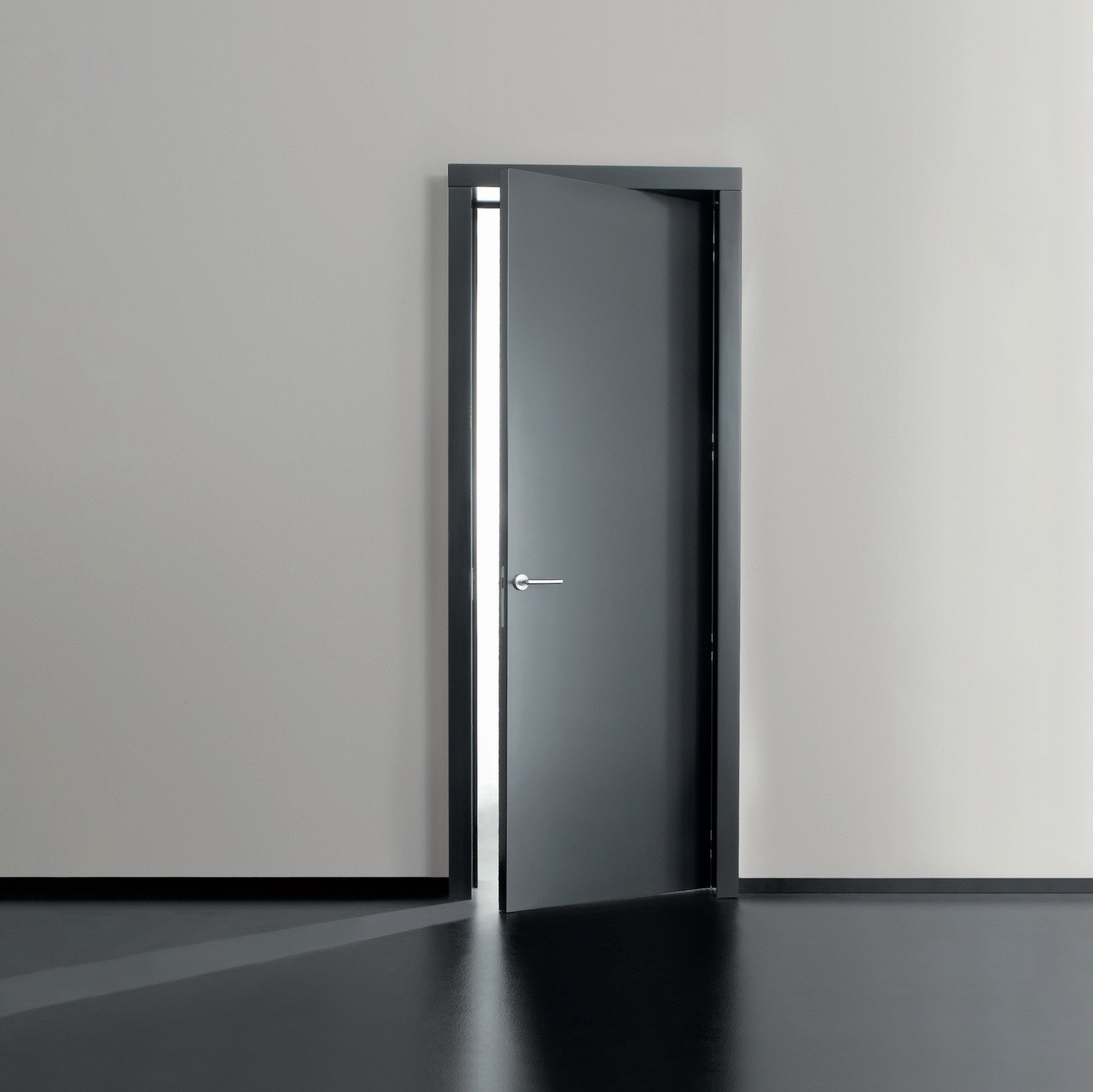
Pivot doors rotate on a vertical axis offset from the frame, allowing larger, heavier panels to operate smoothly. They create a strong architectural statement at main entries or in large, open-plan interiors. They demand precise engineering and are best specified with expert guidance. - Frameless and integrated doors
These sit flush with wall paneling or even align with wallpaper, minimizing visual interruptions. They are perfect for minimalist interiors, hidden storage rooms or “secret” doors within a panelled wall feature.
The goal is to choose the door type that:
- Respects available space and circulation patterns
- Supports the function of the room
- Reinforces the design intent of the entire home
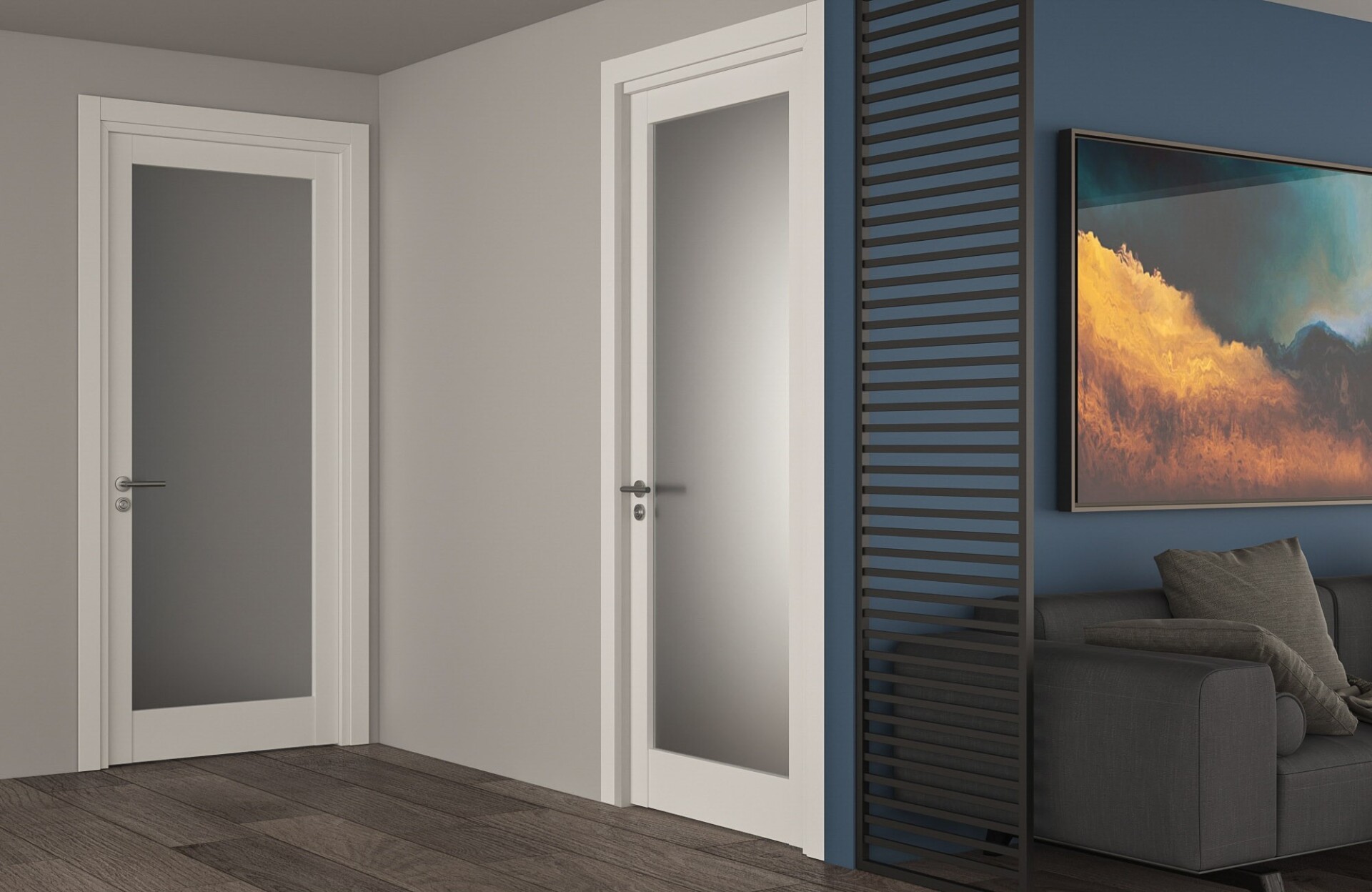
Renovation Mistake #3: Incorrect measurements and ignoring construction constraints
Few things derail an interior door project as quickly as measurements that are “almost” correct. Doors that are just a little too tall, slightly too wide or not designed for the real wall thickness create a chain of problems that show up late in the project, when every change is more expensive, messy and stressful.
Why wrong sizing is one of the most expensive mistakes
On paper, a one-inch difference does not look dramatic. On site, it can be the reason why:
- The door rubs against the finished floor every time it opens.
- There is a visible, uneven gap between door leaf and frame.
- The casings do not sit flush with the wall, leaving shadows and cracks.
- The door never closes quite right, even after multiple adjustments.
Once the door is fabricated, any correction becomes damage control. Typical consequences include:
- Last-minute framing changes to enlarge or shrink the rough opening, often after walls have been painted or tiled.
- Cutting and reworking casings to disguise misalignments, which rarely looks as clean as a properly planned installation.
- Reordering custom doors, which means new lead times, additional delivery costs and potential scheduling conflicts with other trades.
- Wasted labor for installers who must make the best of a poorly prepared opening, often returning multiple times.
- Because doors sit at the intersection of structure, finishes and hardware, every error ripples across several trades. A cheap measurement phase usually turns into an expensive installation phase.
What exactly needs to be measured (and by whom)
To avoid this, the measurement process must be treated as a precise, technical step, not a quick confirmation with a tape measure.
The crucial dimensions include:
- Rough opening width and height
This is the structural opening in the wall before the frame is installed. It must be large enough to allow for shimming and adjustment, but not so large that the frame becomes unstable. - Wall thickness
Interior walls are not all the same thickness. Some contain plumbing stacks, others are simple partitions. Door frames are manufactured for specific wall thicknesses, and misalignment here leads to casings that stick out too far or disappear into the wall. - Floor build-up
Many projects underestimate floor height. The finished floor consists of several layers: underlayment, sound mat, heating systems, tiles or wood. If the door is measured before these layers are in place, without accounting for them, it may end up scraping or sitting too high and exposing a large undercut. - Ceiling height and alignment with adjacent elements
Tall doors are popular in 2026 because they stretch the eye and make spaces feel more refined. However, their height must relate to ceiling levels, bulkheads, upper cabinets and wardrobe tops. A door that is arbitrarily tall may cut across other horizontal lines and feel “off.”
Ideally, these measurements are taken by someone who understands both doors and construction:
- An experienced door specialist or technician from the supplier.
- A contractor comfortable with fine tolerances and used to working with high-end products.
- In the best case, both, working in coordination.
A professional does not just write down numbers. They also check for out-of-plumb walls, uneven floors and misaligned headers, then factor these realities into the order so the final result looks straight and intentional.
Good measurement practice in these rooms looks beyond the door itself and asks: what else moves here, now and later? How will people and objects share this opening?
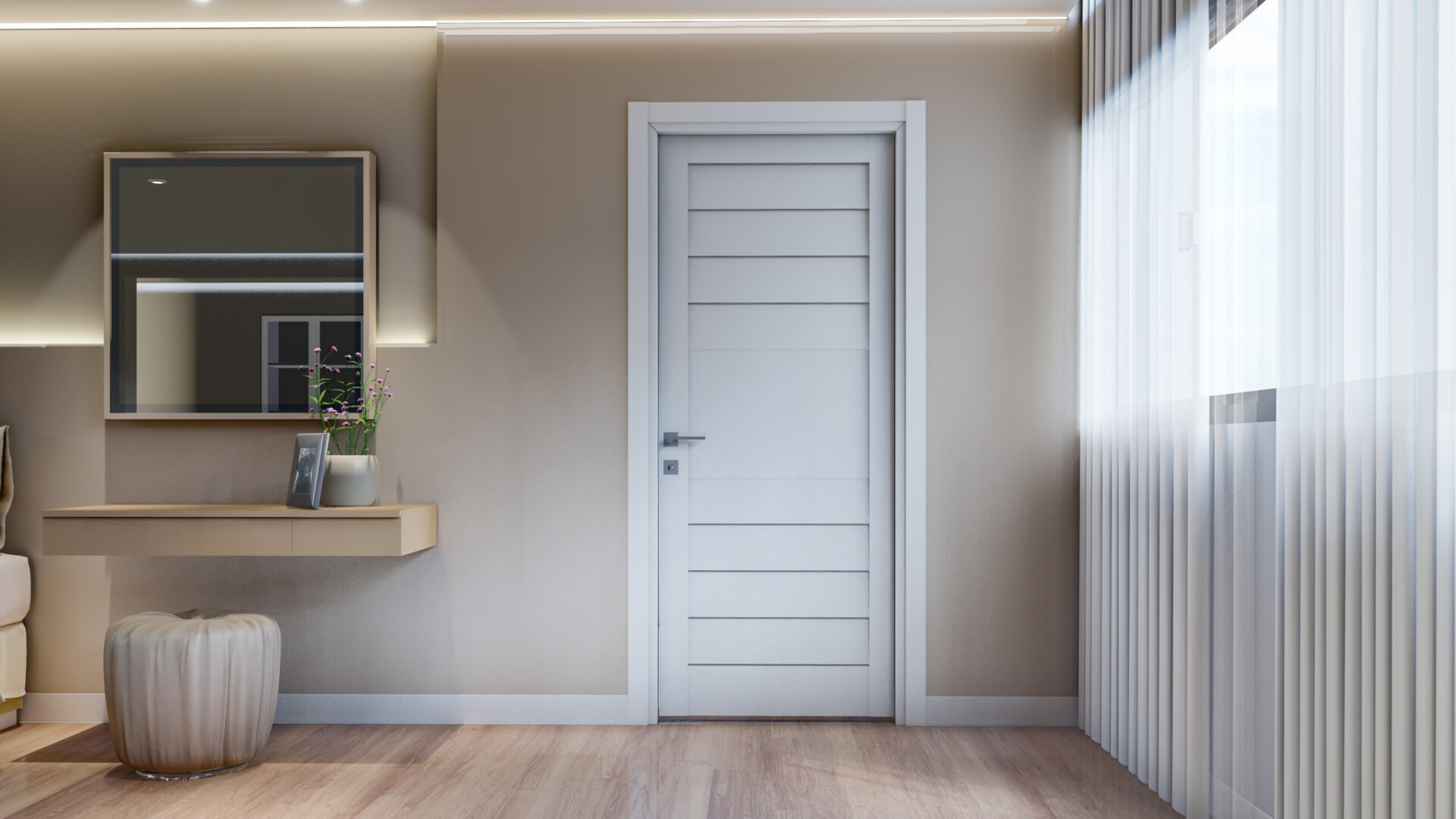
Renovation Mistake #4: Ignoring material, performance and climate – especially in Florida
The fourth big mistake happens when doors are chosen purely for appearance, with little attention to what they are made of, how they perform and how the local climate will treat them over time. This is particularly important in places like Miami-Dade, where heat, humidity and aggressive air-conditioning create a demanding environment for interior doors.
The impact of Miami-Dade climate on interior doors
In a tropical or subtropical climate, doors are exposed to a constant cycle of:
- High humidity levels, which encourage materials to absorb moisture.
- Strong air-conditioning, which dries and cools interior air dramatically.
- Frequent changes between outdoor heat and indoor cooling, especially in entry and corridor zones.
Low-quality doors respond badly to this stress. Over a few seasons, you may see:
- Swelling and sticking as moisture is absorbed.
- Warping and twisting, especially in tall doors or doors near humid rooms like bathrooms and laundry spaces.
- Delamination of cheap veneers that begin to bubble or peel away from the core.
- Rusting or premature wear on low-grade hardware.
The result is not only aesthetic degradation but also functional frustration. Doors that used to swing silently now scrape, bind or fail to latch. In multi-family settings, this can also impact acoustic privacy and perceived building quality.
Choosing materials that are engineered for stability
To stand up to such conditions, interior doors must be engineered deliberately, not just made “thicker” or “heavier.”
This is where premium engineered construction often outperforms pure solid wood indoors:
- Solid wood is beautiful, but it is a living material that moves more aggressively with moisture and temperature. Without careful engineering, tall solid doors are particularly prone to bowing.
- Engineered door leaves, built from a combination of pine, MDF and high-performance cores like XPS, are designed to move in controlled, predictable ways and resist extreme warping.
The door core plays a central role in this performance:
- An XPS or similar core improves dimensional stability, helping the door remain flat under normal temperature-controlled conditions.
- It supports better sound insulation compared to lightweight hollow cores, making rooms quieter and more comfortable.
- It contributes to a solid, reassuring feel when the door closes, without the excessive weight of a solid timber slab.
In a climate like Florida’s, this engineered approach is not a luxury; it is a necessity if you want doors to look and operate the same way years after installation.
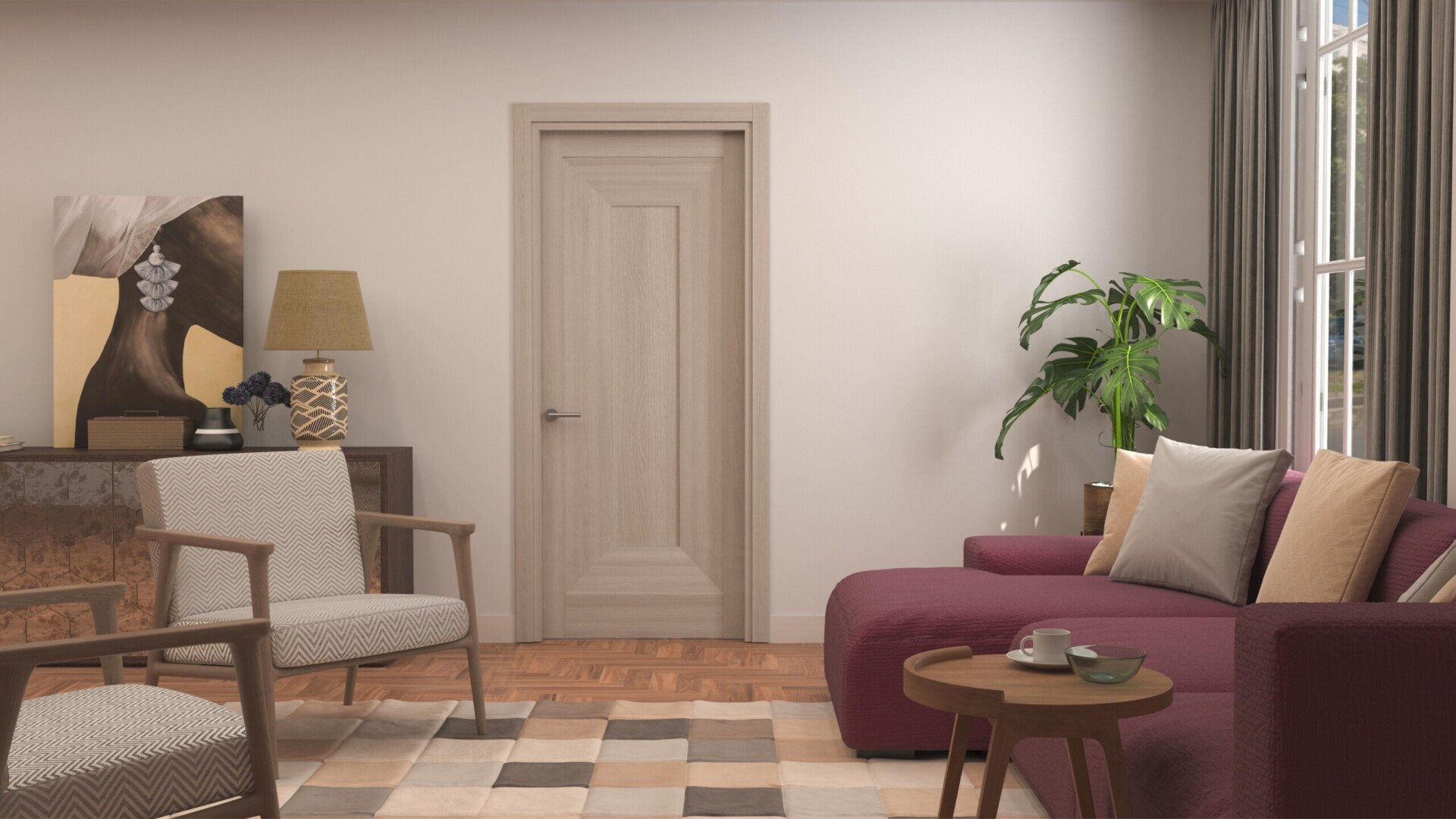
Renovation Mistake #5: Underestimating hardware, installation and total project cost
The final major mistake is subtle but pervasive: treating hardware and installation as minor details to be decided at the last minute or with the lowest bidder. In reality, this is where a significant part of the door experience is created or destroyed.
Treating hardware as an afterthought
Hardware is the part of the door you touch every day. When it feels cheap, rattles, squeaks or looks out of place, the entire door feels downgraded.
Common problems include:
- Mismatched handles and hinges
Handles in one finish, hinges in another, locks that do not align with the design language of faucets, lighting or cabinet pulls. The result is a visually noisy, uncoordinated look. - Low-quality latches and hinges
These wear quickly, leading to door leaves that sag, squeak or fail to latch properly. Every opening and closing becomes a reminder that something is not quite right. - Ignoring tactile experience
A handle that feels flimsy in the hand or a latch that requires force to operate contradicts the impression of a high-quality interior, even if the door leaf itself is beautiful.
When hardware is an afterthought, you end up with a patchwork of pieces that technically work but do not add up to a coherent, satisfying experience.
The importance of an all-inclusive, coordinated door package
Another common source of trouble is assembling a door from components sourced independently: one brand for the leaf, another for the frame, different hardware ordered online, and so on.
This approach often leads to:
- Alignment issues because components were not designed for each other’s tolerances.
- Unclear responsibility when something does not work; every supplier can blame another.
- Warranty complications if the manufacturer’s system guidelines were not followed.
An all-inclusive, coordinated door package avoids these traps. With Italdoors, for example, a typical package includes:
- Door panel
- Door frame
- Casings
- Concealed hinges
- Magnetic lock
- Italian handle
All parts are designed together, ensuring that clearances, load capacities and visual proportions are correct. Optional smart features can be integrated into this system rather than awkwardly grafted on later.
This not only simplifies installation but also guarantees that the final result looks and feels intentional.
Smart features and modern hardware in 2026
By 2026, hardware is not only about metal and mechanics; it is also about technology and convenience.
Key trends to consider include:
- Keyless entry and integrated smart locks
For primary doors and high-traffic zones, smart locks that integrate with home systems provide both convenience and security. Even interior doors, such as a home office or a rental suite within the home, can benefit from controlled access. - Magnetic latches
These provide a smoother, quieter closing action compared to traditional mechanical latches. They help doors align perfectly without the “click” or resistance many people associate with standard locks. - Concealed hinges
These hide the mechanical elements from view when the door is closed, contributing to a clean, minimal aesthetic especially in modern or frameless designs. - Finish coordination
Hardware finishes should harmonize with faucets, shower sets, lighting fixtures and cabinet pulls. Matching or deliberately contrasting in a controlled way creates a sense of design maturity.
Smart features and refined hardware transform the door from a simple barrier into a touchpoint that reflects the overall quality of the home.
Why Italdoors is a smart choice for your 2026 interior door renovation
Choosing interior doors in 2026 is no longer just a matter of function and finish. With endless design options, evolving home layouts, smart hardware trends and the need for durable, climate-aware construction, the right brand becomes a strategic decision. Italdoors stands out because it brings together Italian craftsmanship, technical precision and reliable timelines in a single package designed for both homeowners and design professionals.
Affordable luxury: Italian craftsmanship without the usual wait
In the world of premium doors, long lead times are traditionally accepted as the price of quality. Custom or imported doors often require months of waiting, with unpredictable delivery schedules and budget surprises tied to tariffs and international shipping. Italdoors breaks that pattern.
What makes the brand unique is its in-stock selection of authentic Italian doors, available for installation in as little as 2–4 weeks in many cases. This offers a level of planning security that is rare in the premium door market, where delays can stall other trades and push project deadlines.
Pricing is also transparent and competitive. Italdoors eliminates the guesswork of hidden tariffs, import fees or surprise charges often associated with overseas products. Homeowners and professionals alike benefit from clear budgeting, without sacrificing the aesthetic and technical standards associated with Italian design.
The result is simple: you get true European quality without long waits or hidden costs, making it possible to elevate your home with high-end doors without derailing your project schedule or financial plan.
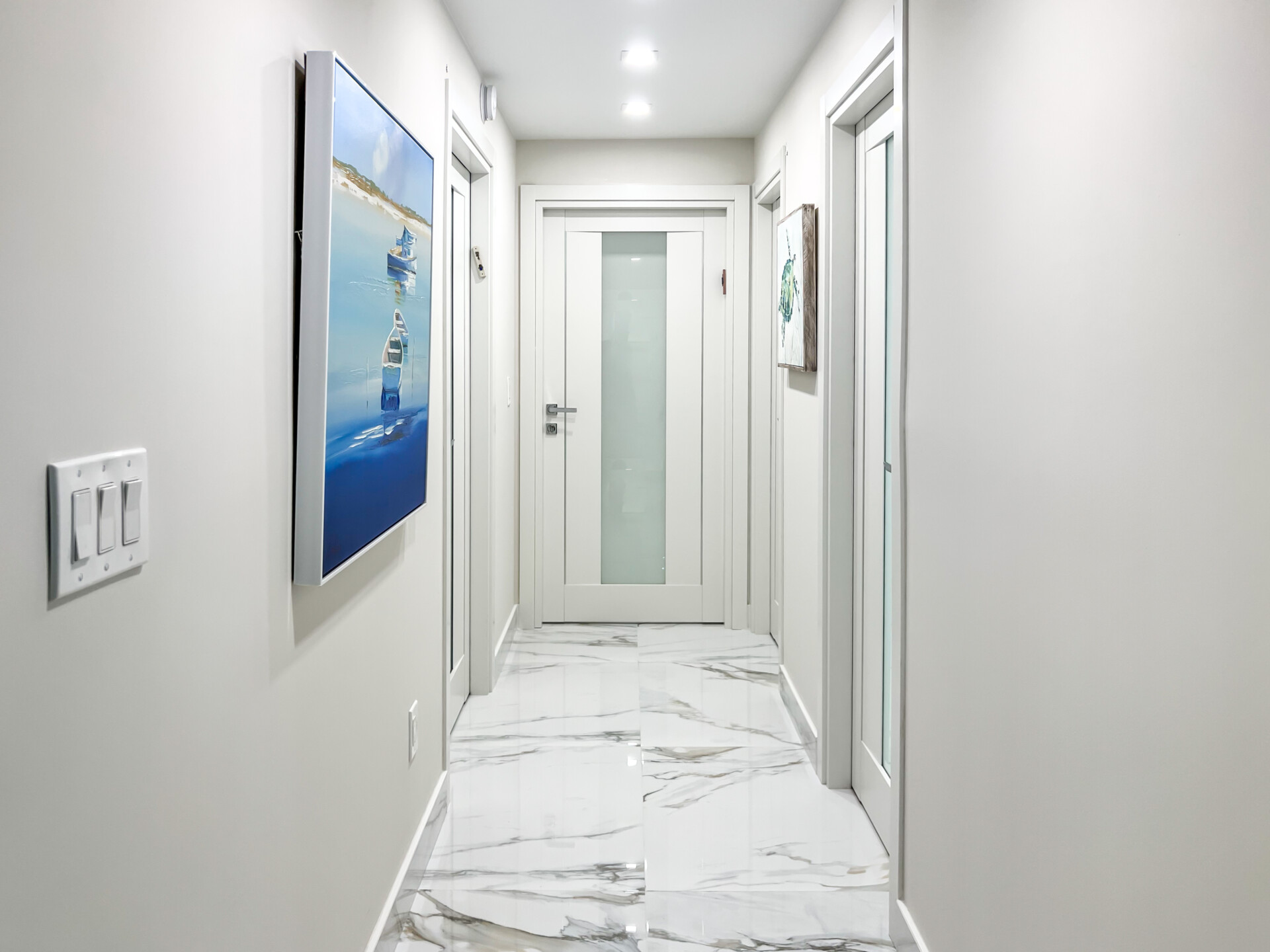
Custom fit and design flexibility
Every home speaks its own aesthetic language, and a premium door should adapt to it rather than force compromises. Italdoors offers the flexibility needed to match design intent while responding to layout constraints, climate and performance requirements.
With over 100 door designs and multiple collections that include Modern, Transitional, Eco and Flat Panel options, the brand provides a palette of styles suited to clean minimalism, soft contemporary spaces or more balanced transitional interiors. Standard finishes range from natural wood tones like walnut, wenge and oak to matte whites, textured greys and linen-inspired surfaces that complement coastal, urban or Scandinavian concepts.
Importantly, design freedom is not limited to the look of the door leaf. Italdoors allows clients to configure the same aesthetic across a full spectrum of door types, including:
- Single swing or double swing
- Sliding or barn style
- Pocket systems for tight spaces
- By-pass for closets or wardrobes
This means a cohesive design language can flow throughout the home, while each room receives the type of operation that best suits its function and spatial layout. You do not have to choose between beauty and practicality; you can have both, consistently.
Support for both homeowners and industry professionals
Navigating door specifications can feel overwhelming without expert guidance, especially when decisions affect construction, acoustics, hardware compatibility and climate performance. Italdoors serves both individual homeowners and design/build professionals with tailored support.
For homeowners, the brand provides one-on-one guidance, helping clarify what each room needs in terms of privacy, sound, swing clearance, aesthetics and long-term durability. This consultation transforms abstract choices into practical solutions rooted in everyday living.
For architects, contractors and interior designers, Italdoors adds value through technical expertise, including accurate specification support, documentation, integration options for wall systems and hardware coordination. This eliminates compatibility conflicts and ensures smooth communication between design intent and real-world installation.
Whether you are designing your first home or coordinating a multifamily development, the brand acts as a trusted partner rather than just a supplier.
From showroom to site visit: making every room start with a statement
Seeing a door in person matters. The heft of the panel, the smoothness of the hinge action, the tactile feel of the handle and the precision of the magnetic latch all convey quality that photos cannot fully express.
Italdoors encourages clients to visit the Miami showroom to experience doors at full scale, compare finishes and evaluate how hinge and hardware systems perform in reality. This firsthand interaction gives homeowners confidence and helps professionals confirm design choices with clients.
Once selections are made, site visits can be scheduled in available regions, ensuring that measurements, wall conditions and floor transitions align with the selected door systems. This proactive step protects budgets and helps avoid installation surprises, turning design decisions into predictable results.
From our family to yours: long-term value and service
Italdoors is a family-driven company built on relationships, not one-time transactions. Its focus is not only on providing high-quality doors today, but on supporting the spaces that families and professionals will live and work in for many years.
- Long-term value is emphasized through:
- Durable, climate-appropriate construction designed to resist warping and maintain acoustic quality
- Hardware engineered to operate smoothly after years of use
- Consistent finish options that age gracefully and remain relevant as interiors evolve
- Reliable service that prioritizes trust, transparency and dependable communication
When a brand commits to lasting performance and personal service, the door becomes more than a product. It becomes an investment in the comfort, style and practicality of everyday life.