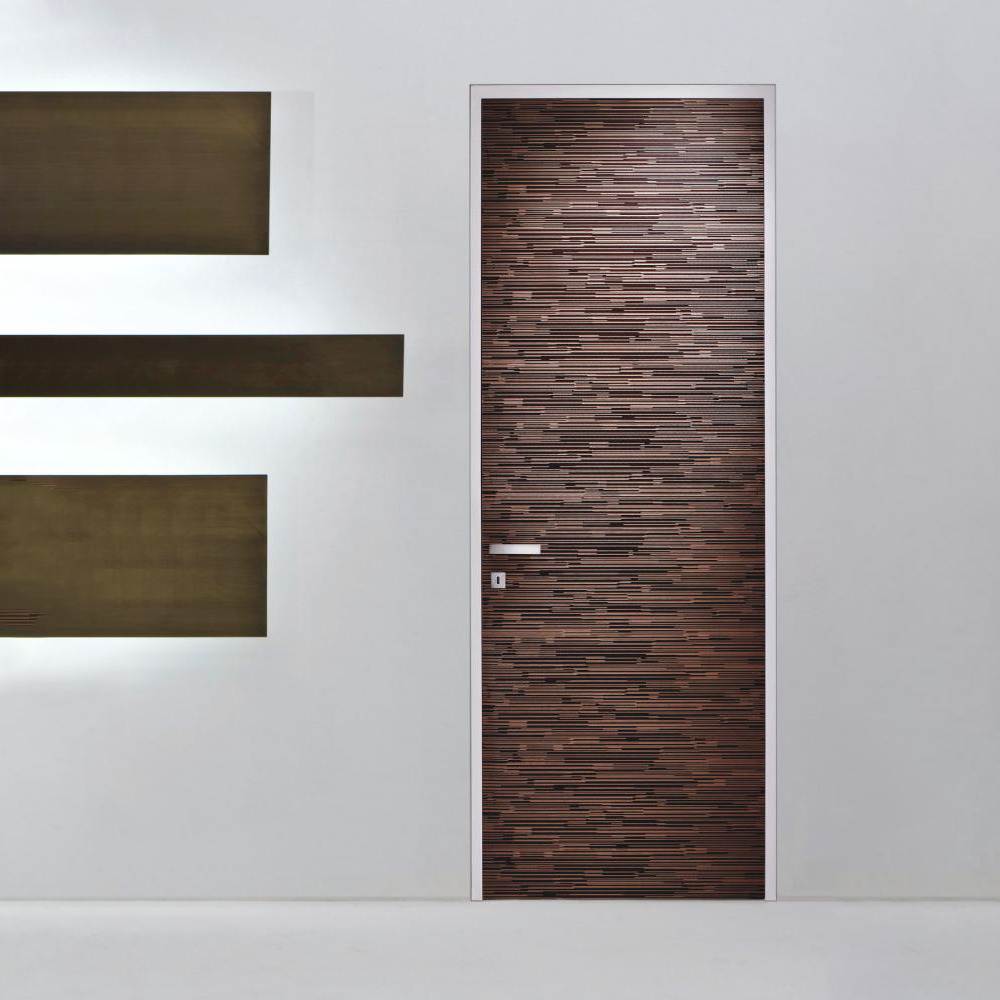
The Pivoting Mechanism Explained
The core innovation that sets a pivot door apart from a traditional one is the pivoting mechanism. This includes two main components:
- Bottom pivot – This is the main “engine” of the door system, anchored into the floor or subfloor, and responsible for bearing the door’s weight and facilitating its rotation.
- Top pivot – Installed in the ceiling or top jamb, this component helps guide and stabilize the movement of the door.
This structural evolution has allowed pivot doors to be integrated into even the most delicate architectural projects without compromising the existing flooring, underlayment, or spatial design. It also enables retrofitting in renovations as well as new builds.
Architectural Elegance and Movement
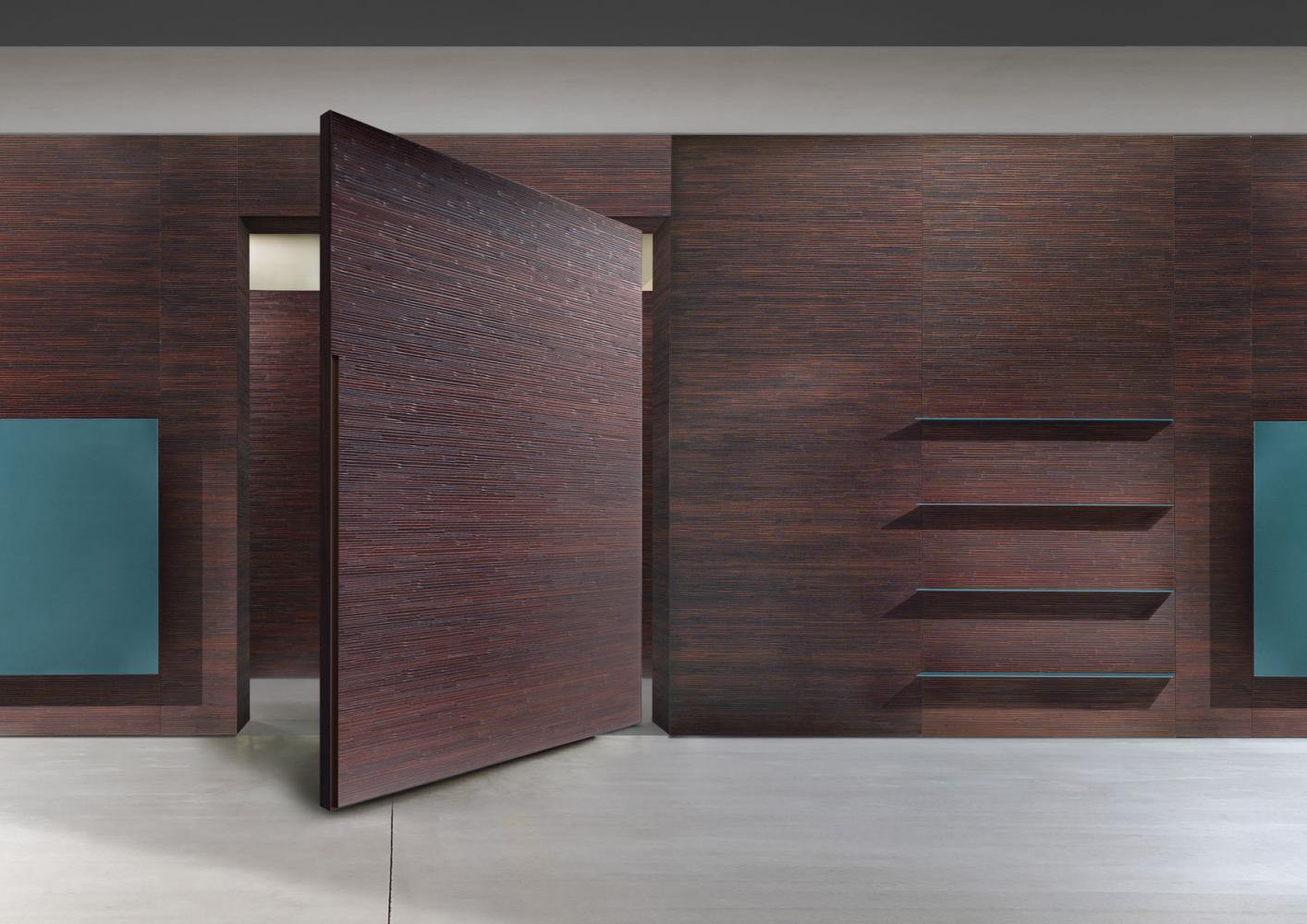
Beyond engineering, what truly sets a pivot door apart is its visual and architectural presence. When installed flush with walls or concealed within decorative paneling, it creates a sleek, minimalist aesthetic that resonates with modern design philosophies. Whether used as a statement-making front door or an interior partition that blends into its surroundings, a pivot door provides a sense of openness, luxury, and movement.
Why Architects Choose Pivot Systems Today
The return of the pivot door is not simply a stylistic choice. Architects are drawn to its:
- Versatility: Suitable for both exterior and interior applications, from front entries to partitions and even hidden doors.
- Minimalism: The absence of visible hinges and frames supports clean, continuous surfaces.
- Spatial Drama: The rotation and fluidity create a memorable and luxurious user experience.
- Structural Capability: Pivot doors support far greater sizes and weights than traditional hinged doors, allowing for bold, statement-making entrances.
How a Pivot Door Works – Technical Anatomy
| Component / Feature | Description |
|---|---|
| Door Leaf | The visible panel that swings open. Can be made of wood, glass, steel, or marble, and may weigh several hundred kilograms. |
| Bottom Pivot | Supports the door’s weight and controls rotation. Mortised into the bottom edge and rests on a floor plate. |
| Top Pivot | Stabilizes the door. Installed at the top edge, it aligns with the ceiling plate for secure rotation. |
| Floor Plate | Shallow-mounted (8 mm) plate that holds the bottom pivot spindle, ensuring balance and operability. |
| Ceiling Plate | Receives the top pivot pin, completing the vertical rotation axis of the door system. |
| Concealed Floor Springs | Older pivot technology requiring deep floor installation; rarely used in modern residential projects. |
| Integrated Mortised Hinges | Modern pivot systems embedded directly into the door for clean aesthetics and easy installation. |
| Smart Locking | Options include fingerprint access, PIN codes, and smartphone integration. |
| Soft-Close & Damping | Prevents slamming and allows for smooth, quiet closure. |
| Latch Control | Enhances closure security, especially on exterior doors with latching bolts. |
| Hold Positions | Keeps door open at a desired angle without drifting. |
| Pivot Systems by ITALdoors | Include UL fire rating (120 min), Miami-Dade hurricane certification, insulation, atmospheric resistance, and premium finishes. |
Main Components of a Pivot Door System
A high-performance pivot door includes the following key elements:
1. Door Leaf
This is the visible part of the pivot door – the panel that rotates open and closed. It can be made from wood, glass, steel, marble, or even mixed materials. With modern pivot systems, the door leaf can be extremely large, often reaching heights of up to 10 feet or more, and weighing several hundred kilograms.
2. Bottom Pivot
The bottom pivot is the mechanical heart of the pivot door system. It supports the door’s entire weight and governs its motion. In advanced systems, this component is mortised into the bottom edge of the door and rests on a floor plate, allowing the door to rotate smoothly while remaining stable.
3. Top Pivot
The top pivot acts as a stabilizing element. It is installed in the top edge of the door and interfaces with the ceiling plate or header frame, ensuring that the door remains aligned and secure during rotation.
4. Floor Plate
The floor plate is mounted shallowly – usually only 8 mm into the surface – eliminating the need for extensive construction work. It receives the bottom pivot spindle and plays a vital role in the door’s balance and operability.
5. Ceiling Plate
This element houses the top pin and serves as the anchor point for the top pivot. When installed correctly, it completes the vertical axis and allows the door to rotate securely and consistently.

Types of Pivot Systems
There are two primary types of pivot systems in use today:
Concealed Floor Springs
Traditional floor spring mechanisms require cutting into the subfloor and embedding hydraulic or spring-loaded units deep below the surface. While still in use for certain heavy-duty commercial applications, this method is now considered outdated for residential or minimalist interiors due to its invasive nature.
Integrated Mortised Hinges
Modern pivot doors, such as those offered by ITALdoors, rely on mortised hinges that are embedded directly into the door itself.
Optional Smart Features for High-End Pivot Doors
Thanks to modern engineering, today’s pivot doors can include a variety of advanced features:
- Electronic locking systems – Including fingerprint readers, PIN keypads, or smartphone-based access control
- Soft-close functionality – Prevents slamming and ensures gentle, controlled closing
- Adjustable closing speed and latch control -For fine-tuned user experience
- Hold positions – Keeps the door open at preset angles for ease of use
- Hydraulic back-check – Slows the door’s motion to protect adjacent walls
These features make the pivot door not only beautiful but also intelligent and user-friendly.
Pivot Hinge Systems by ITALdoors
At ITALdoors, pivot doors are engineered to meet the highest international standards, offering the perfect blend of performance, safety, and design flexibility. Each door is handcrafted in Italy and shipped directly to the U.S., ensuring uncompromising quality from start to finish.
Notable features of ITALdoors pivot systems include:
- Pivot Hinge System
- UL Fire Rating Certification (up to 120 minutes)
- Miami-Dade NOA Impact-Resistance Certification (Hurricane-proof)
- Thermal and acoustic insulation
- Protection against atmospheric agents
- Break-in resistance
- Wide variety of premium finishes
Exterior Pivot Doors by ITALdoors
Designed to combine beauty, strength, and innovation, pivot exterior doors by ITALdoors are engineered to meet the highest standards in security, durability, and customization. These doors are ideal for homeowners, architects, and builders who want to transform the traditional concept of a front door into a work of modern design.

Key Features of ITALdoors Pivot Exterior Doors
Large Format, Wall-Flush Design
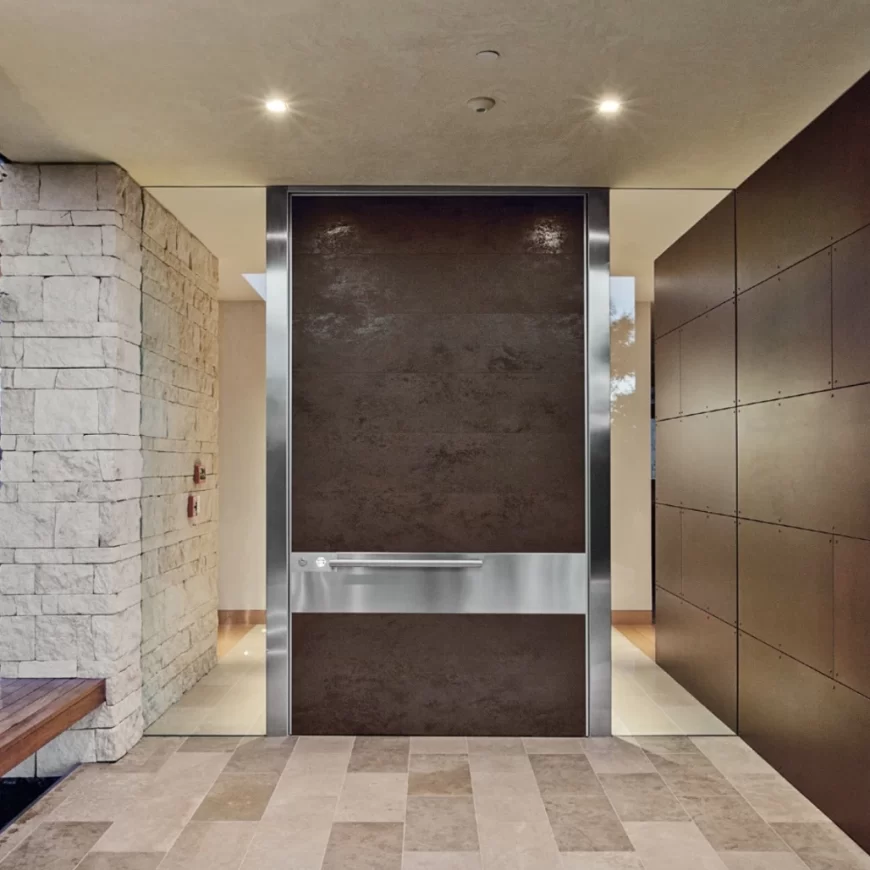
One of the defining characteristics of ITALdoors’ pivot exterior doors is their large format. Thanks to the pivoting mechanism, these doors can reach extraordinary dimensions – up to 72 inches in width and 144 inches in height – while remaining smooth and easy to operate. Despite their scale, the doors can sit flush with the wall, creating a minimal and seamless visual profile that aligns with the most sophisticated contemporary architectural styles.
Modular Construction and Custom Materials
Every pivot exterior door from ITALdoors is modular in design, allowing for custom cladding in a wide variety of materials. Clients may choose from fine woods, lacquered panels, metal finishes, or even glass and stone. The surface can be further tailored to complement wall paneling systems, enabling full integration into surrounding façades or design motifs. This modularity ensures that each custom pivot door reflects the unique character and vision of the space it inhabits.
Performance Engineering for Real-World Demands
While aesthetic excellence is at the forefront, ITALdoors’ pivot doors are also built to perform under pressure. These doors provide:
- Thermal insulation, helping to maintain interior climate stability and improve energy efficiency.
- Acoustic insulation, reducing unwanted noise transmission from outside.
- Resistance to atmospheric agents, including wind, rain, and UV radiation.
- Break-in resistance, providing a secure barrier to the outside world.
Additionally, ITALdoors’ pivot exterior doors are Miami-Dade NOA certified, meaning they meet the highest standards for impact resistance and are approved for hurricane-prone regions. They are also UL fire-rated for up to 120 minutes, offering enhanced safety in residential and commercial applications.
Made in Italy, Delivered with Precision
All custom pivot doors from ITALdoors are handcrafted in Italy, where design heritage meets cutting-edge engineering. Due to the high degree of personalization involved – including finishes, size, and optional features – lead times for exterior doors are typically 12 to 16 weeks. This timeline reflects the brand’s commitment to precision, quality, and excellence in execution.
Interior Pivot Doors and Design Freedom
Creating Seamless Interiors with Frameless and Flush Designs
When it comes to interior architecture, designers and homeowners are increasingly seeking solutions that prioritize minimalism, openness, and visual continuity. Interior pivot doors offer precisely that. Unlike traditional hinged doors, which require visible frames and handles, a frameless pivot door can be designed to disappear into the wall, contributing to a clean and uninterrupted interior landscape.
ITALdoors specializes in flush systems that align perfectly with adjacent wall surfaces. These systems not only enhance the door’s visual appeal but also support architectural consistency across spaces. The result is a smooth, cohesive interior where transitions are fluid and doorways become part of the overall design language.

Custom Integration with Wall Panels and Finishes
One of the most powerful features of ITALdoors’ interior pivot systems is their ability to integrate seamlessly with custom wall finishes. Whether it’s a wood panel, lacquered surface, or wallpapered design, the door can be finished to match or mirror its surroundings. This level of customization allows the pivot door to be used as a hidden panel, accent feature, or focal point – depending entirely on the project’s intent.
Interior pivot doors are also available in a range of material options, including glass, wood, metal, and composite materials, each offering a unique texture and ambiance to the room. Paired with concealed pivot hardware, they elevate interior design by adding a sense of movement and grace without visual clutter.
Versatile Applications in Modern Spaces
The flexibility of the pivoting mechanism makes interior pivot doors an ideal solution across many settings:
- Residential homes: Create fluid connections between living rooms, kitchens, and bedrooms. Conceal storage or utility rooms. Add drama to master suites with oversized pivot panels.
- Corporate offices: Use pivot doors to define meeting areas, executive suites, or private workspaces with elegance and efficiency.
- Hospitality spaces: Integrate pivoting partitions into hotels, lounges, and spas to create dynamic room divisions that are both functional and visually captivating.
- Retail environments: Conceal back-of-house areas or create attention-grabbing display zones with statement pivot entrances.
Whether used as space dividers, hidden doors, or freestanding sculptural elements, interior pivot doors are a bold, flexible solution that meets the evolving needs of modern interior design.
Installation Process and Requirements
A Detailed Look at Pivot Door Installation
While the elegance and scale of a pivot door may suggest a complex installation process, modern systems have dramatically simplified the procedure. Today, pivot door installation is engineered to be efficient, precise, and minimally invasive – especially when working with advanced concealed hardware like that offered by ITALdoors.
Whether integrating a pivot door into a new build or retrofitting it into an existing structure, it is essential to understand the steps involved and the importance of professional execution.
Step 1: Preparing the Door and Hardware
Every pivot door begins with precision milling. The pivot system (bottom and top components) is mortised directly into the door slab according to manufacturer specifications. The dimensions and position of the hardware vary based on the type of pivot system, material, and desired rotation angle (90°, 180°, or 360°).
If the door is made of wood, grooves are cut directly into the door’s edge to house the pivot system. For metal, glass, marble, or composite doors, the hardware is embedded into profiles or structural supports pre-integrated into the door panel.
Step 2: Mounting the Floor and Ceiling Plates
The floor plate is installed 8 mm into the surface, making it suitable even for finished flooring and underfloor heating systems. In special cases, such as porous materials (e.g., terrazzo or reclaimed stone), a 30 mm depth may be used to ensure firm anchoring.
The ceiling plate is positioned precisely in alignment with the floor plate, often with the aid of a laser guide. This alignment forms the vertical pivot axis and ensures the door will rotate smoothly without warping, dragging, or misalignment.
The entire system is engineered to avoid major structural modifications. There is no need for sunken floor springs or recesses, making it ideal for both new construction and renovation projects.
Step 3: Lifting and Placing the Door
Once the plates are secured, the door is lifted into position. The bottom spindle is placed into the floor plate socket, typically with the aid of a specialized axle wrench. The top pin is then extended into the ceiling plate using an Allen key, completing the pivot axis and locking the door into place.
Proper handling is critical at this stage due to the size and weight of the door. For this reason, pivot door installation should always be performed by a certified installer or under the guidance of an experienced architect.
Step 4: Fine-Tuning Movement and Performance
After the door is installed, it is fine-tuned to match the design intent and user experience. High-end pivot systems include a range of adjustable features, such as:
- Soft-close damping – Ensures a gentle, controlled closure
- Back-check (hydraulic damping) – Prevents abrupt movement and wall collisions
- Latch control – Applies additional force to engage latching mechanisms
- Hold positions – Keeps the door open at preset angles for easy passage
- Adjustable opening and closing speed – Customizable based on user preference
These options enhance both functionality and longevity, making sure that the door not only looks impressive but also performs flawlessly for years to come.
Why You Should Work with Professionals
While the pivot door system is highly engineered for ease of use, precision during installation is absolutely critical. Misalignment by even a few millimeters can affect door movement, cause stress on the hardware, or compromise the seamless aesthetic. Architects and trained installers have the expertise to coordinate with structural elements, ensure proper clearance, and avoid installation errors that could affect performance.
Pivot Doors from Italy – Why Choose ITALdoors
100% Made in Italy – A Legacy of Craftsmanship
All ITALdoors products are 100% manufactured in Italy, crafted by artisans and engineers who bring decades of experience in precision woodwork, metal fabrication, and finishing. This commitment ensures that every pivot door meets strict standards for quality, design integrity, and material selection. Italian design is globally recognized for its elegance and functional beauty, and each door from ITALdoors carries this legacy into your home or commercial space.

Specialists in Custom Doors
While pivot doors are a flagship offering, ITALdoors is also a recognized expert in specialty door solutions, including:
- Sliding doors
- Frameless flush doors
- Hidden panel systems
- Wall-integrated doors
This breadth of expertise allows the company to support complex architectural needs and ensure cohesive design language across various door types in a single project.
Integrated Design-to-Installation Service
ITALdoors offers a comprehensive service, from early-stage consultation and technical specification to delivery and installation coordination. Architects, designers, and property developers benefit from a collaborative process that guarantees the final result aligns with the project’s goals, both in appearance and in function.
Every pivot door is custom-built according to the client’s dimensions, material preferences, finish choices, and system requirements. Whether you are ordering a statement-making entry door or a flush interior partition, the experience is fully tailored to your space and style.
Balancing Design, Engineering, and Personalization
What distinguishes ITALdoors from many competitors is its commitment to combining architectural aesthetics with advanced engineering. Pivot doors are designed to integrate seamlessly into both traditional and modern environments, offering clients the ability to:
- Choose from an extensive library of finishes and materials
- Customize panel layout and size
- Integrate smart locking systems
- Match adjacent wall panels or surfaces for continuity
This blend of form, function, and flexibility makes ITALdoors a true leader in the pivot door category.
Lead Times and Delivery Transparency
All orders are custom-made to specification and shipped directly from Italy. Due to the meticulous manufacturing and finishing process, the standard lead time for pivot doors is approximately 12 to 16 weeks. Clients are kept fully informed throughout the process, with clear communication on order milestones, production status, and delivery timelines. This transparency ensures peace of mind and accurate planning for construction and renovation schedules.
If you’re seeking a door that elevates your space, enhances your lifestyle, and performs with flawless precision, ITALdoors offers the ideal solution.